
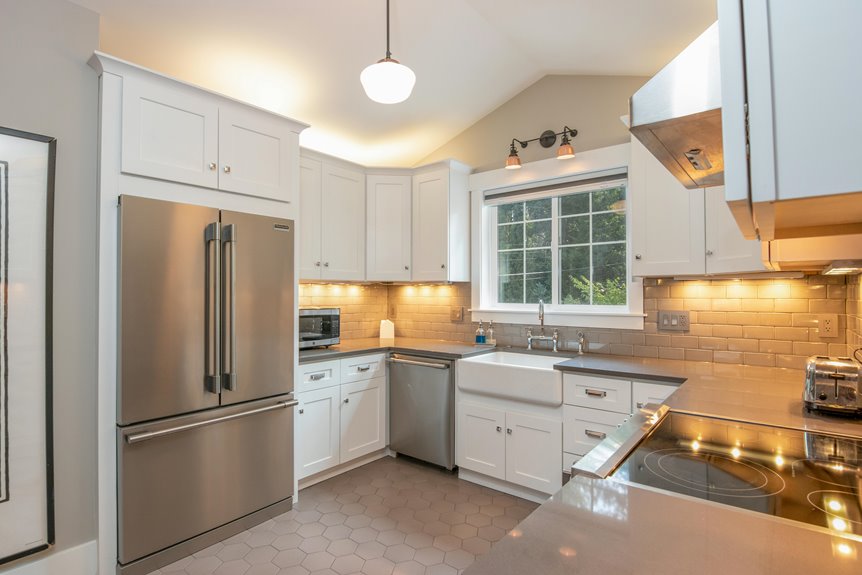
I’ve learned that your farmhouse sink choice hinges on three things: material durability, your kitchen’s layout, and how you actually wash dishes. Fireclay sinks like Bocchi last decades but cost more upfront and need careful handling. Stainless steel is easier to maintain but shows water spots. Size matters too—a 33-inch sink fits standard 36-inch cabinets perfectly. Single bowls give you space for giant pots; double bowls separate your dirty dishes from prep work. Keep reading, and I’ll walk you through which specific model matches your kitchen best.
Which Material Lasts Longest: Fireclay, Stainless Steel, or Granite?
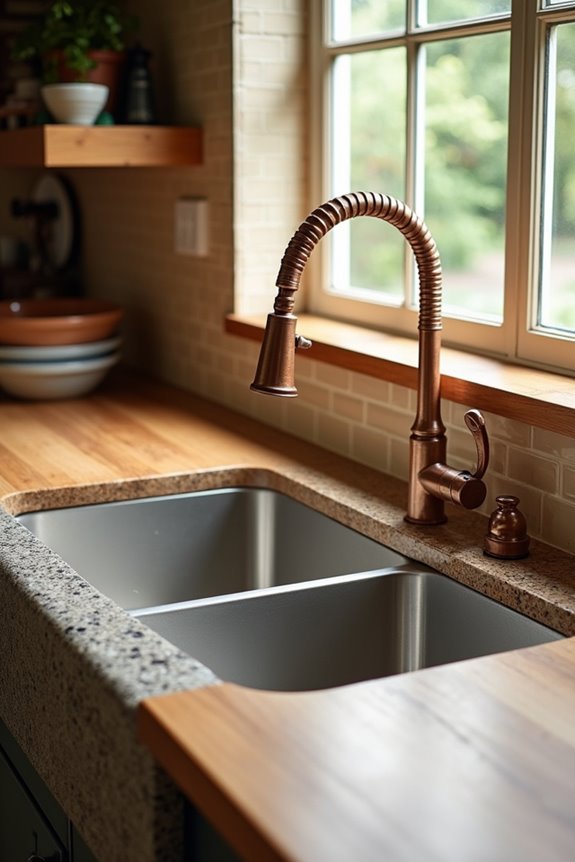
The material you choose for your farmhouse sink is the foundation of your kitchen’s durability—get it right, and you’ve got a workhorse that lasts for years.
Fireclay durability wins for pure toughness. Fired at 2,900°F with non-porous enamel, it resists stains and scratches well. However, impacts can cause cracking, so handle it carefully.
Stainless steel longevity performs well if you don’t mind occasional water spots and scratches. It’s lightweight and easy to maintain—though it requires regular wiping to stay clean.
Granite/composite resilience offers heat resistance and scratch protection, but demands more cleanup effort than smoother surfaces.
Enamelled cast iron durability lasts for decades in heavy-duty kitchen sinks. It’s heavy though, and needs patina and care attention to prevent chipping.
Choose based on your lifestyle and maintenance needs.
Size and Style: Finding the Right Farmhouse Sink Fit for Your Kitchen Layout
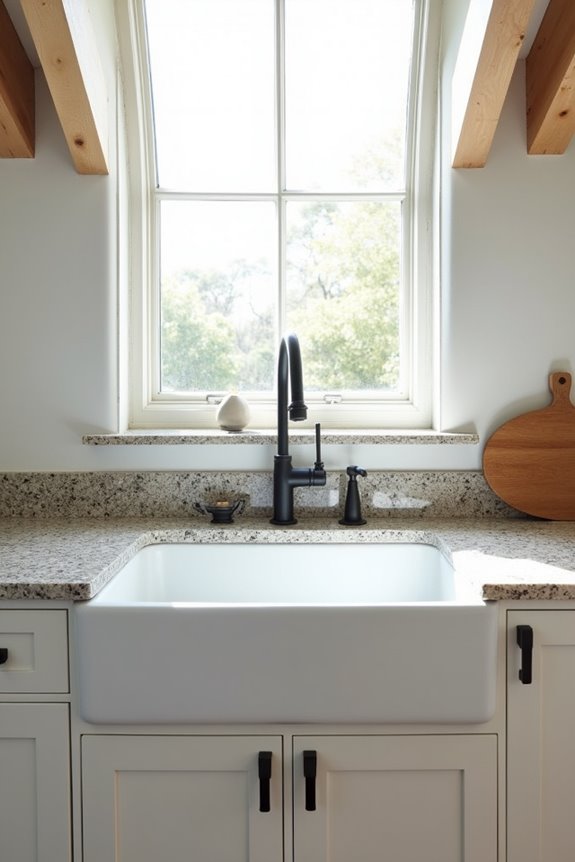
How do you know if a 33-inch sink will actually fit your kitchen without creating installation problems? Matching your farmhouse sink size to your base cabinet compatibility is necessary. A 33-inch sink fits a 36-inch base cabinet properly—I’ve observed the complications when people overlook this step.
| Feature | Single Bowl | Double Bowl |
|---|---|---|
| Best For | Simple cleaning | Multitasking |
| Space Needs | Smaller kitchens | 36″+ cabinets |
| Installation | Easier retrofit | More complex |
| Cost | Lower cost | Premium pricing |
Your sink installation options matter too. Undermount sinks look seamless but need strong support. Drop-in sinks are easier retrofits. Consider your apron-front design preference—it affects your sink cutout dimensions. Planning your kitchen layout around these factors prevents costly mistakes and makes your farmhouse sink a functional addition to your kitchen rather than a source of regret.
Single vs. Double Bowl: Which Serves Your Workflow?
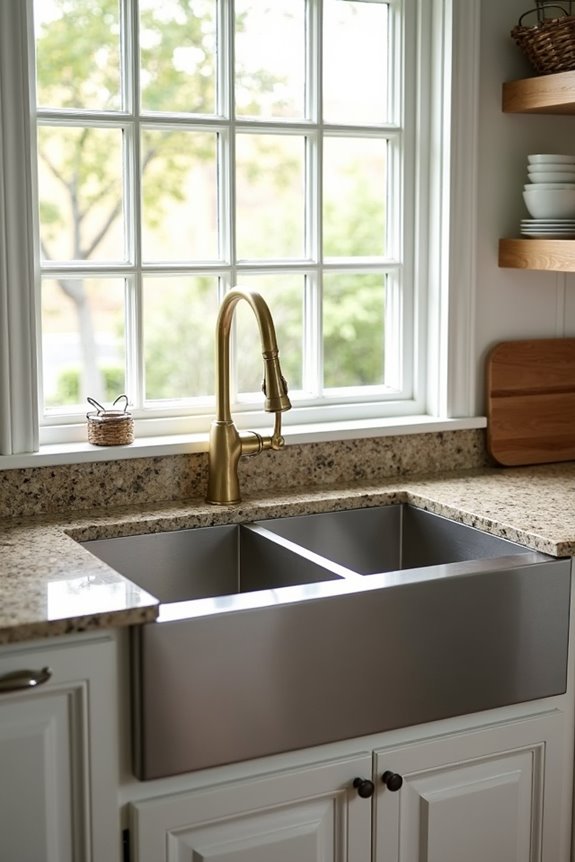
When you’re standing at your sink washing dinner dishes, do you wish you had a separate spot to rinse vegetables without moving everything around?
That’s where understanding your farmhouse sink options matters. A single bowl maximizes space for large pots and simplifies cleaning and maintenance. But a double bowl? It offers distinct advantages for work efficiency. You’ll wash in one while prepping in the other—no more juggling.
A single bowl maximizes space for large pots, while a double bowl separates washing and prepping tasks for better work efficiency.
Consider your kitchen workflow honestly. Heavy cooking means you’ll benefit from task separation. Check your base cabinet width too; 33″ accommodates most sinks nicely. Think about your pot size clearance needs.
Double bowls excel at water management by separating dirty dishes from food prep. Single bowls work best if you prioritize multitasking space and larger item clearance. Choose what matches your daily cooking rhythm.
5 Best Farmhouse Sinks Ranked: Features, Durability, Price
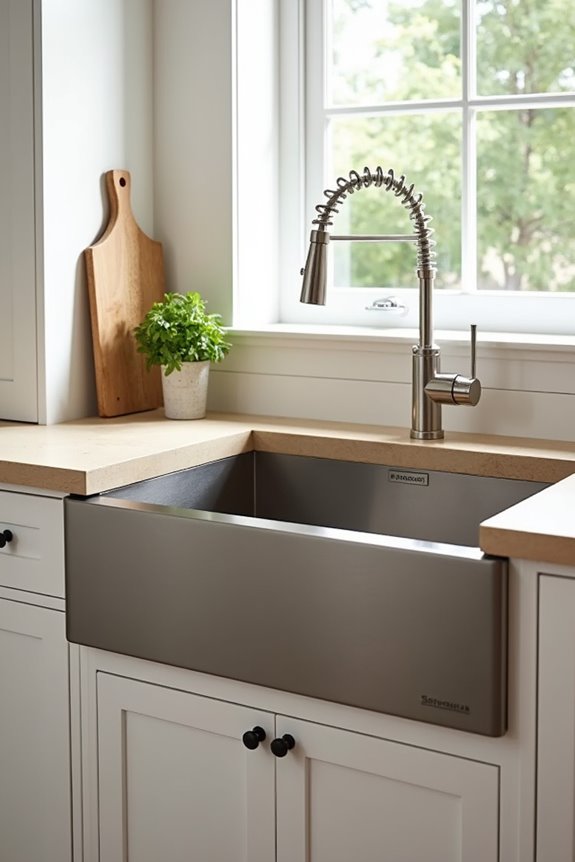
Now that you’ve figured out whether you need one bowl or two, it’s time to pick an actual sink. I’ll break down my top picks so you can find your perfect match.
Fireclay Winners: Bocchi and Ruvati dominate here. Their fireclay sinks feature durable enamel coatings fired at extreme temperatures—think 2,900°F for serious strength. You’re looking at resistance to stains and chips that’ll last years. Sizes range from 30″ to 36″.
Stainless Steel Option: Ruvati’s Roma Pro offers lighter weight and easier cleaning at a lower price. Fair warning: water spots happen.
Installation Reality: Most need professional help or cabinet reinforcement. Some workstation models include accessories that add value.
Price Range: Fireclay costs more upfront but outlasts budget options. Nantucket Sinks balances quality and value nicely.
Cabinet Compatibility, Installation, and Maintenance: Before You Commit
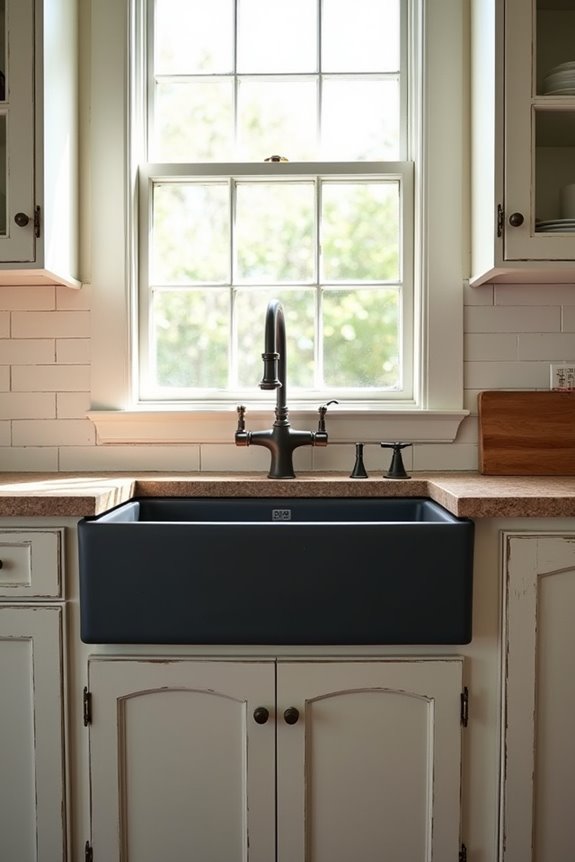
Before you fall in love with that gorgeous farmhouse sink, here’s the thing: your cabinet’s gotta cooperate. Cabinet compatibility matters.
Before falling for that farmhouse sink, remember: your cabinet’s gotta cooperate. Cabinet compatibility truly matters.
Size It Right
A 33″ sink typically fits a 36″ base cabinet, though some 30″ models need their own 30″ cabinet. Larger 36″+ options suit bigger kitchens better.
Installation Counts
Drop-in and self-trimming options? DIY-friendly. Undermount installations? You’ll probably want a pro, especially with heavy fireclay or enamelled cast iron. These materials need cabinet reinforcement.
Maintenance Reality
Stainless steel’s lighter and easier to maintain. Enamelled cast iron’s durable but heavy. Fireclay chips if you’re careless.
Your apron-front design affects countertop cutouts too. Measure twice, install once.