
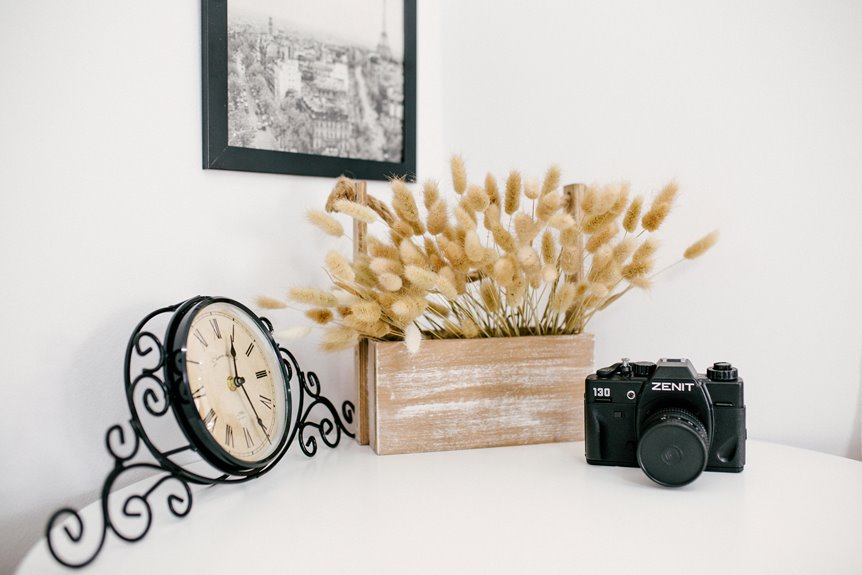
Start simple: paint your walls soft beige or cream, then layer in texture with shiplap or beadboard on one accent wall. Hunt thrift stores for vintage wood furniture and metal accents—I’ve found good pieces for under ten bucks. Mix old finds with clean modern pieces for balance. Add warm lighting like mason jar sconces, tuck storage into baskets, and swap seasonal pillows to keep things fresh. Stick with neutrals as your base, and your space will reflect thoughtful choices.
Start With Neutral Walls as Your Farmhouse Foundation
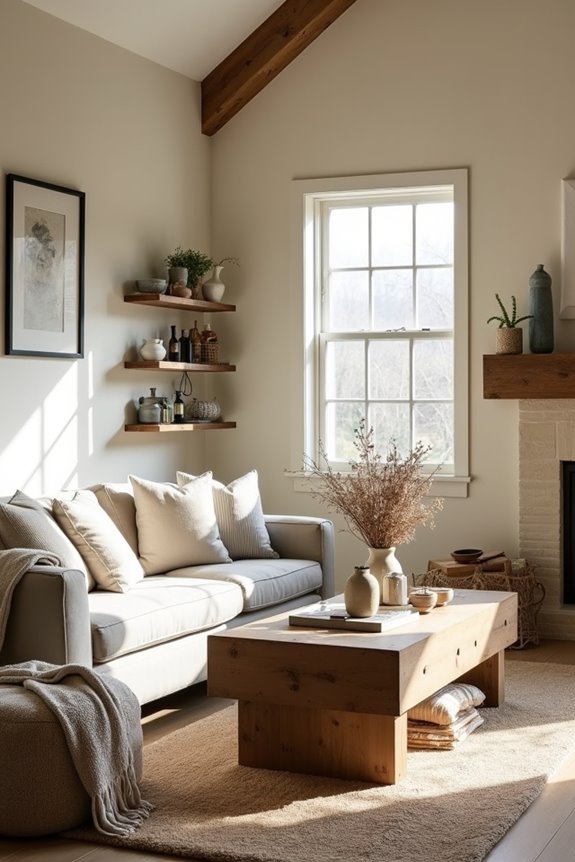
Why do so many farmhouse spaces feel calm and inviting? I’ve discovered it starts with your walls. I choose soft beige, cream, or gray as my foundation—these neutral tones create the perfect backdrop for everything else I add.
Here’s what I’ve learned: keeping walls in the same light color scheme throughout your home creates a connected environment. You’re not jarring your guests (or yourself!) with dramatic color shifts from room to room. Instead, you’re building a serene setting.
Light walls pair beautifully with natural wood and textiles. They let these textures shine without competing for attention. I’ve found that intentional pops of color feel purposeful when they rest against neutral backgrounds.
Starting here makes decorating easier. It’s the smartest foundation you can build.
Add Rustic Texture With Shiplap and Beadboard
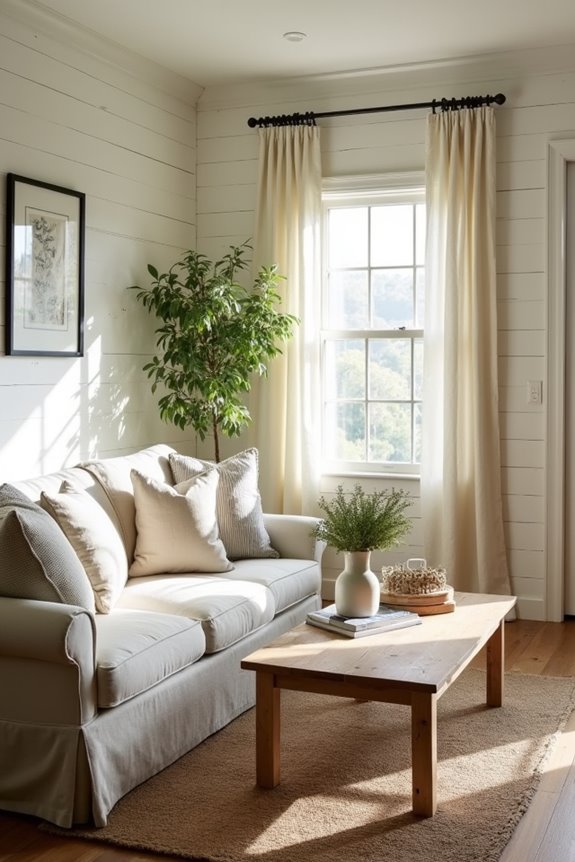
I’ve found that shiplap and beadboard add depth to a plain wall—and honestly, it’s easier than you’d think. When I started adding these textured elements to my bathroom and living spaces, I realized I could either go all-in with true rustic shiplap or begin smaller with beadboard to test the look before committing. The key is pairing these wall treatments with natural wood pieces and keeping your base colors neutral so the texture becomes the focal point.
Shiplap Installation Techniques
How do you turn a flat, boring wall into something with farmhouse character? Shiplap installation is straightforward.
Starting Your Project
Begin with one accent wall. Measure twice, cut once (I learned that the hard way). You’ll install horizontal boards with small gaps between them, which creates that signature textured look.
Material Choices
Real shiplap offers authenticity, but honestly? Painted plywood works beautifully too. Pre-primed shiplap saves time and money without sacrificing style.
The Installation
Secure boards horizontally using nails or a brad nailer. Keep gaps consistent. Paint everything in neutral tones—white, cream, or soft gray. This establishes that farmhouse aesthetic you’re after.
Starting small builds confidence. Once you’ve mastered one wall, you’ll feel ready to tackle bigger spaces.
Beadboard Design Applications
Beadboard brings authentic farmhouse charm to spaces where shiplap alone might feel flat. This classic material creates rooms with genuine character and personality.
Here’s what makes beadboard practical:
- Bathroom walls gain texture and subtle rustic detail with vertical tongue-and-groove panels
- Living areas look dimensional when you pair beadboard with shiplap for layered visual interest
- Dining rooms benefit from wainscoting paired with beadboard for traditional architectural appeal
- Accent walls work well for introducing texture without overwhelming your space
Start with a half-wall or single accent wall. Real beadboard’s vertical panels echo authentic farmhouse construction, giving your home genuine character. The material ties design elements together effectively.
Textural Depth And Warmth
Once you’ve got beadboard in place, you’ll notice something shifts in your space—suddenly it feels layered and real. That’s textural depth at work.
I’d recommend mixing materials strategically. Pair your beadboard with shiplap in living areas where natural light hits best. Add fabric through throw pillows and curtains. Include a plaster-like finish on an accent wall. These combinations create dimension without chaos.
Start small—maybe one textured wall per room. Gradually add more as you gain confidence. Pair everything with neutral colors like cream, soft gray, or warm white. This keeps things calm and cohesive.
The result? Your home feels welcoming and deliberate. You’re building a space that genuinely welcomes people in.
Mix Vintage and Modern Pieces for Timeless Appeal
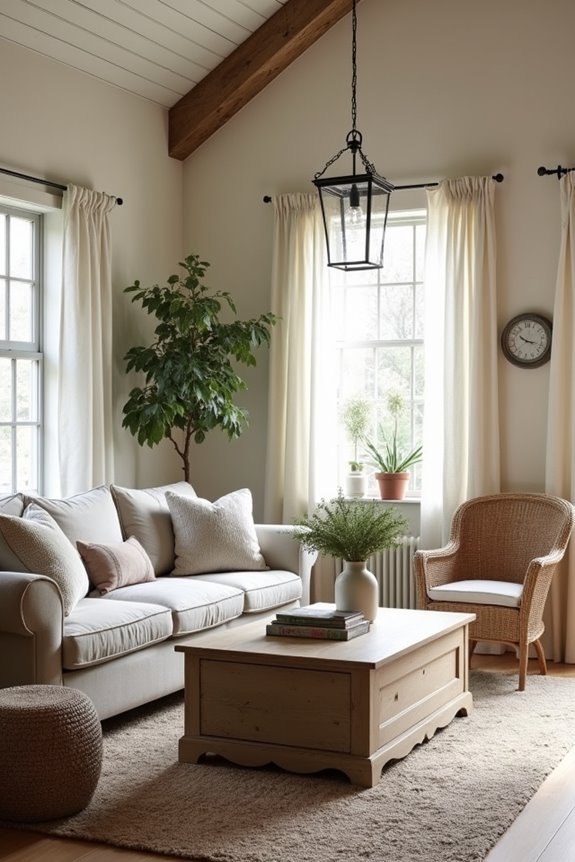
I’ve learned that blending old and new pieces creates farmhouse style that feels authentic rather than staged. When I pair a vintage flour sifter with sleek modern storage, or mix reclaimed wood shelving with contemporary brackets, I’m creating rooms that tell a story while still functioning well for my daily life. The key is letting both eras work together—not fighting each other—so your space has purpose and lasting appeal instead of looking like you just grabbed whatever was available at the thrift store.
Blending Eras for Authenticity
- Repurpose old items into functional decor, like displaying a vintage flour sifter on your kitchen shelf
- Pair distressed wooden doors with sleek modern furniture for balanced contrast
- Mix antique hardware with current cabinetry for authentic warmth
- Combine rustic wood accents alongside clean-lined contemporary pieces
When every vintage find serves a purpose, your design choices become grounded. You’re not just decorating—you’re creating spaces where practicality meets nostalgia. That’s when your home belongs to you.
Practical Vintage Integration
The beauty of blending old and new doesn’t stop at pairing a distressed door with modern furniture—it gets even better when you let vintage pieces actually work for you. THAT’S WHERE practical vintage integration truly shines.
I’ve discovered that repurposing thrifted finds gives your space real function. An old flour sifter becomes a charming storage accent. A weathered bench serves as both seating and character. Repainted dining tables tell stories while functioning perfectly.
The value emerges when vintage pieces earn their place through dual purpose. You’re not just decorating—you’re creating a home that works harder. These items blend eras naturally because they’re genuinely useful.
When you choose pieces with history, your farmhouse style feels authentic, not forced. THAT’S HOW you build a space where you truly belong.
Creating Timeless Visual Balance
How do you actually pull off mixing old and new without your room looking like a thrift store exploded? It’s all about balance and intentionality.
The key to farmhouse decor that feels cohesive is choosing pieces that serve a purpose. Here’s what works:
- Pair vintage wooden tables with sleek modern chairs
- Display antique bottles alongside contemporary artwork
- Use old doors as functional room dividers
- Mix reclaimed hardware with updated cabinet designs
When you blend eras thoughtfully, your space feels both timeless and lived-in. You’re not just collecting stuff—you’re creating a story. Each vintage item earns its place by being genuinely useful or visually striking. This approach keeps your farmhouse style from feeling stuck in the past while honoring what makes vintage pieces special.
Choose Reclaimed and Natural Wood Elements
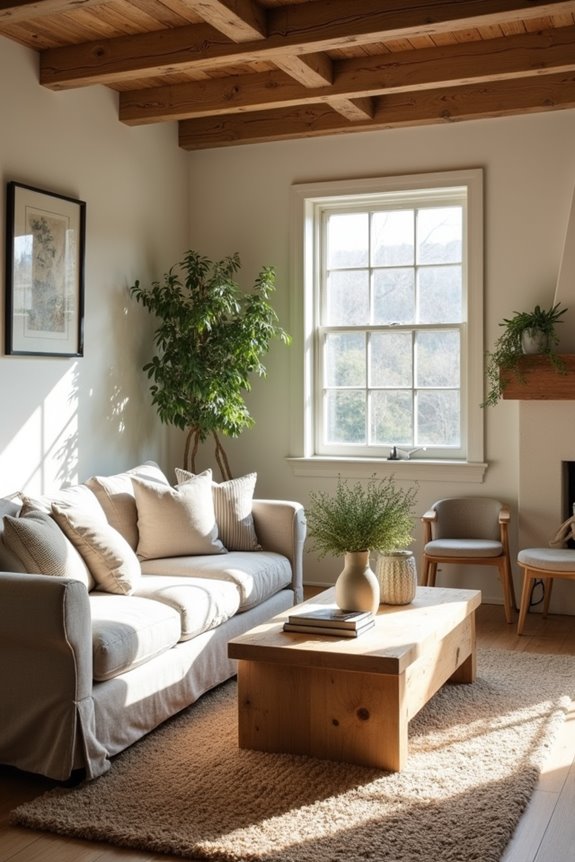
Reclaimed wood brings warmth, history, and character that new materials can’t replicate. Mixing different wood tones creates visual interest without feeling chaotic. Pair salvaged barn wood with metal fixtures or woven baskets for a balanced look. Distressed furniture pieces and antique wooden items provide authentic farmhouse vibes.
Scout local salvage yards for unique finds like old spindles or washboards. Use reclaimed wood for wall accents, shelving, or rustic signs. The imperfections are what make farmhouse style work.
Extend this aesthetic outdoors. Wooden porch railings and patio furniture create smooth transitions between inside and outside spaces. This approach builds the inviting home you’re seeking.
Pick Farmhouse Lighting Fixtures That Transform Rooms
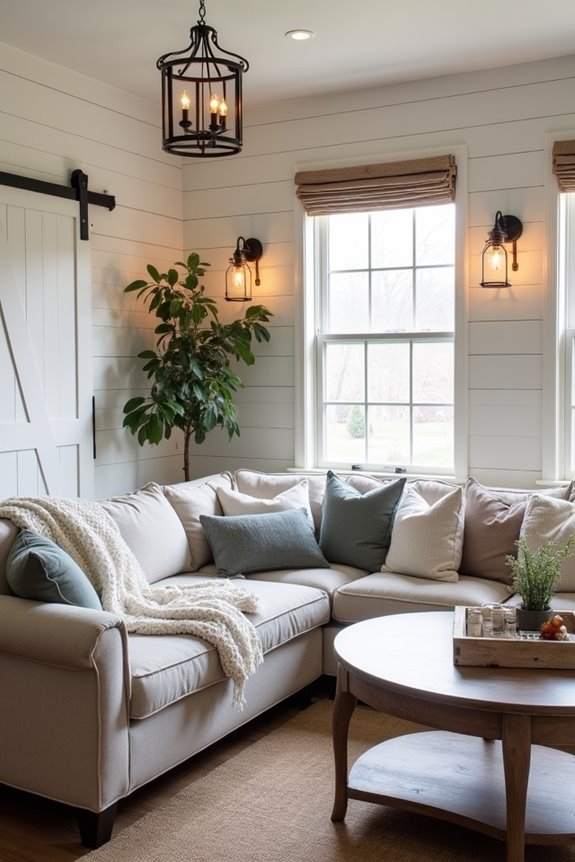
Swapping out a single light fixture can completely change how a room feels, and honestly, it’s easier than rearranging furniture. When I picked farmhouse lighting—think mason jar sconces or barn-style pendants—my whole space shifted from boring to cozy without me repainting a single wall. The right fixture works because it ties together your wood textures and rustic elements while actually making the room warmer, not just brighter.
Quick Style Updates
Want to give your entire room a farmhouse makeover without ripping out walls or buying new furniture? I’ve discovered that swapping lighting fixtures is one of the quickest ways to update your space.
Here’s what I’d focus on:
- Wagon wheel pendant lights over your dining table for instant rustic charm
- Blackened steel sconces flanking a mirror to add farmhouse decor sophistication
- Aged brass fixtures that pair beautifully with wood accents
- Warm white bulbs (soft color temperature) that create that inviting feeling
The best part? You don’t need an electrician’s license. Swapping ceiling or wall-mounted fixtures updates your entire vibe. I mixed pendant, sconce, and ceiling options throughout my home, and everything felt more connected. Your room will benefit from these changes.
Rustic Fixture Selection
Don’t overthink it. Pick fixtures that make you smile and feel right in your home. Trust your gut. The best farmhouse lighting is the kind that creates a room where you actually want to spend time.
Lighting as Design Element
Why do so many people underestimate the power of a single light fixture? I’ve learned that lighting changes your entire farmhouse space—instantly. It’s one of the quickest ways to refresh a room without major renovations.
Here’s what I’ve discovered about choosing the right fixtures:
- Warm finishes like wagon wheels and rustic metals create that cozy ambiance we’re all after
- Natural textures in your lighting complement your neutral palette beautifully
- Quick swaps shift your room’s mood noticeably
- Fixture selection influences the entire style and cohesion of your home
When I updated my farmhouse lighting, I noticed everything else fell into place. Your fixtures aren’t just functional—they’re design elements that bring your aesthetic together. This investment delivers results right away.
Paint Worn Timber Pieces to Anchor Your Color Palette
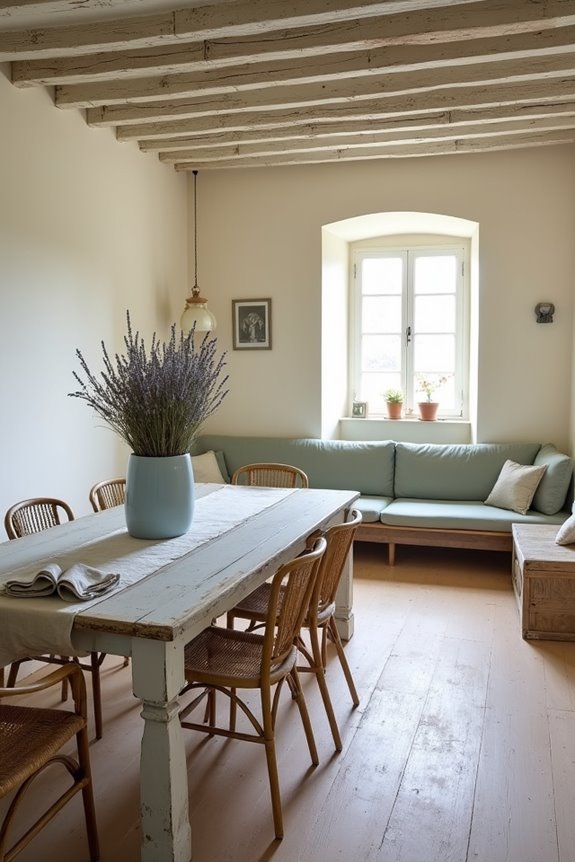
How many old wooden pieces are sitting in your garage or tucked away in a corner, looking tired but still sturdy? I’ve been there too. That’s where chalk paint made a real difference for me.
Here’s what I discovered: painting worn timber furniture works as an anchor for your whole room. It brings everything together while letting your accent colors stand out.
| Piece | Chalk Paint Color | Wall Tone | Result |
|---|---|---|---|
| Dining table | Soft cream | Warm white | Provides backdrop |
| Cabinet | Sage green | Neutral beige | Creates harmony |
| Bookshelf | Charcoal gray | Light gray | Modern farmhouse feel |
| Dresser | Dusty blue | Cream | Transitional anchor |
I started with a distressed dining table. One coat of chalk paint changed it into something that tied my whole farmhouse scheme together. The benefit? Minimal prep work. No sanding required. Just paint, and suddenly that tired piece becomes part of your design.
Embrace Distressed Furniture and Worn Hardware for Character
Once you’ve anchored your room with painted pieces, it’s time to lean into what makes farmhouse style so inviting: the beauty of imperfection. I’ve discovered that distressed furniture isn’t about things being broken—it’s about telling a story through worn edges and chipped paint.
Here’s what I’ve found works:
- Antique hardware on drawers and cabinets adds authenticity
- Visible wear patterns become design features, not flaws
- Old doors and windows create character walls that anchor spaces
- Repurposed vintage pieces function beautifully while showcasing history
When you combine distressed furniture with natural wood tones and neutral colors, your room feels lived-in and welcoming. I pair my worn pieces with practical storage solutions—that chipped cabinet doesn’t just look good; it actually holds my everyday items. That’s farmhouse style working for you.
Hunt for Vintage Finds at Thrift Stores and Auctions
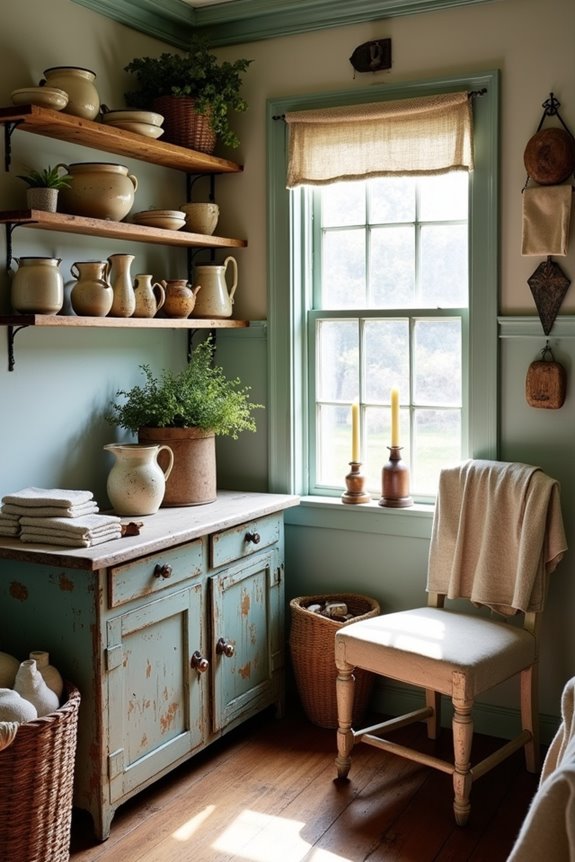
I’ve found some of my best farmhouse pieces by hunting through thrift stores and auction houses—places where genuine vintage treasures hide among the clutter. Whether I’m scouring estate sales on Saturday mornings or browsing local thrift shops during lunch breaks, I keep my eyes open for items with real history, like old wooden doors, vintage hardware, or weathered frames that tell a story. The trick is visiting these spots regularly and staying patient, because that perfect worn mirror or authentic barn wood shelf won’t wait around forever.
Thrift Store Shopping Strategy
Where do you find those gorgeous vintage farmhouse pieces on a budget? I’ve discovered that thrift stores are goldmines for authentic treasures. Here’s what I’ve learned works best:
- Visit regularly – New inventory arrives constantly, so I check back weekly for fresh finds
- Arrive early – The best pieces disappear fast
- Inspect carefully – Look past surface dirt; chalk paint can refresh almost anything
- Hunt strategically – Focus on wood furniture and metal accents that fit farmhouse style
I’ve scored good pieces for under $10. The key? Don’t rush your search. I space out my shopping over months, which keeps my decor cohesive instead of chaotic. You’ll develop an eye for potential. That weathered cabinet? Perfect for refreshing. Those mismatched chairs? They’re telling a story. Shopping locally for pre-loved items connects us to something real—pieces with history, not mass-produced duplicates.
Auction House Treasure Hunting
Beyond thrift stores, auction houses and farm sales offer excellent opportunities for sourcing farmhouse pieces. Local auctions provide access to old doors, vintage hardware, and reclaimed wood with history. These venues offer variety you won’t find in regular stores, plus reasonable prices that fit most budgets.
| Item Type | What to Hunt | Price Range | Condition |
|---|---|---|---|
| Furniture | Tables, chairs, cabinets | $15–$100 | Distressed okay |
| Hardware | Knobs, hinges, brackets | $2–$15 | Worn is perfect |
| Signage | Old signs, metal pieces | $5–$50 | Rusty works |
| Windows | Frames, glass panes | $10–$75 | Imperfect ideal |
The advantage is sourcing authentic, non-mass-produced pieces while supporting local sellers. Hunt regularly, examine items carefully, and consider pieces that need paint or repair. Your collected aesthetic will develop through these intentional choices.
Identify Quality Vintage Pieces Worth Buying
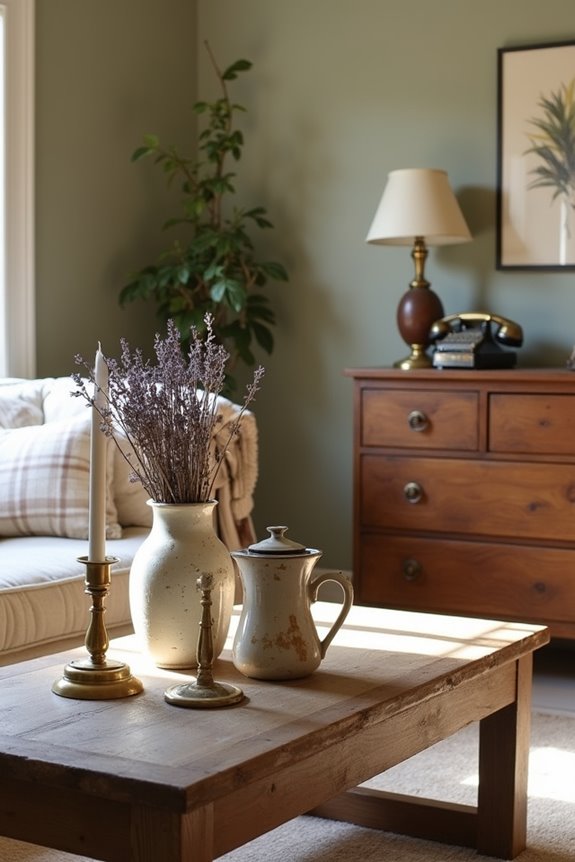
How do you know when you’ve found a genuine treasure versus just old stuff? Real vintage pieces tell stories through their construction and history.
When I’m hunting, I look for:
- Solid wood construction built to last, not flimsy particle board
- Functional hardware that still works—hinges that move, latches that catch
- Authentic patina showing genuine age, not artificial distressing
- Craftsmanship details like hand-carved edges or dovetail joints
I prioritize items with purpose. A vintage flour sifter or washboard isn’t just decorative—it actually works in my kitchen. These pieces blend practicality with charm.
I also check that my finds coordinate with my neutral base palette. A weathered door or distressed window frame should integrate into my existing decor, creating that farmhouse look I’m after.
Arrange Open Shelves So They Don’t Look Cluttered
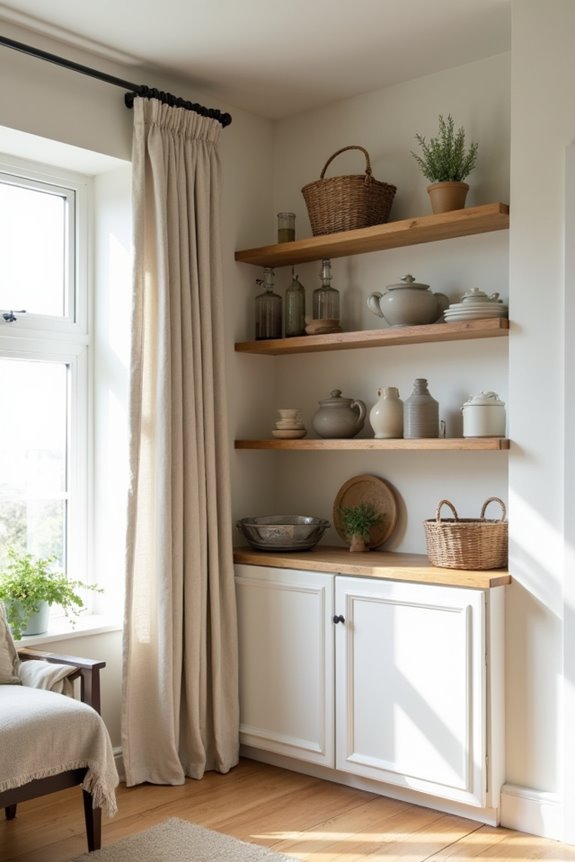
Once you’ve gathered those quality vintage finds, the real challenge becomes displaying them without making your shelves look like a thrift store exploded. Open shelves work best with restraint. Group items in odd numbers—three vintage books, five glass jars, three woven baskets. Vary heights so your eye travels naturally across the shelf. Pair textures intentionally: rough wood signs next to smooth glass. Stick with neutrals and natural tones as your foundation, then add one or two small pops of color. Leave breathing room. Your shelves should feel organized and purposeful, not crammed. When you step back, you should see negative space as clearly as you see your treasures. That’s what makes this approach work.
Keep Things Hidden With Baskets and Reclaimed Storage
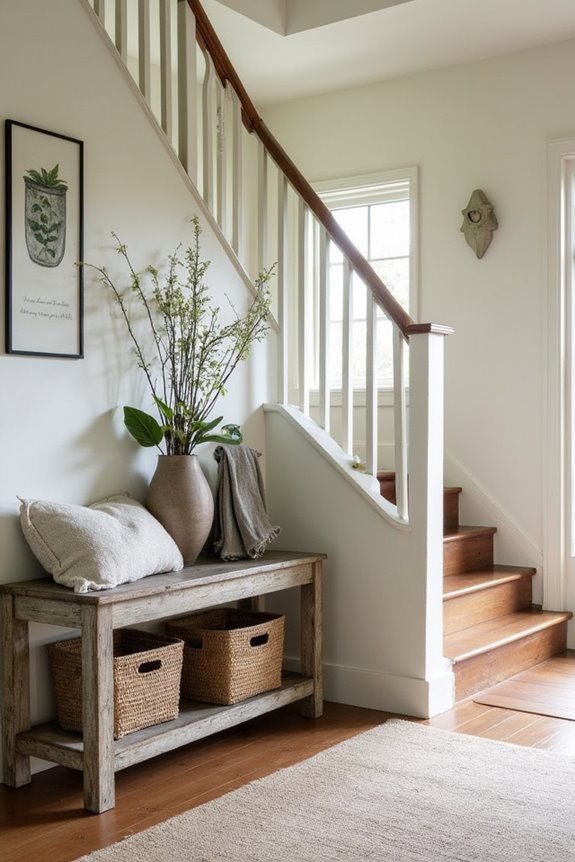
What keeps a farmhouse home serene instead of chaotic? Storage baskets and reclaimed crates. Hidden storage turns cluttered spaces into organized rooms.
Here’s what I use:
- Wire baskets tucked into mantels and cubbies for daily items
- Reclaimed crates styled as decorative accent pieces
- Storage benches with hidden compartments for blankets and pillows
- Matching basket sizes across rooms for a unified look
I pair my storage baskets with open shelving and mason jars. This combination keeps smaller items organized while maintaining the clean farmhouse aesthetic. Weathered wood signs and vintage containers disguise what’s actually inside—your stuff stays hidden, but your décor stays charming. The key? Choose matching finishes so everything looks deliberate, not like you’re just stuffing things away.
Refresh Your Farmhouse Decor With Seasonal Swaps
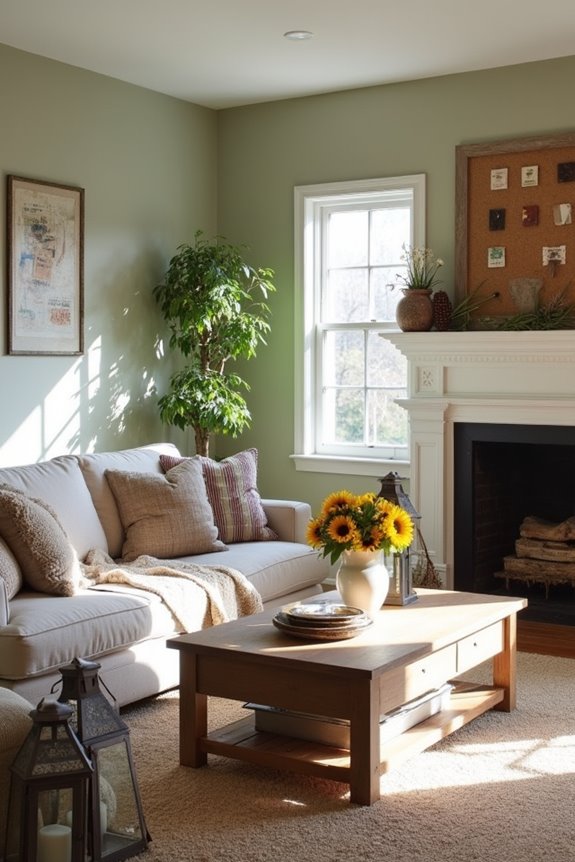
Tired of your farmhouse looking exactly the same month after month? Seasonal swaps keep things fresh without overwhelming your space.
Here’s what I do: swap out throw pillows in spring pastels, then switch to cozy fall tones come September. It’s that simple. Chalk paint works wonders on furniture too—I’ve refreshed pieces in hours with minimal prep work.
Rotate accent pieces like vintage signs, mason jars, and metal accessories throughout the year. These small changes shift your vibe noticeably. I hunt thrift stores and yard sales for affordable finds that match my neutral walls, maintaining that cohesive farmhouse feel I love.
Plan updates gradually across months. Gentle, staged refreshes feel manageable and genuinely engaging.
Use Soft Accent Colors Like Aqua, Navy, and Blush
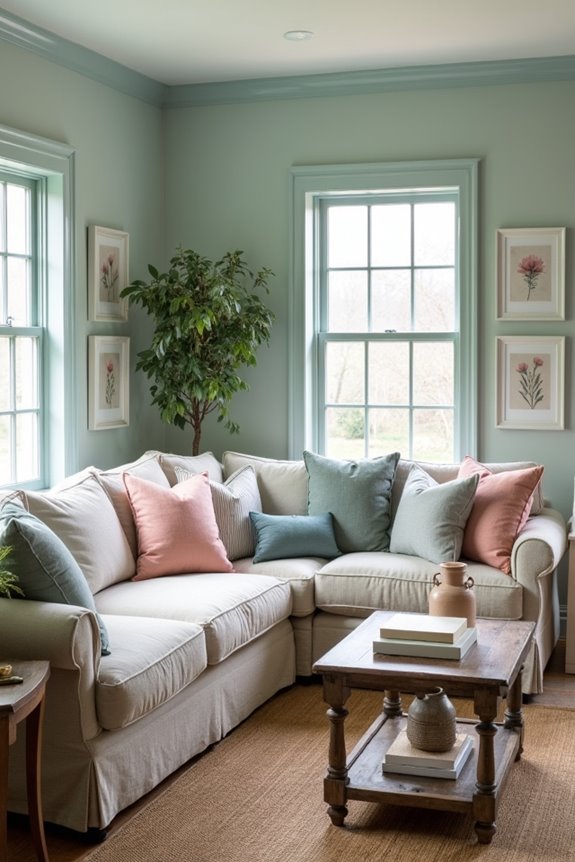
How do you add personality to your farmhouse without abandoning that peaceful, neutral foundation you’ve worked hard to build? I’ve found that soft accent colors are your concealed advantage for wall decor that feels both welcoming.
Here’s what works well:
Soft accent colors—aqua, navy, blush, and black—add personality while preserving your peaceful farmhouse foundation.
- Aqua walls create a calm backdrop that supports cohesive farmhouse aesthetics
- Navy blue accents add rich contrast without overwhelming neutral spaces
- Blush pink touches bring warmth and sophistication to your rooms
- Black details modernize your look while hiding everyday smudges
I started by painting one accent wall in soft aqua. The difference? Immediate. The color invited guests in rather than demanding attention. Then I layered navy blue through wall decor and accessories. That’s when everything came together.
These soft tones let your farmhouse personality show while maintaining that peaceful foundation you’ve created.
Plan Your Farmhouse Refresh on a Pinterest Board
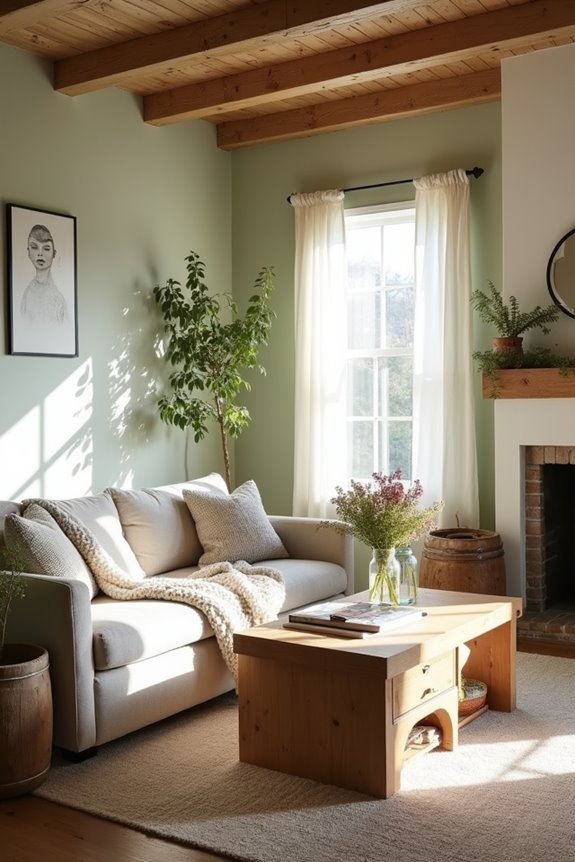
Once you’ve settled on those soft accent colors, you’ll want to pull everything together in one place—and that’s where a Pinterest board becomes your best planning tool.
I created my “Plan Your Farmhouse Refresh” board to organize all my farmhouse decor ideas without drowning in browser tabs. Here’s what I organized:
| Board Section | Purpose |
|---|---|
| Wall Colors | Neutrals, aqua, navy references |
| DIY Chalk Paint | Budget-friendly project ideas |
| Repurposed Furniture | Creative transformation inspiration |
| Thrifted Finds | Antique stores, yard sales, Facebook Marketplace |
| Room Plans | Living room, kitchen, dining layouts |
This visual roadmap keeps me focused on authentic pieces and materials like reclaimed wood and shiplap. When you’re hunting thrift stores or scrolling Facebook Marketplace, you’ll know exactly what fits your vision. Your board becomes your personal farmhouse style guide—helping you stay consistent while keeping costs down.