
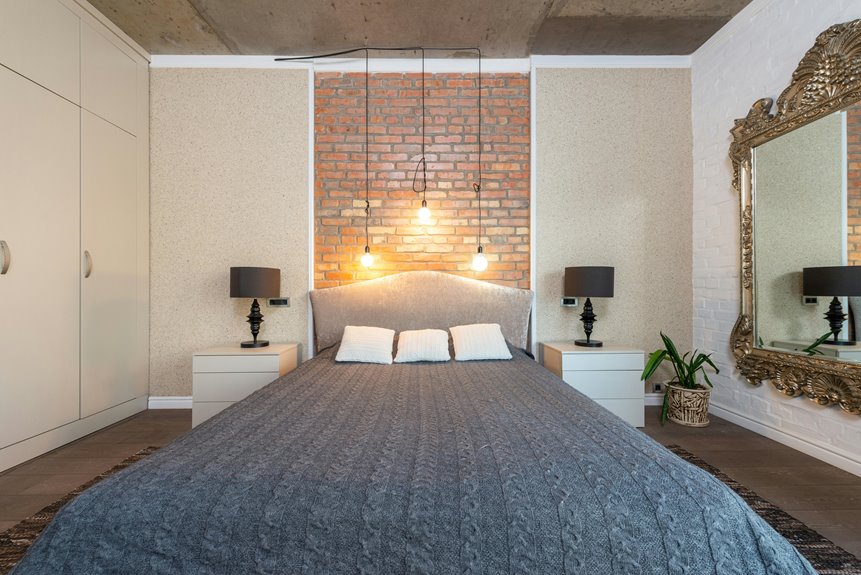
I’ve learned that decorating a small bedroom starts with your bed as the room’s anchor—think built-in storage underneath or a wall-mounted headboard with shelves. Then I’d pick a light color palette to make space feel bigger, use mirrors to bounce natural light around, and swap bulky nightstands for wall-mounted lighting. Stack multifunctional furniture like dressers that double as vanities. Finally, create visual zones with textiles and vertical storage that keeps floors clear.
There’s actually much more strategy behind making tiny spaces feel spacious and personal.
Start With Your Bed
Your bed should be your room’s main hero. I’d recommend a divan or built-in bed with integrated storage underneath—those hidden compartments are useful for stashing extra blankets and seasonal clothes. A built-in headboard works well. It embeds your bed right into the wall, which makes the whole room feel organized and put-together.
Can’t do built-in? No problem. Even a regular bed with drawers underneath helps you reclaim precious floor space. That’s what belonging in a small room really means: maximizing every inch.
Choose Your Color Story: Light or Rich
How do you want your small bedroom to feel—open and airy, or cozy and intimate?
Your color story sets the entire mood. A light palette works well for space optimization, making your room feel bigger than it actually is. I pair soft neutrals with warm oak flooring and golden accents—think mustard touches or warm whites. Add mirrors and glossy finishes to reflect light everywhere.
If you prefer richness, go deeper. Feature walls in jewel tones create that intimate atmosphere. Balance darker hues with lighter elements so you don’t feel trapped. Neither approach is wrong—it’s about what makes you feel comfortable. Your color story becomes the foundation for everything else, so choose what speaks to your soul.
Layer Pattern and Texture Strategically
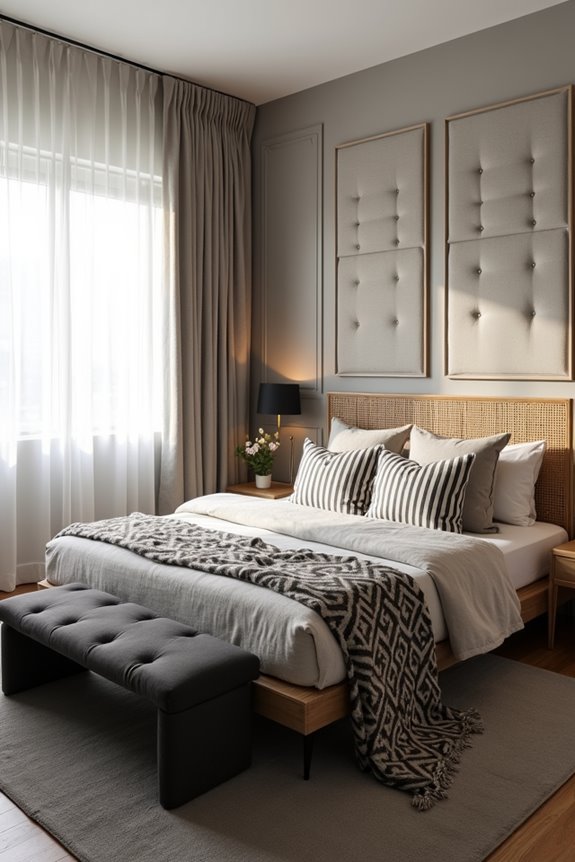
I’ve learned that adding patterns and textures to a small bedroom isn’t about throwing everything at the walls—it’s about being intentional with what you choose. When I started layering a patterned wallpaper with textured rugs and soft throws, I realized the key was keeping everything connected through color and scale so the room felt comfortable, not chaotic. You can absolutely make your small space feel rich and dimensional by mixing tactile fabrics like velvet and grasscloth, as long as you’re thoughtful about how they work together.
Bold Patterns for Impact
Why settle for bland walls when a bold pattern can completely change your small bedroom? I’ve learned that strong colors and large-scale prints create instant atmosphere without taking up physical space. Here’s what I recommend:
- Use wallpaper or paint on one accent wall to anchor the room without overwhelming it
- Repeat your chosen print across curtains and bedding for cohesive decor
- Layer textures with patterned wallpaper, textiles, and rugs to add visual depth
- Balance boldness by pairing patterns with light furniture and mirrors that reflect light
The trick? Don’t go overboard. I initially covered everything in patterns (rookie mistake). Now I choose one main pattern and let it stand out. This approach changes your small space into a room that feels distinctly yours while staying open and inviting.
Texture Through Layered Fabrics
What makes a small bedroom feel luxurious and layered without overcrowding it? Texture through layering.
I start by choosing a neutral color base—think soft grays or warm whites. Then I layer textiles strategically: a grass cloth wallpaper, velvet bedding, linen curtains, and a cozy throw blanket. Each piece adds depth without visual chaos.
The trick? I touch multiple spots in the room. A textured rug grounds the space. Soft pillows invite you in. A draped throw changes the chair into something inviting.
I keep my furniture simple so textures shine. One accent color—maybe sage green—ties everything together nicely.
These multi-function textiles do double duty: they’re cozy *and* practical. You’re not just decorating; you’re building a space that actually feels like home. That’s the real luxury.
Cohesive Pattern Coordination Methods
When you’re working with limited square footage, how do you layer patterns without making the room feel chaotic? Cohesive pattern coordination works well for this. Here’s what actually works:
- Pick one dominant color to anchor your unified color story across walls, curtains, and bedding
- Mix pattern scales—pair large florals with small geometric prints to create visual interest
- Balance bold with calm—surround statement patterns with neutral furniture and minimal clutter
- Repeat strategically—use the same pattern across multiple surfaces to reinforce connection
Texture layering deepens this approach. Combine woven grass cloth walls with coordinating linen curtains and a patterned duvet. The repetition makes everything look deliberate rather than random. Add reflective surfaces and soft lighting to enhance the interplay without overwhelming your small space.
Harness Natural Light First
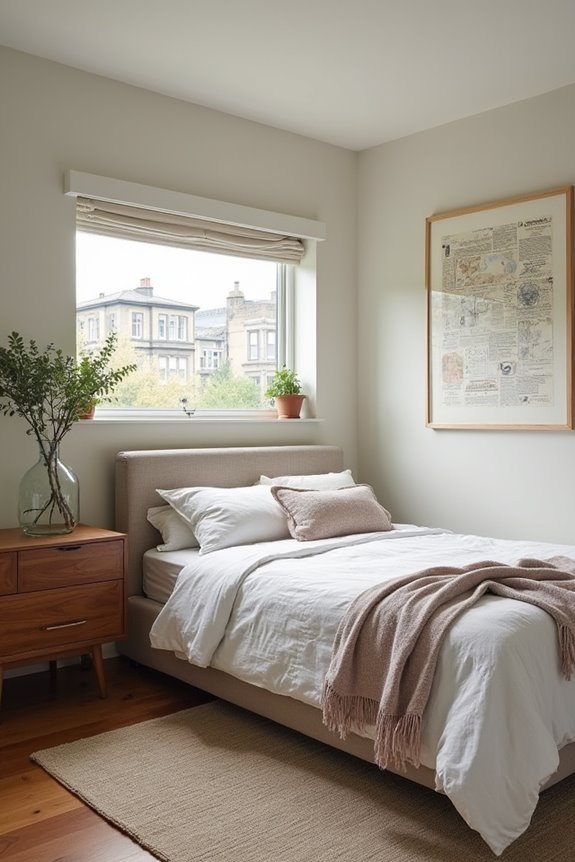
The right lighting can really change how your small bedroom feels—and I’m not just talking about fancy lamps.
I’ve learned that natural light is your best friend here. Start by keeping your windows clear with sheer curtains that let sunlight pour in without blocking it. Hang mirrors opposite your windows—they help bounce light around the room effectively.
Next, embrace a clutter-free space. When you remove unnecessary items, light travels freely across your room, making everything feel bigger. I arrange my multi-use furniture strategically so nothing blocks those precious light rays.
For evenings, position lamps at different heights on walls and shelves. This mimics natural light’s flow and saves floor space. Use light, neutral wall colors too—they reflect what little light you have, multiplying its impact throughout your room.
Add Wall-Mounted Lighting
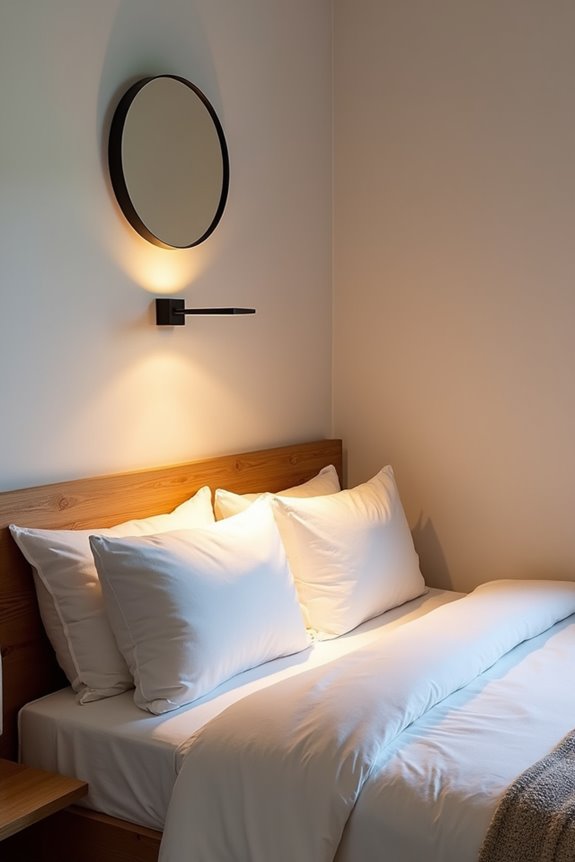
Here’s where I stopped wasting precious surface space on clunky bedside lamps—wall-mounted fixtures work well for tiny bedrooms. Swing-arm sconces flanking my bed provide adjustable, focused light without using any nightstand real estate, and they look sleeker than my old lamp collection. You can even find fixtures that integrate directly into your headboard, which gives you both style and function from one installation.
Space-Saving Bedside Solutions
Ditching your bedside table lamp might feel like losing a friend, but wall-mounted lighting actually frees up precious real estate in a small bedroom. I’ve found that these space-saving bedside solutions change how I use my nightstand—finally, room for a book, water glass, and maybe even a plant.
Wall-mounted lighting gives you:
- Swing-arm sconces that adjust for reading without taking up surface space
- Even illumination from fixtures positioned equally on both sides
- Slim, unobtrusive designs that don’t visually clutter tight corners
- Clear pathways around your bed for safer nighttime navigation
Positioning these lights at matching heights creates balanced brightness and makes your room feel more open. I’ve reclaimed my bedside real estate while gaining better-directed light. It’s a practical solution for small spaces.
Lighting Integrated With Headboards
Wall-mounted sconces beside your bed offer genuine space-saving illumination. You get balanced ambient light at equal heights without consuming precious surface real estate. Swing-arm fixtures work well for reading or getting ready, directing light exactly where you want it.
Combining ambient, task, and accent lighting in one zone gives you flexibility. Slim, low-profile fixtures with neutral finishes keep your room feeling open and organized. No more cluttered nightstands. Just clean lines and exactly the light you need when you need it.
Wall-mounted lights eliminate those bulky nightstand lamps that take up valuable space. This approach works particularly well in bedrooms where square footage is limited. The fixtures mount directly to the wall or headboard structure, freeing up surface area for other essentials.
Headboard-integrated lighting provides practical benefits beyond aesthetics. You can position task lighting for reading without disturbing a sleeping partner. Ambient lighting creates a balanced glow throughout the room. Accent lighting can highlight architectural details or artwork.
Build Vertical Storage
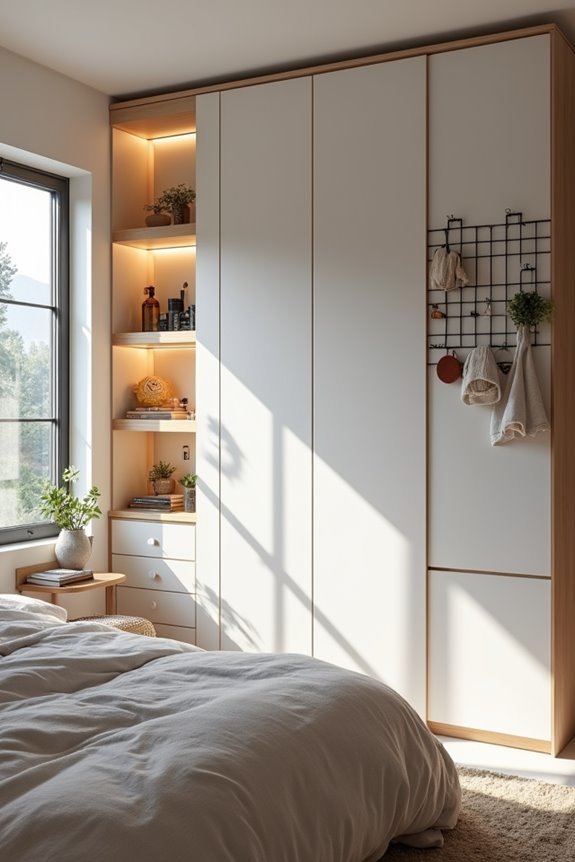
- Floor-to-ceiling built-ins maximize every inch without eating into your walking space
- Wall-mounted storage beside the bed replaces clunky nightstands completely
- Shelves above the bed display your favorite items while keeping floors clear
- Tall wardrobes with pull-out organizers and labeled bins keep small stuff accessible
The real trick? I chose finishes matching my wall colors. This makes everything blend together, creating an airy feel despite substantial storage. You’re not sacrificing style for function—you’re gaining both. Your small bedroom becomes organized and personal.
Choose Furniture That Multitasks
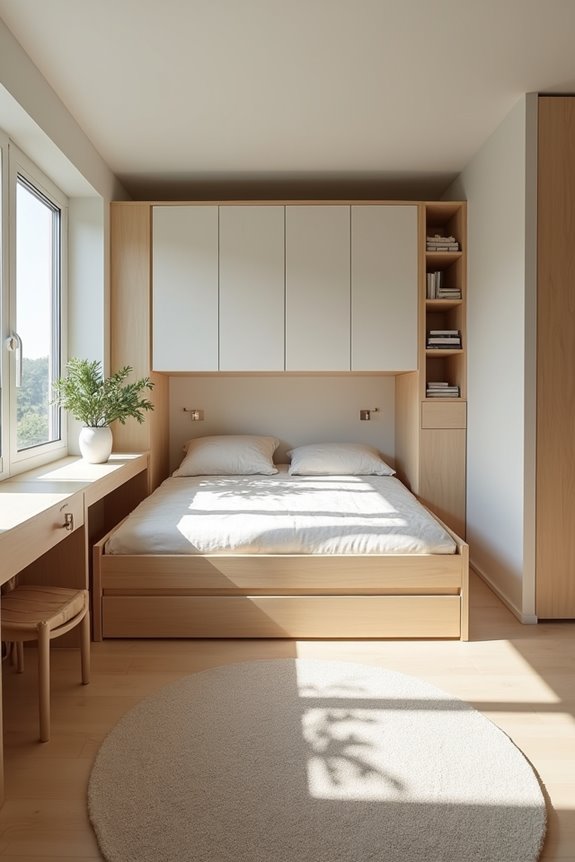
How much floor space are you actually wasting on furniture that does just one thing?
I realized I was. That’s when multifunctional furniture changed my small bedroom. A dresser that doubles as a vanity? Worth it. A desk that pulls double duty as a nightstand? I’m here for it.
Storage optimization happens naturally when you choose pieces with purpose. I paired my wall-mounted headboard with built-in shelves and drawers. Suddenly, my sleeping area became my command center for organization.
Consider a day bed for seating during the day and sleeping at night. Or a dresser with a mirror for grooming and dressing. Space-saving design isn’t about buying less—it’s about buying smarter. Every piece I added now earns its place. That’s what belonging in a small space really means.
Create Distinct Zones in Tight Spaces
When you’ve got limited square footage, your bedroom needs to work harder than most rooms. Zoning creates organization in a cramped space. Here’s how to do it:
- Use textiles strategically. A curtain behind your bed or a contrasting rug separates your sleeping area from your work zone.
- Add wall-mounted lighting. Sconces above your desk and different lights near your bed let each zone function independently.
- Go vertical with storage. Shelves above your bed create visual division without using floor space.
- Install a window seat. This multi-functional furniture piece provides lounging space and hidden storage.
When zones feel distinct, your small bedroom stops feeling cramped.