
Start with whites and creams to anchor everything, then layer in warm wood tones and natural textures like jute and linen—they’re your glue between styles.
Add weathered furniture, a slipcovered sofa, and maybe some shiplap or barn doors for that farmhouse charm.
Stick to one focal piece per wall and a handful of coastal accents (think driftwood or shells) so it doesn’t feel cluttered.
Balance breezy lightness with cozy warmth, and we’ll show you exactly how to pull it off room by room.
What Makes Coastal Farmhouse Different From Either Style Alone
Have you ever felt stuck choosing between coastal and farmhouse styles because you loved pieces from both?
Torn between coastal and farmhouse? Blend them thoughtfully to enjoy breezy seaside charm with warm farmhouse comfort.
I get it. Here’s what makes coastal farmhouse special: it takes the best from each style without the drawbacks. Pure coastal can feel too beachy and temporary. Pure farmhouse sometimes leans too heavy and dark. Together? They create something balanced.
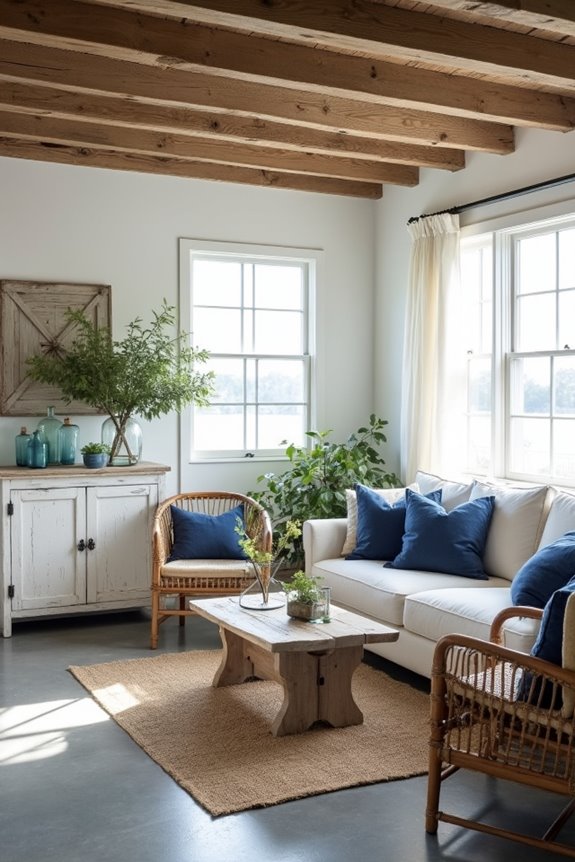
Coastal farmhouse uses neutral foundations—think sandy beiges and whites—that anchor your space. Then you layer in coastal touches like shells and lighthouses alongside farmhouse staples like distressed wood and barn doors. Both styles share a relaxed, unpretentious vibe.
You’re not choosing one aesthetic anymore. You’re blending them thoughtfully. This hybrid approach lets you enjoy breezy seaside charm while keeping that warm, inviting farmhouse feeling. You get the best of both worlds without the commitment headaches.
Start With a Neutral Foundation: Whites, Creams, and Warm Tones
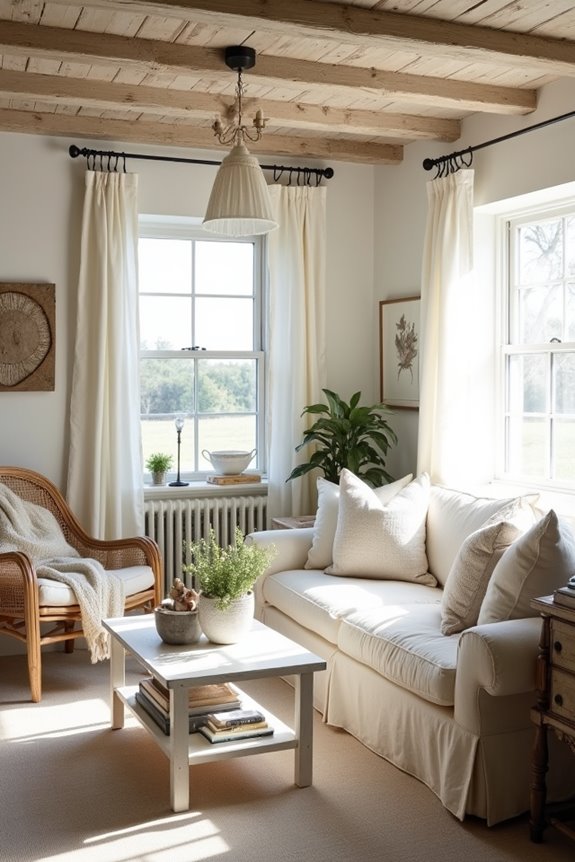
When I started mixing coastal and farmhouse styles in my own home, I realized that whites, creams, and warm beiges worked well together—they let both design personalities exist without competing. These neutral tones create a calm backdrop that allows you to highlight coastal blues through pillows and artwork, then layer in farmhouse warmth with wooden accents and natural textures. Think of your neutral foundation as a blank canvas: it keeps the space consistent while giving you the flexibility to swap out accessories as your preferences shift.
Whites and Creams Create Cohesion
Why do so many coastal and farmhouse homes feel calm and connected instead of mismatched? The answer is straightforward: whites and creams do the heavy lifting.
I’ve found that starting with these neutral tones creates an invisible thread linking both styles together. When I painted my walls cream and chose a white-washed dresser, suddenly my nautical pillows and vintage farmhouse signs belonged together rather than clashing.
Think of whites and creams as the glue. They let your coastal and farmhouse pieces breathe without competing for attention. A white shiplap wall pairs beautifully with both a weathered wooden shelf and pale blue beach-inspired accents.
This foundation isn’t boring—it’s strategic. You’re building a cohesive space where every element belongs, creating that peaceful, connected feeling you’re after.
Warm Tones Add Farmhouse Character
Now that you’ve got your whites and creams locked in place, it’s time to layer in warmth—and that’s where farmhouse really shines. I’m talking warm-toned woods that make a space feel lived-in and loved. Think honey, amber, or light chestnut furniture and flooring. These tones bring farmhouse style without drowning out coastal lightness—it’s the balance that makes everything work together.
| Wood Tone | Best For | Effect |
|---|---|---|
| Honey | Dining tables | Inviting warmth |
| Amber | Flooring | Grounded foundation |
| Light chestnut | Shelving | Subtle richness |
Pair these woods with cream walls and natural beams. You’ll notice how they bridge coastal and farmhouse styles beautifully. It’s straightforward—just let the wood do the heavy lifting while keeping everything else light.
Neutral Backdrops Showcase Coastal Accents
How do you build a space that feels both breezy and grounded? Start with a neutral backdrop of whites, creams, and warm beiges. This foundation becomes your canvas—letting coastal accents like blues, seafoam, and coral stand out without clashing.
Neutral walls make everything easier. They showcase coastal textures—rattan, jute, wicker—without creating visual chaos. Your large furniture pieces (sofas, chairs, tables) anchor the room in soft, neutral tones, giving you flexibility to swap accessories seasonally.
This approach lets you layer color thoughtfully. Add navy throw pillows, sea-glass vases, or turquoise accents whenever you want. Light natural woods or white-painted finishes complement driftwood-inspired details perfectly. Your neutral backdrop stays timeless while your coastal personality comes through naturally.
Build Depth With Textured, Natural Materials: Jute, Linen, and Distressed Wood
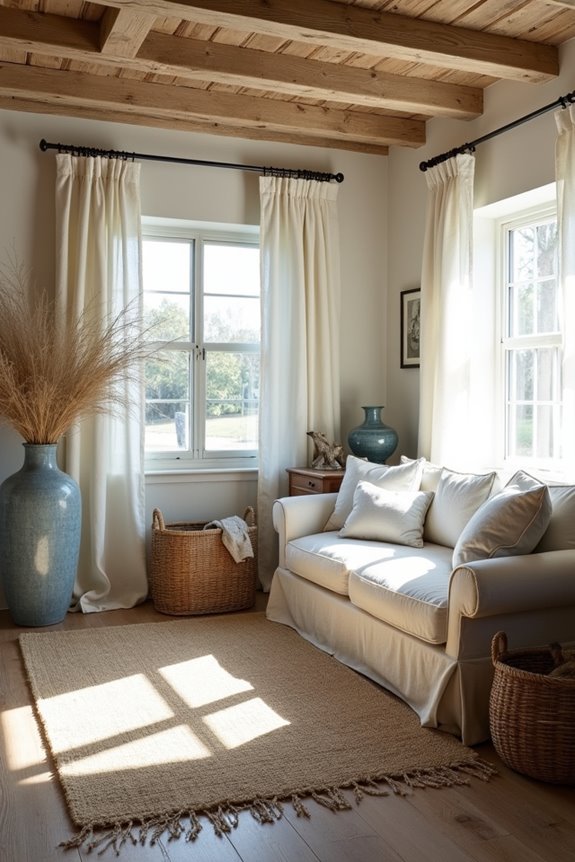
Now that you’ve established your neutral base, here’s where layering textures creates depth—I’m going to show you how combining materials brings dimension and personality to a flat room. You’ll want to start with a jute rug as your anchor (they’re durable and work well with coastal-farmhouse aesthetics), then build upward with linen upholstery and distressed wood pieces that add visual variety without demanding attention. Think of it like this: each textured layer—whether it’s a woven basket, weathered beam, or soft throw blanket—contributes another layer of detail that makes your space feel deliberate and lived-in.
Jute Rugs For Durability
Want to add warmth and texture to your living room on a budget? Jute rugs work well for this purpose. Their tightly woven fibers handle high-traffic areas effectively—entryways, living rooms, and other spaces that see regular use. They’re durable and long-lasting.
Here’s what makes them suitable for coastal-farmhouse style: their natural tan tones create a neutral base that works with whites, beiges, and blues. Pair them with linen textiles and distressed wood for layered texture that feels deliberate and comfortable.
To keep yours looking fresh, stick with low-pile options and avoid heavy stains. Simple, minimal patterns maintain that timeless quality. Jute rugs deliver durability without sacrificing the relaxed aesthetic you’re building.
Distressed Wood Visual Interest
The real appeal of coastal farmhouse style? Distressed wood that tells a story. I’ve found that weathered surfaces—with their chipping paint and visible grain—create a sense of comfort that new furniture simply can’t match. They age gracefully, becoming more distinctive over time.
| Element | Purpose |
|---|---|
| Distressed beams | Anchor rooms |
| Weathered shelving | Display focal points |
| Worn tables | Gather spaces |
| Ship-lapped walls | Add texture |
| Whitewashed paneling | Brighten rooms |
| Natural wood grain | Create character |
When I pair these pieces with light colors—whites, soft blues, sand tones—the space stays airy. I balance the visual weight by adding linen textiles and brass accents. The coarse texture of jute against smooth wood? That’s where depth happens. You’re not just decorating; you’re building a home that feels lived-in and welcoming.
Layering Linen And Textures
Where does real depth come from in a coastal farmhouse room? It’s all about layering textures that feel real and touchable.
When I combine natural materials, my space shifts. Here’s what I do:
- Mix flat-weave jute rugs with linen slipcovers for soft contrast
- Pair distressed wood surfaces with clean, crisp curtains
- Add woven baskets and textured throw pillows throughout
- Incorporate driftwood elements as subtle coastal accents
These layered textures create visual interest without feeling overdone. I balance everything with light, neutral tones—sand, seafoam, and touches of navy keep things cohesive. The key? Mixing old and new pieces.
Coastal farmhouse style becomes enduring when you let natural materials speak for themselves. You’re building a space that belongs to you.
Select Furniture That Merges Both Styles: Slipcovered Sofas, Weathered Tables, and Rustic Seating
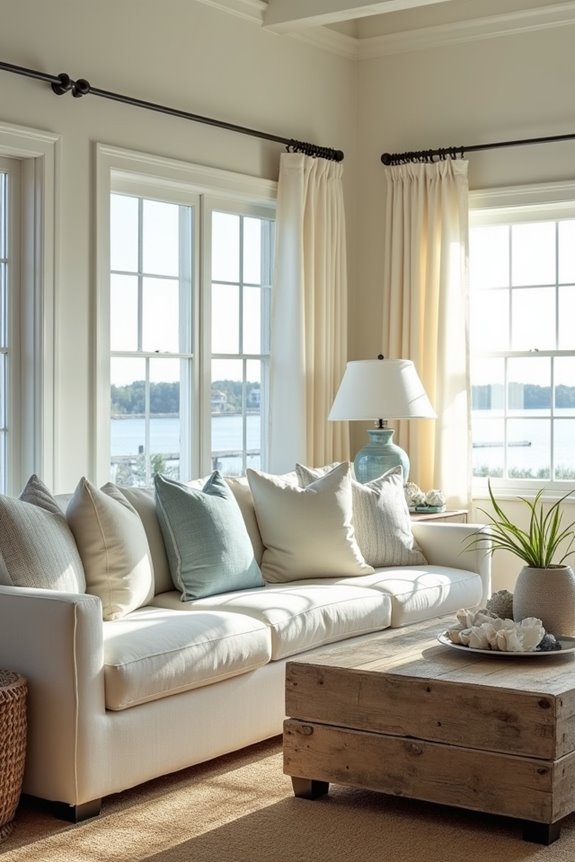
Several smart furniture choices can bridge that gap between coastal and farmhouse design, and starting with a slipcovered sofa makes everything else fall into place. I’d pick neutral tones like white, ivory, or beige—they’re the foundation of this style combination. Pair that with weathered wood tables featuring light finishes and subtle distressing. They feel warm and sturdy without looking heavy. Then add rustic seating like wicker chairs alongside upholstered pieces. This combination gives you that blend of cozy farmhouse charm with breezy coastal vibes. The key? Let natural textures do the work through jute rugs and linen cushions. You’re creating a space that feels both welcoming and refreshingly light.
Anchor Your Space With Shiplap, Barn Doors, and Exposed Beams
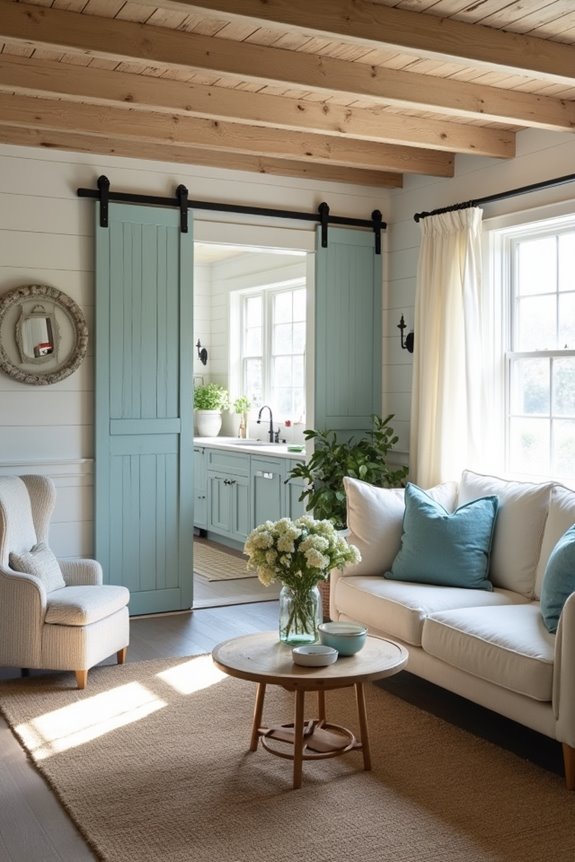
How do you create a room that feels anchored? I’ve found that shiplap, barn doors, and exposed beams do exactly that. These architectural features work together to give your space personality and depth.
Here’s what works best:
- Install shiplap on accent walls for subtle texture without overwhelming the room
- Add barn doors to closets or pantries to save space while boosting charm
- Leave exposed beams natural or lightly whitewashed for rustic warmth
- Balance these textures with neutral furniture and soft coastal colors
It takes planning. But when you combine these elements thoughtfully, they create layers that feel cohesive rather than chaotic. Your room becomes a welcoming space that reflects both your coastal and farmhouse aesthetic.
Bring It Together Room by Room: Kitchen, Living, and Bedroom Examples
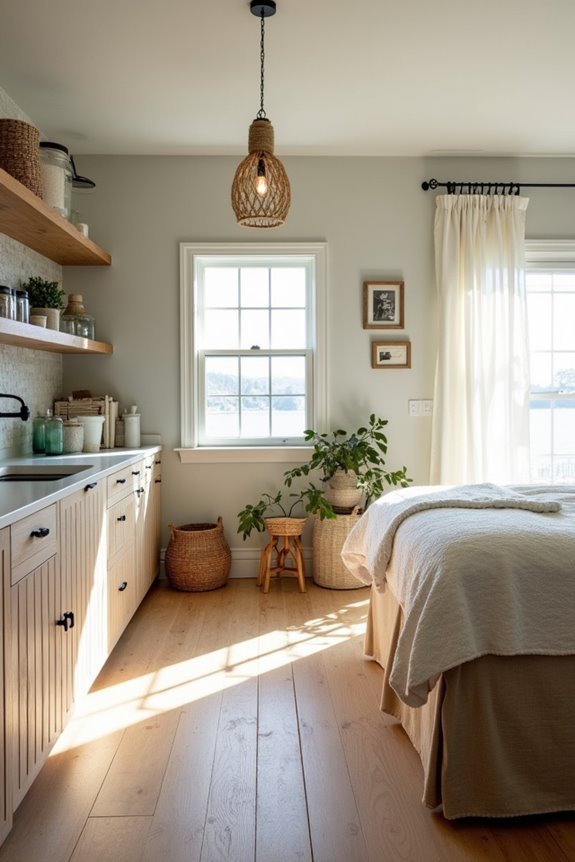
Now that you’ve established the foundation of your space with shiplap and exposed beams, it’s time to fill in those rooms with purpose. Here’s how to create a coastal farmhouse style room by room.
| Room | Key Elements | Color Palette | Textures |
|---|---|---|---|
| Kitchen | Large island, white beams | Whites, creams, light blues | Distressed wood, natural fiber |
| Living Room | Neutral furniture, layered lighting | Whites, creams, soft blues | Rope, shells, wicker |
| Bedroom | Whitewashed furniture, open sightlines | Warm neutrals, coastal accents | Jute rugs, linen, driftwood |
Your kitchen becomes the heart where farmhouse charm meets coastal breeze. The living room invites relaxation through soft furnishings and gentle blues. Bedrooms become peaceful retreats with textured layers and rustic woods. You’re building a consistent coastal farmhouse style that suits your preferences.
Restrain Your Accessories: When Less Creates the Perfect Coastal Farmhouse Balance
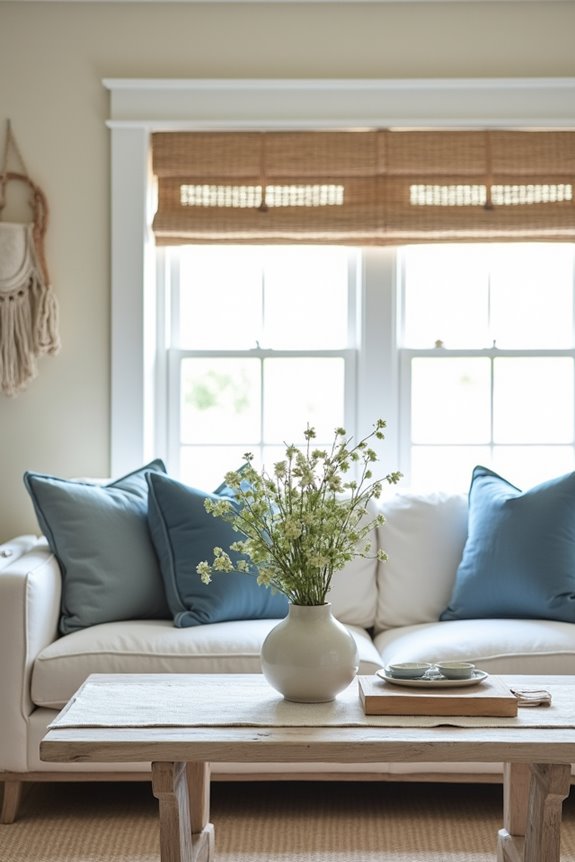
Why do so many of us fill our spaces until they feel crowded instead of calm? I’ve been there—drowning in decorations. The answer to blending coastal style with farmhouse elements lies in restraint.
Here’s what actually works:
- Choose one statement accent per wall (a shiplap panel or beaded chandelier)
- Limit coastal accessories to shells, driftwood, and glass lamps
- Add just two farmhouse textures—linen throws and woven baskets
- Use soft whites, beiges, with restrained blues or navy accents
I layer textures instead of stacking items everywhere. One jute rug. One distressed wood shelf. A few black fixtures. This approach creates depth without visual noise.
When you stop fighting for every inch of wall space, your room breathes. You’ll feel that peaceful coastal-farmhouse vibe you’ve been seeking.