
I’ve learned the hard way that bathroom accessory placement affects functionality. Mount towel bars at 48 inches and toilet paper holders around 26 inches high. Choose hooks for quick shower access and bars for stacking towels elsewhere. Keep fixtures clear of mirrors and switches to avoid awkward reaches. Install into drywall, not tile, so you can adjust later without costly repairs. Finally, confirm exact measurements with your contractor before any drilling happens. Get these five fundamentals right, and your daily routine will run more smoothly.
Know the Right Heights for Bathroom Accessories
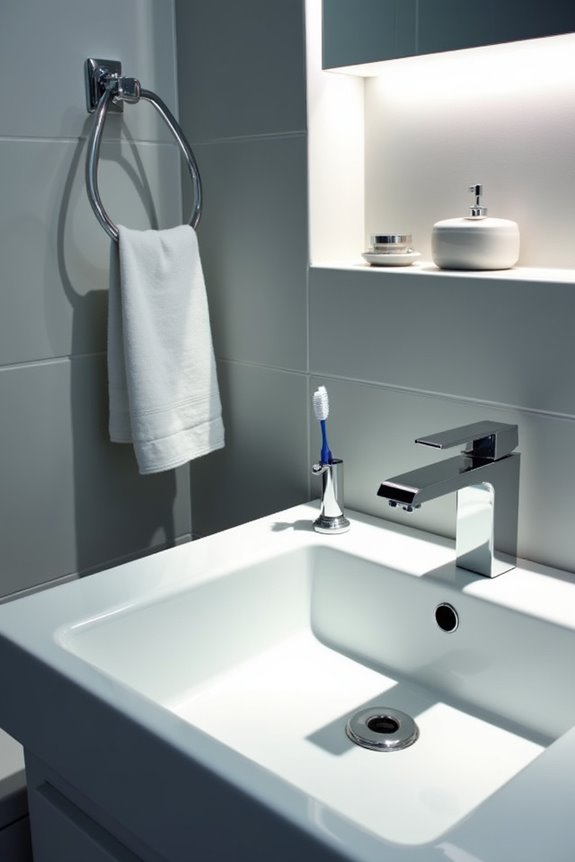
When you’re hanging stuff in your bathroom, getting the height right actually matters way more than you’d think. I used to just eyeball it and ended up with towel bars at awkward angles.
Here’s what works:
Towel bars and hooks go at 48 inches from the floor. This height feels natural when you reach for them.
Toilet paper holders need to sit about 26 inches up, positioned 8–12 inches from the toilet seat’s front rim. I know that sounds specific, but it prevents the annoying stretch.
Shower rods for standard showers hit 75–77 inches high so you won’t bonk your head.
Vanity mirrors should sit 5–10 inches above your counter, leaving at least a foot above your eye level.
Getting these heights right keeps your bathroom organized and functional.
Choose the Best Hanging Method for Your Space
Now that you’ve nailed down where things actually go, it’s time to pick the right way to hang them—and this decision matters.
Hooks and towel bars each serve different purposes. Hooks are space-savers, especially in cramped bathrooms. You can tuck them practically anywhere without eating up precious wall space. Towel bars let you stack multiple towels neatly and grab them fast—ideal near the shower.
Here’s a practical combo: place hooks close to the shower for quick access, then mount a bar across the opposite wall. This setup balances practical placement with airflow for drying. Avoid mounting anything over the toilet—it creates maintenance issues. Smart bathroom fixtures arrangement means working *with* your space, not against it.
Plan Your Placement to Avoid Conflicts With Mirrors and Switches
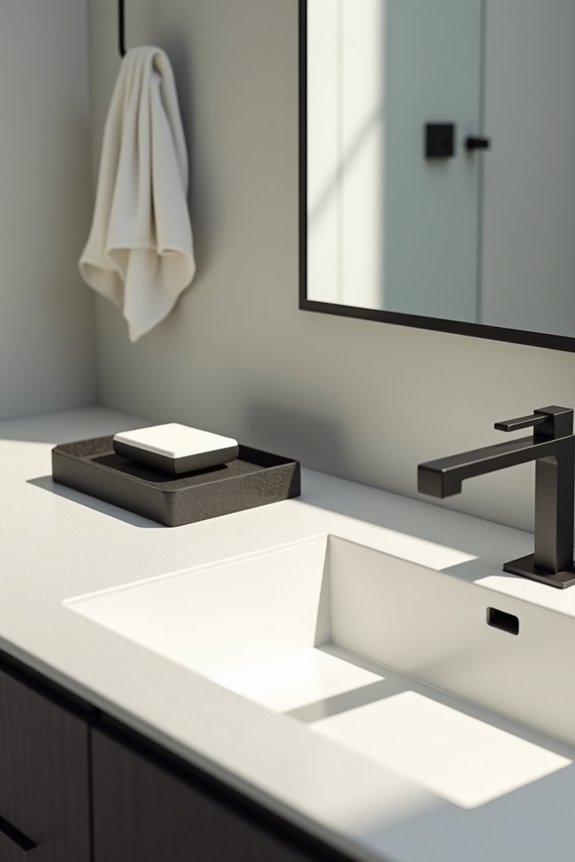
Because mirrors and light switches take up valuable wall real estate, you’ve got to think strategically about where your towel bars and hooks actually land.
I learned this the hard way—almost installed a towel rack directly over my light switch. Oops. Here’s what I do now: I map out each wall first, identifying where mirrors and switches live. Your hooks should clear the mirror by at least a few inches to avoid obstruction. Position your towel rack away from switches so you’re not constantly reaching around fixtures.
Think about reach and accessibility too. I place hooks near the shower for quick access, and my towel rack away from the toilet to minimize traffic jams. A wall-by-wall assessment helps me decide between multiple hooks or a single bar elsewhere. This simple planning prevents conflicts and keeps your bathroom accessories working hard without getting in each other’s way.
Install Into Drywall, Not Tile, for Easier Future Adjustments
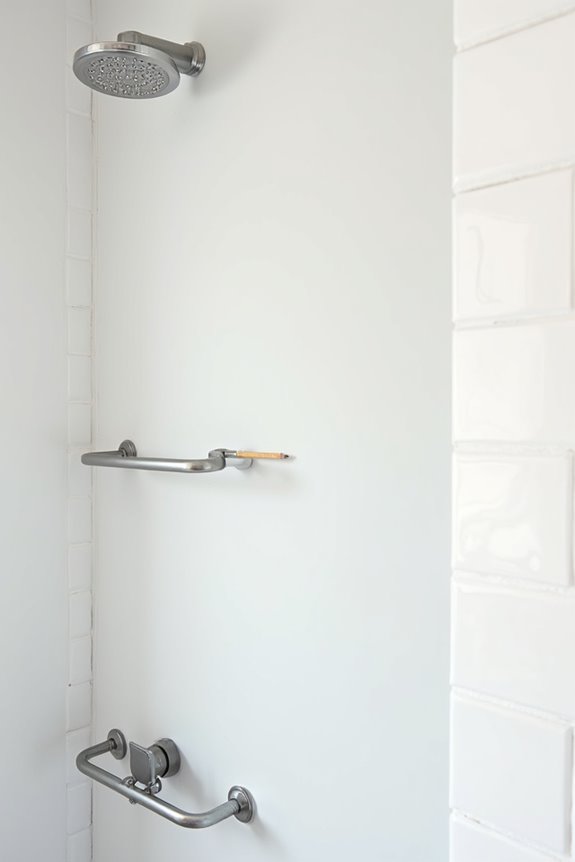
Why drill into tile when drywall’s sitting right there behind it?
I’ve learned this the hard way. Installing bathroom accessories into drywall instead of tile saves you serious headaches. When you mount into drywall, you’re protecting your investment. Tile damage means costly repairs or replacements—that’s not fun.
Here’s my approach: I use wall anchors or screw directly into studs for solid drywall mounting. This method supports your accessories’ weight safely. The real bonus? Repositioning becomes simple. Changed your mind about that towel bar location? No problem.
Before drilling anywhere, I confirm exact heights and positions with my contractor. This prevents misalignment and keeps tile untouched. Your bathroom accessories deserve a home that won’t trap you into permanent placement decisions. Drywall gives you that freedom.
Communicate Your Final Measurements to Your Contractor Before Drilling
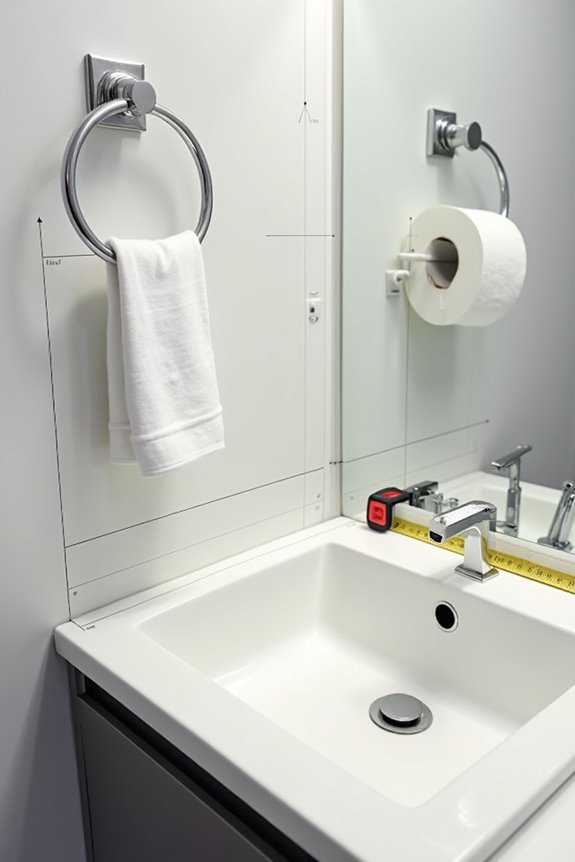
Once you’ve decided to mount into drywall instead of tile, the next step is actually talking to your contractor about where everything goes.
I learned this the hard way. Here’s what you need to communicate clearly:
- Exact mounting heights for towel bars and towel hooks
- Horizontal positions relative to your vanity and mirrors
- Toilet paper holder placement to avoid awkward reaches
- Wall material confirmation to determine proper drilling techniques
These conversations prevent costly mistakes. Your contractor needs written approval on every fixture location before drilling starts. When you’re both on the same page about heights and positions, you’ll avoid misalignment with tiles and vanity edges.
Spending an extra hour measuring and discussing beats fixing drilling errors later.