
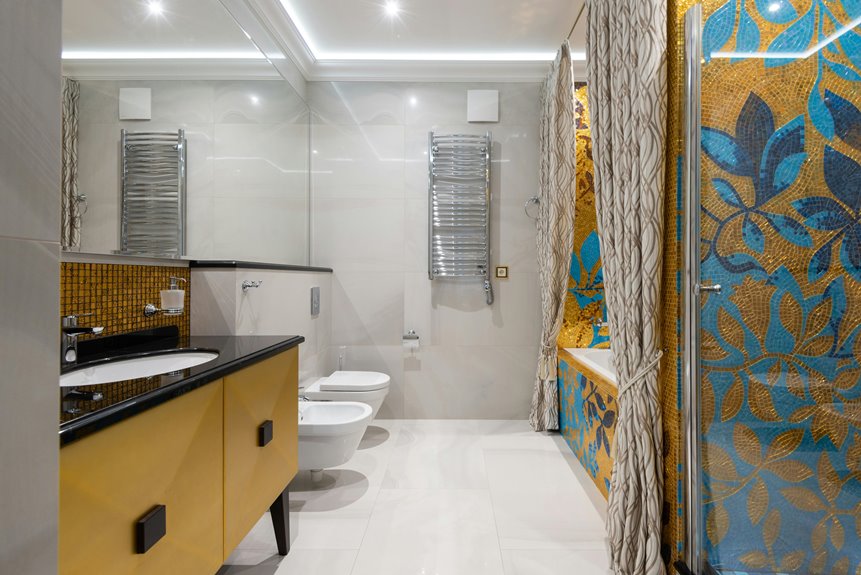
Bathroom decoration in 2026 runs $200–$1,500 depending on what you’re adding—wallpaper, hardware, lighting, or accent materials. Budget $500–$800 for a solid mid-range refresh that boosts resale value. Labor costs jumped 8–10% this year, and tariffs hit imported fixtures hard, so you’re looking at 4–6% higher prices than 2025. DIY painting and simple swaps cut costs by 20–30%. Skip the floating vanity trend—stick with practical choices instead. The breakdown’s more nuanced than it first appears.
Average Bathroom Decoration Costs in 2026
What’ll it actually cost you to freshen up that bathroom? I’ll be honest—it depends on what you’re tackling. A small bathroom remodel typically runs $6,500, though you might spend anywhere from $2,000 for basic updates to $15,000+ for a complete overhaul. Per-square-foot costs usually land between $70–$250, depending on your material choices. Labor costs are your biggest expense, eating up 40–65% of your total budget. Here’s the tricky part: tariffs are pushing material prices higher, especially on imported vanities. Plan on $18,500 for a master bathroom remodel at minimum. The key? Choose domestic vanities early and be realistic about labor rates ($50–$100+ hourly). Start by listing what you actually need versus want.
Why 2026 Costs Are 4–6% Higher Than 2025
Why does your bathroom remodel cost more than you budgeted last year? It’s not just inflation. Three major forces are pushing prices up by 4–6%.
| Cost Driver | Impact | Example |
|---|---|---|
| Labor costs | Plumbers up 8–10% | Your contractor’s hourly rate increased |
| Tariffs | 50% duty on vanities | Imported fixtures cost way more |
| Regional pressures | 2–3× higher on coasts | West Coast projects are pricier |
Labor shortages mean plumbers and electricians charge more. Tariffs on imported vanities and materials like tile hit hard. Meanwhile, non-tariff cost growth adds another 2–3% to your bill. Your project now takes 1–2 extra weeks. If you’re on the West Coast or mid-Atlantic, you’re facing steeper regional pressures. Understanding these factors helps you plan smarter and make informed decisions about your remodel.
Small Bathrooms vs. Full Baths: How Size Affects Your Budget
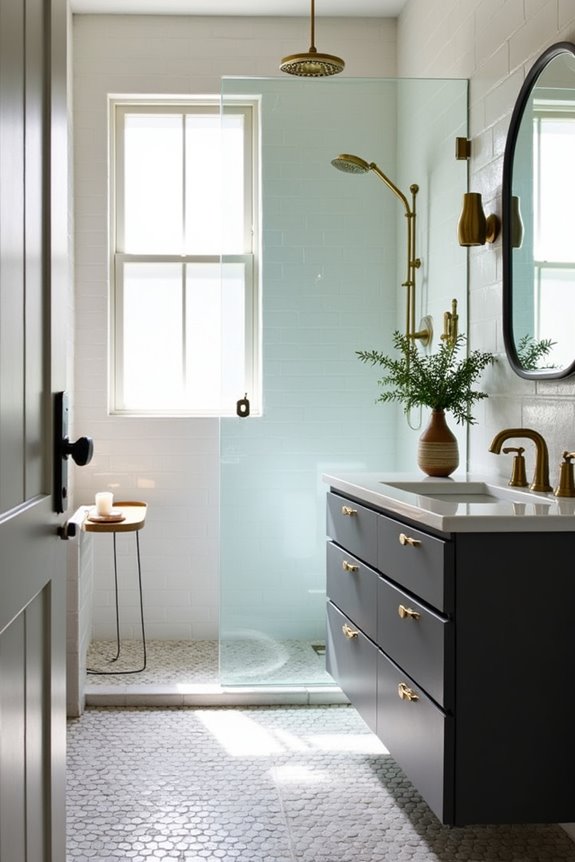
How much of your remodel budget actually goes toward that tiny powder room versus a sprawling master bath?
Here’s what I’ve learned: small bathrooms hit you harder per-square-foot. A powder room can cost $200+ per square foot, while a spacious 5×10 bath averages $140–$180. Why? Fixed costs—your toilet, sink, and labor—don’t shrink with your space. You’re paying the same essentials in half the area.
Larger bathrooms spread those fixed costs across more square footage, naturally lowering per-square-foot expenses. Your small bathroom remodel might total $2,000–$15,000 overall, but that per-square-foot cost stings compared to bigger projects.
Adding trendy features like walk-in showers ($7,875+) amplifies small bath expenses quickly. Size, not design alone, truly drives your bathroom remodel cost. Plan accordingly.
Budget, Mid-Range, and Premium Decoration Strategies
Which approach feels right for you?
Where Your Decoration Budget Actually Goes
When I started planning my bathroom remodel, I quickly realized that understanding where every dollar goes is half the battle—and honestly, it’s way more interesting than it sounds. Your budget splits into two main buckets: materials (like vanities and tile) and labor (the skilled pros who actually install everything), and I’ll walk you through exactly how much each typically claims. Let me show you the breakdown so you can make smarter choices about where to spend more and where to cut costs.
Material Cost Breakdown
Most of your bathroom decoration money—we’re talking 40 to 50 percent—goes straight to your vanity and shower or tub setup. I learned this the hard way when planning my own remodel. The remaining budget splits between tile, labor, fixtures, and those tariffs that’ll catch you off guard.
Here’s where things get real:
- Tile pricing jumps dramatically: economical runs ₹60–₹80/sq ft, standard hits ₹150–₹250/sq ft, premium reaches ₹450–₹650/sq ft (all before installation labor)
- Pattern complexity matters: hexagon and herringbone designs boost labor costs
- Artisanal tile adds cost: handmade zellige runs $5–$15 extra per square foot
- Tariffs sting: 50% on imported vanities, 20–30% on certain tiles
- Buy early: material costs keep climbing, so don’t delay procurement
Understanding this breakdown helps you allocate wisely and avoid surprises.
Labor Expense Distribution
Labor can consume up to 65 percent of your bathroom budget, and that’s before you even pick out tile colors.
In metro areas, you’re looking at $50–$100 per hour for general labor. Skilled trades? Plumbers and electricians charge $75–$150 hourly. That adds up fast.
Here’s the real issue: relocation work. Need to move plumbing or electrical lines? You’re adding thousands in labor costs. Major layout changes require extra engineering too.
Lead times matter. Skilled trades book 8–12 weeks out. Longer project duration means extended labor expenses.
I learned this firsthand—every week my contractor waited for the electrician cost me money. Understanding hourly rates and project duration upfront helps you budget smarter and avoid surprises.
Warm Earth Tones and Artisanal Finishes: Price Impact
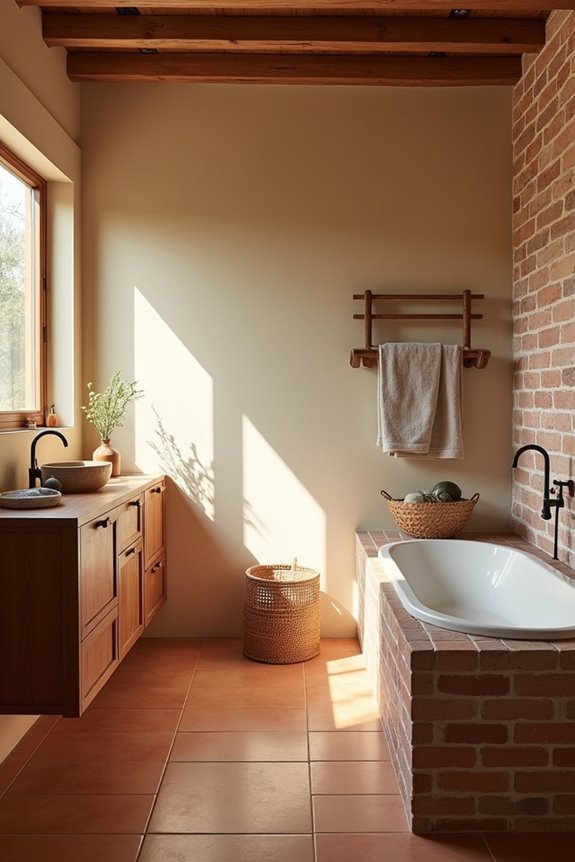
Because you’re drawn to that cozy, natural aesthetic taking over bathrooms in 2026, you’ve probably noticed how earthy colors like terracotta, sage, olive, and taupe feel so much warmer than the stark whites we’ve all seen before.
Here’s what I’ve learned about pricing these trendy finishes:
- Standard warm earth tone tiles cost the same as basic options
- Artisanal finishes like zellige add $5–$15 per square foot
- Natural stone surfaces increase material expenses noticeably
- Intricate patterns bump up labour costs significantly
- Honed, textured surfaces require skilled installation
The good news? You don’t need expensive artisanal tile costs to capture this vibe. Standard tiles in warm earth tones deliver the aesthetic at a lower cost. If you’re splurging on artisanal finishes, expect those labour costs to rise when patterns get complicated. Think of it as investing in distinctive character rather than uniform sameness.
Statement Vanities and Smart Storage: What You’ll Spend
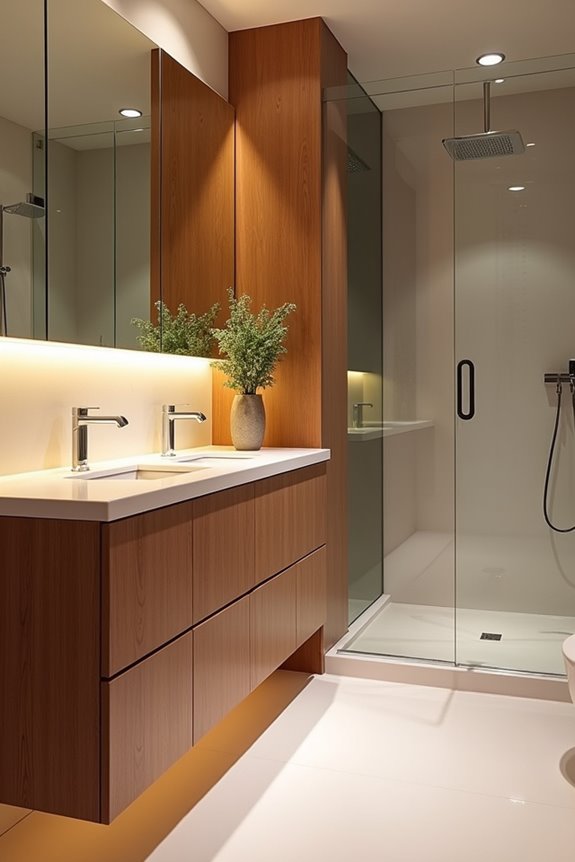
Your vanity’s become the primary focus of the bathroom in 2026, and it’s where you’ll allocate a significant portion of your budget—understanding the costs helps with planning. Stock vanities run $525–$2,940, while installed ranges jump to $630–$3,200 because labor costs account for 40–65% of your total project. Semi-custom and custom options land between $1,500–$4,500+.
The shift in priorities: everyone’s ditching vanities without storage. Instead, people are choosing integrated solutions—extra shelving, makeup stations, built-in lighting. These smart storage features cost more upfront but create more functional bathrooms. Avoid floating vanities; they’re impractical. Factor in contractor rates ($50–$100 hourly in cities), and you’ll see why materials plus labor matters.
Plan ahead: buying before tariff increases saves money.
Custom Showers and Tub Conversions: Cost Realities
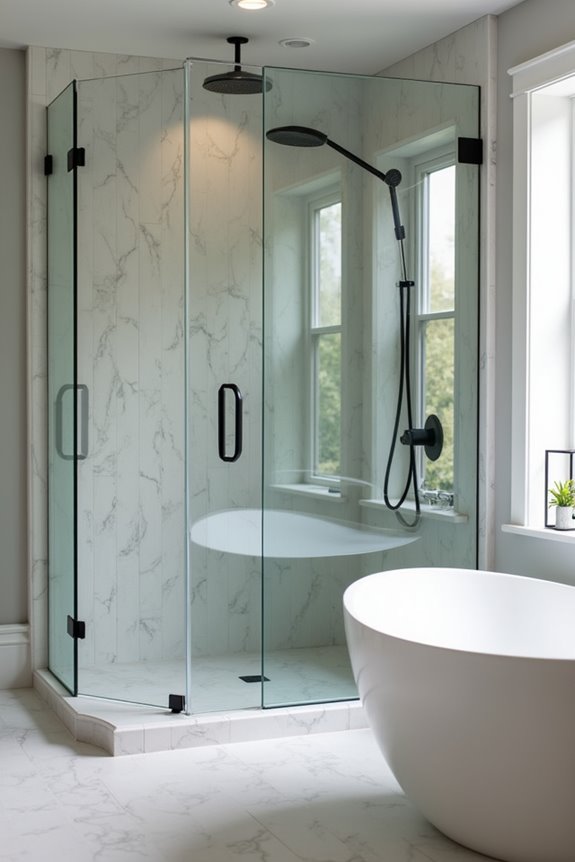
Once you’ve settled your vanity plan, you’ll face another big decision: what’s happening with your shower or tub?
Here’s what I’ve learned: tub-to-shower conversions using prefab units typically run $2,500 to $8,000. Custom walk-in showers? They start around $7,875, and frameless designs cost even more. But here’s the kicker—plumbing costs and waterproofing add thousands to your renovation budget. New plumbing rough-ins alone contribute substantially before you even touch tile.
Consider these factors:
- Prefab units simplify installation complexity
- Custom features push costs significantly higher
- Waterproofing prevents expensive water damage later
- High-cost markets inflate everything dramatically
- Your existing plumbing determines hidden expenses
I’ll be honest—I underestimated plumbing initially. Don’t make my mistake. Budget generously here, and you’ll avoid unpleasant surprises mid-project.
Wallpaper, Hardware, and Decorative Accents
How much should you actually spend on the details that people notice first?
Wallpaper, hardware finishes, and decorative accents shape bathrooms into spaces that reflect who you are. Wallpaper with premium textures paired with contrasting tiles creates visual interest. Hardware’s trending toward unlacquered brass—it’s becoming a design feature, not background detail. Built-in lighting and vanity features add resale value, though they increase costs.
| Element | Budget Range | Impact |
|---|---|---|
| Wallpaper | $200–$800 | Narrative accent |
| Hardware finishes | $150–$600 | Design statement |
| Decorative lighting | $300–$1,200 | Value enhancement |
| Accent materials | $400–$1,500 | Texture storytelling |
These aren’t extras—they’re investments in bathroom remodeling costs that matter. You’re creating a space you’ll use and appreciate daily.
ROI on Bathroom Decoration: What Increases Home Value
When you’re dropping thousands on that bathroom remodel, there’s really one question that matters: will I get my money back?
I’ve learned that mid-range bathroom projects typically recoup 74–80% of your costs at resale. That’s solid. For a $400,000 home, I’d suggest targeting a primary bath budget of $12,000–$20,000 to maximize your remodel ROI without overspending.
Here’s what actually moves the needle on resale value:
- Strategic layout changes that improve flow
- Quality fixtures that look upscale but stay practical
- Neutral finishes that appeal broadly
- Improved lighting and ventilation
- Smart storage solutions
The key? Skip the luxury upgrades—they only recoup about 42%. Stick with mid-range choices instead. You’ll feel good knowing your investment genuinely pays off when you eventually sell.
Regional Price Variations in 2026 Bathroom Decoration
Where you live might matter more than you think when budgeting your bathroom remodel. I’ve learned that labor rates swing dramatically across the country—San Francisco plumbers charge roughly twice what Little Rock’s do. That’s not just a minor difference; it reshapes your entire budget.
Your regional cost guides matter. Northern Virginia residents can tap Fairfax County calculators to see actual local prices. Material costs fluctuate too, especially for vanities and tile in areas dependent on imports.
Here’s the reality: local market conditions affect everything. I recommend checking regional cost guides specific to your area rather than trusting national averages alone. Your neighbors’ projects reflect your actual expenses better than national trends do.
DIY Decoration Tasks That Cut Costs Without Sacrifice
I’ve found that tackling the right DIY tasks—like painting walls, demo work, and swapping out fixtures—can slash your bathroom costs by 20–30%. The trick is knowing when to refinish what you’ve got versus when replacement actually makes more sense, so you’re not wasting time or money on a vanity that’s beyond saving. Once you determine which tasks you can handle yourself, you can redirect those savings toward the finishes that matter most to your space.
Safe DIY Task Selection
How much money could you actually save by rolling up your sleeves on bathroom updates?
I’ve learned that DIY tasks cut costs by 20–30% when you handle the right jobs. The key? Know what you can safely tackle versus what demands licensed professionals.
Here’s what I confidently do myself:
- Paint walls and trim (my first attempt wasn’t perfect, but it looked good)
- Demo old fixtures and remove outdated materials
- Install basic fixtures like towel bars and mirrors
- Handle cleanup between project phases
- Prep surfaces for tile or paint
I always hire licensed professionals for plumbing, electrical work, and tile installation. These require permits and expertise I simply don’t have. Getting three quotes first protects your budget and reduces stress. That balance is where real savings happen without cutting corners on safety or quality.
Material Refinishing Versus Replacement
What if you could get that high-end bathroom look without the high-end price tag? You absolutely can. I’ve discovered that bathroom refinishing beats full material replacement every time for budget-conscious folks like us.
Instead of ripping out tile, I resurfaced mine. Instead of replacing cabinets, I repainted them. These cosmetic updates cost me around $2,000–$4,000 for my powder room, versus $8,000+ for complete replacement.
Here’s my honest take: look-alike materials work well. Porcelain tile that mimics marble? Nobody knows the difference.
The key? Protect waterproofing considerations carefully. Don’t cheap out there—that’s where problems start.
DIY costs drop 20–30% when you handle painting and fixture installation yourself. Get three quotes. Compare line items. Smart refinishing isn’t cutting corners; it’s choosing wisely.
Strategic Budget Allocation Techniques
Where’s the real money-saving approach in bathroom decorating? I’ll tell you—it’s smart budget allocation. You can trim labor costs by 20–30% when you handle prep work yourself. Here’s my strategy:
- Keep your plumbing layout unchanged to avoid those costly $2,000–$5,000 moving expenses
- Choose standard sizes like 60-inch vanities instead of custom pieces
- Pick look-alike materials—porcelain tile mimicking marble offers significant savings
- Handle DIY tasks yourself: painting, demolition, simple fixture installation
- Time your purchases early to dodge GST and tariff impacts
The trick? Don’t sacrifice quality. You’re just being intentional about where money flows. I’ve found that smart choices beat expensive ones every time. Your bathroom doesn’t need premium everything—it needs thoughtful planning.
Avoid These Five Budget-Busting Mistakes
Why do so many bathroom projects end up costing way more than expected? I’ve learned the hard way that avoiding five critical mistakes saves thousands. Let me share what I discovered.
| Mistake | Cost Impact | Prevention |
|---|---|---|
| Skipping contractor quotes | 15-20% budget overrun | Get three minimum quotes |
| Ignoring permits | $200-$1,000 delays | Check requirements upfront |
| Missing hidden water damage | 15-20% contingency needed | Budget buffer during demolition |
| Underestimating installation | 40-65% of total cost | Prioritize vanity and shower |
| DIY risky trades | Costly safety hazards | Hire licensed professionals |
I won’t pretend I didn’t learn these lessons painfully. Getting multiple contractor quotes protects you from hidden labor costs. Always budget for permits—they’re non-negotiable. Include that contingency for surprises. Professional plumbers, electricians, and tile specialists prevent costly mistakes. Investing upfront saves regret later.
Money-Saving Strategies Without Sacrificing Style
How can you create a bathroom that looks expensive without draining your wallet? Smart bathroom remodeling doesn’t mean cutting corners on style. Here’s what works:
- Choose look-alike materials: Modern porcelain tile mimics Calacatta marble beautifully at half the cost
- Go standard with vanities: A 60-inch standard vanity saves thousands versus custom options
- Pick economical fixtures: Quality doesn’t require premium price tags
- DIY simple tasks: I handled painting and demolition myself, cutting labor costs by 20–30%
- Plan ahead: Buy early to dodge tariff spikes on porcelain tile and fixtures
These cost-saving strategies let you achieve designer appeal. Get three quotes comparing line-by-line prices. You’ll create a beautiful bathroom without guilt about overspending.
Permit Requirements and Hidden Costs to Budget For
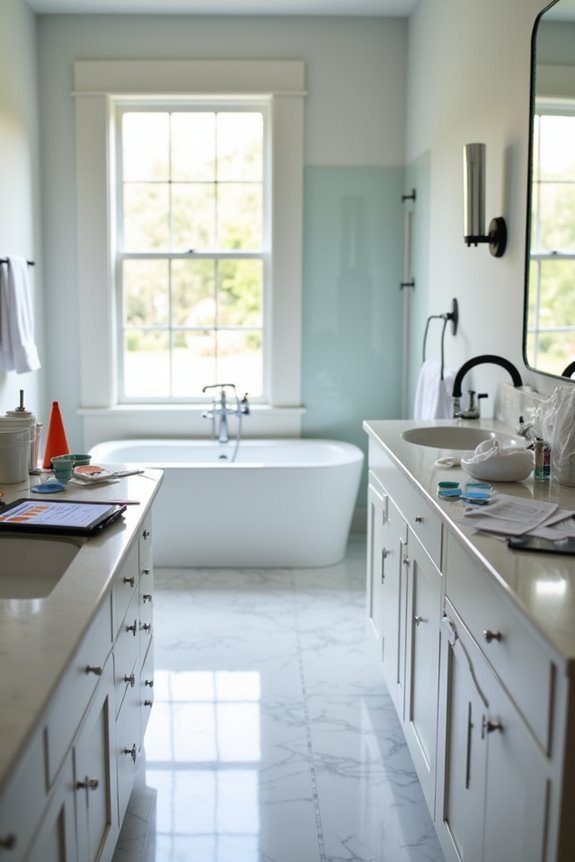
Once you’ve nailed down your design and locked in your material costs, you’ll hit a reality check: permits and surprise expenses.
Design locked in and materials priced? Now comes the real budget check: permits and surprise expenses.
Here’s the thing—permits aren’t optional for structural work, plumbing moves, or electrical changes. You’re looking at $200 to $1,000 depending on where you live. I learned this the hard way.
Then come the hidden costs. Demolition reveals water damage? That’s unexpected money gone. That’s why I now budget a 15–20% contingency cushion for surprises.
Your project timeline matters too. Permits take 8–12 weeks, and approval delays happen. Major plumbing moves add thousands beyond basic costs due to engineering requirements.
Check your local permit process early. Planning ahead saves stress and money later.