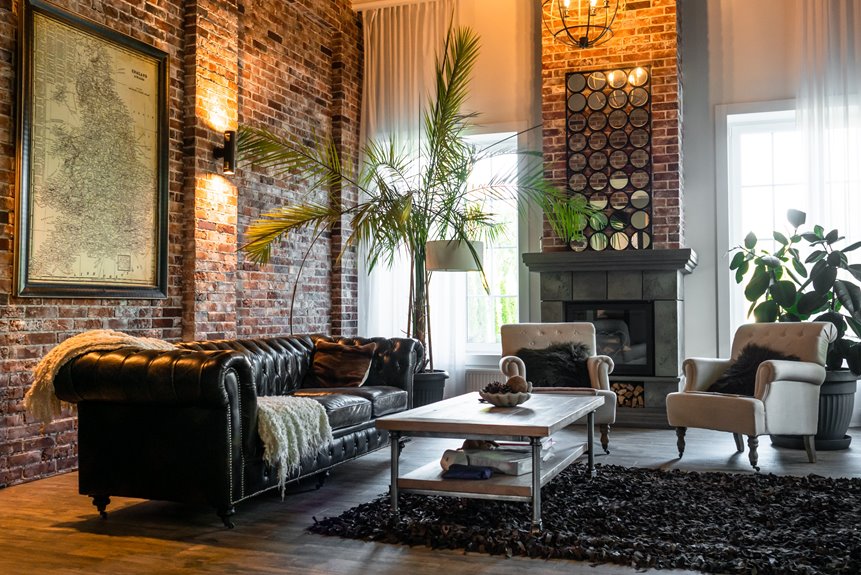
Start with soft white walls and warm neutrals—they’re your canvas. Layer in reclaimed wood pieces like barn beams or distressed tables, then balance them with sleek modern furniture featuring clean lines. Add black metal accents (think pendant lights or hardware) to tie the blend together.
Mix textures with linen throws and leather pieces. Keep copper details minimal so they stand out. Finally, arrange comfortable corners within open spaces. The key is intentional contrast—when you understand how each element plays off the others, your space comes together well.
Start With a Neutral Color Foundation
A neutral foundation of soft whites and warm tones creates the perfect canvas for blending modern and farmhouse styles harmoniously.
The foundation of blending modern and farmhouse styles? It’s all about your neutral foundation. I’ve learned that white walls and warm neutrals create the perfect canvas for mixing both aesthetics without fighting each other.
Here’s what I do: I paint walls soft white or cream. Then I add dark accents—think black trim or hardware—for modern contrast. This balance keeps things from feeling too one-sided.
Your color palette becomes the glue holding everything together. Light, airy surfaces pair beautifully with natural wood tones, whether reclaimed or distressed. I’ve found that streamlined furniture in soft whites works well alongside warm woods.
Start neutral. Build from there. You’ll find that restraint creates harmony, not boredom.
Layer Reclaimed Wood Into Modern Farmhouse Materials
Once you’ve got your neutral foundation locked in, it’s time to build character by layering reclaimed wood throughout your space. Mixing rustic-modern elements creates that balance worth pursuing.
Start with reclaimed beams or flooring—they’re the anchors. Pair them with sleek quartz countertops and minimal cabinetry. Add wooden shelves for open storage that feels organized and deliberate. The contrast between distressed wood and blackened steel hardware creates visual interest.
| Element | Rustic Touch | Modern Edge |
|---|---|---|
| Flooring | Hand-finished wood | Clean grout lines |
| Hardware | Wooden handles | Blackened steel |
| Shelving | Reclaimed boards | Minimalist brackets |
Don’t skip durability and finishes—quality sealants protect your investment. Your rustic-modern space will benefit from this attention to detail.
Select Furniture: Minimal Lines With Rustic Character
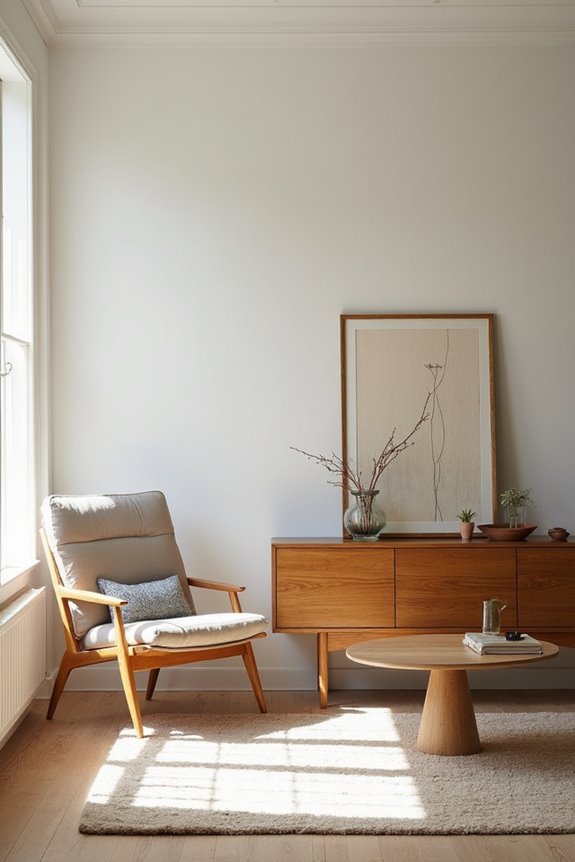
While your walls and flooring create the foundation, furniture is where you’ll establish that modern-farmhouse blend. Choosing pieces with minimal lines keeps things feeling contemporary and uncluttered. Look for sofas with clean, streamlined silhouettes—nothing too fussy.
Now for the rustic element: pair those sleek pieces with warm wood tones. A low-profile sofa paired with a salvaged wood dining table creates balance. Mix distressed chairs with neutral upholstery too. Think linen paired with leather accents.
Key pieces matter here. That barn-door wardrobe or live-edge coffee table becomes your focal point against clean walls. Don’t overcrowd your space. Strategic spacing keeps modern and rustic elements from competing with each other, allowing both styles to work together.
Open Spaces With Cozy Corners
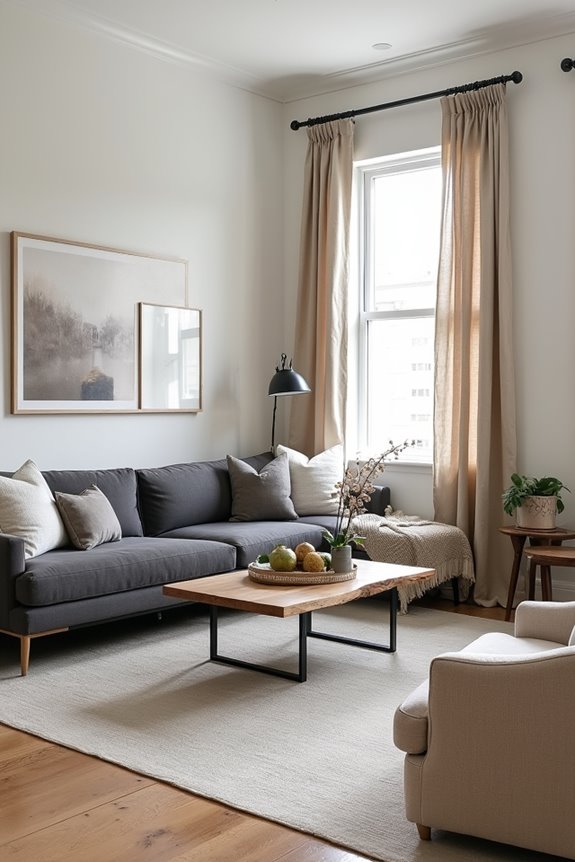
I’ve learned that open floor plans don’t have to feel cold or impersonal—you can absolutely carve out those intimate gathering spaces that encourage people to stay longer. The trick is thinking about how you arrange your furniture and zones to create natural “rooms” within the larger space, kind of like I did by positioning my sectional to face a cozy corner with a wood-burning stove and soft lighting. When you balance those flowing open areas with smaller enclosed nooks (think a reading corner tucked under a window or a dining zone defined by a statement fixture), you get the best of both worlds: modern airiness with farmhouse warmth.
Layout Strategies For Flow
How do you create a home that feels both spacious and intimate at the same time? Strategic layout choices matter significantly.
I use transitional zones—hallways, lobbies, and entryways—to bridge different areas. These spaces blend mixed materials that soften the visual shift between modern and farmhouse aesthetics. Think stone accents paired with sleek metal frames.
I also arrange furniture to guide movement naturally. Open floor plans work best when you anchor them with focal elements like fireplaces or built-in shelving. These create gathering spots without blocking sightlines.
I’ve learned to cluster seating arrangements in larger rooms, carving out cozy nooks without cramping flow. It’s like creating rooms within rooms. This approach lets your home breathe while still feeling welcoming and connected.
Creating Intimate Gathering Spaces
Once you’ve got your layout flowing smoothly, the real opportunity emerges when you start carving out those special spots where people actually want to gather.
Intimate nooks change a space from beautiful to beloved. Try nestling a small built-in banquette near a window—perfect for curling up with coffee. Layer in cozy textures like linen pillows and a chunky wool throw.
Add warm lighting with copper fixtures overhead. Position potted ferns nearby for that lived-in farmhouse feel.
Here’s what I do: arrange seating to encourage conversation. Mix modern clean-lined chairs with reclaimed wood side tables. Install open shelving above to display meaningful items without stuffiness.
These gathering spaces aren’t fancy. They’re just deliberately crafted corners that make people feel at home—and honestly, isn’t that the whole point?
Balancing Open And Enclosed Areas
Why does a room with mostly open space sometimes feel cold, while a cramped one feels suffocating? The answer lies in blending both intentionally. Modern farmhouse design works well when you mix expansive areas with intimate corners.
Here’s how to do it:
- Pair clean-lined furniture in open spaces with wood-toned accents and built-ins
- Layer lighting—recessed fixtures for openness, warm statement pieces over intimate corners
- Use textured materials like shiplap or reclaimed wood to create visual interest
- Unify everything with neutral palettes and natural woods
This approach creates distinct zones in your home where you feel both connected and comfortable. Rustic elements work as anchors in modern spaces, making your home feel like it belongs to you.
Layer Modern Farmhouse Lighting for Depth and Function
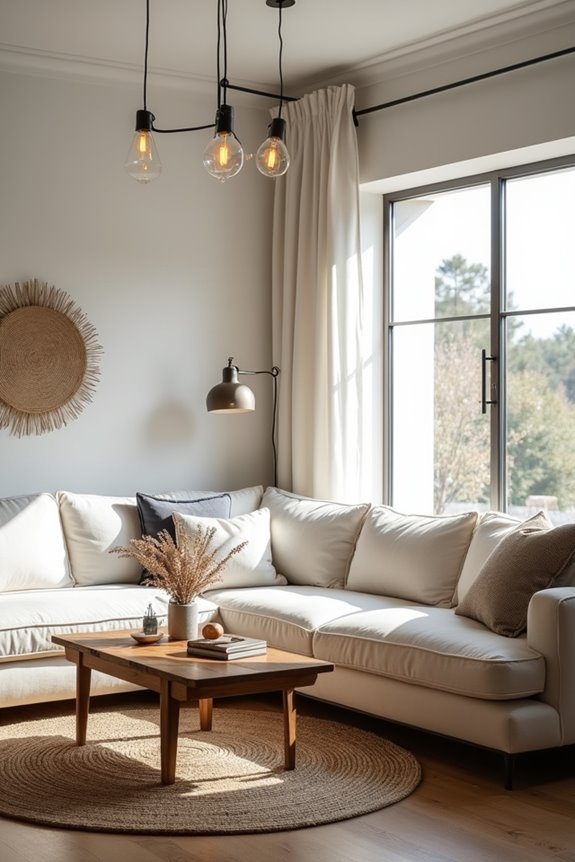
When’s the last time you really looked at your room’s lighting? I realized mine needed serious help when my modern farmhouse space felt flat and uninviting.
The approach that worked? Layering lighting. I started by creating three distinct zones: ambient lighting for overall glow, task lighting for functionality, and accent lighting to showcase those beautiful textural contrasts.
I installed copper pendant lights above my kitchen island—they’re my favorite because they bridge farmhouse warmth with modern craftsmanship beautifully. Then I paired them with sleek, minimalist fixtures in other areas.
Here’s what made the difference: I positioned my pieces to highlight reclaimed wood and stone using natural daylight during the day. This reduced my dependence on artificial light while adding genuine depth.
Your modern farmhouse deserves lighting that works as hard as you do.
Mix Metal Fixtures: Black Industrial With Aged Copper
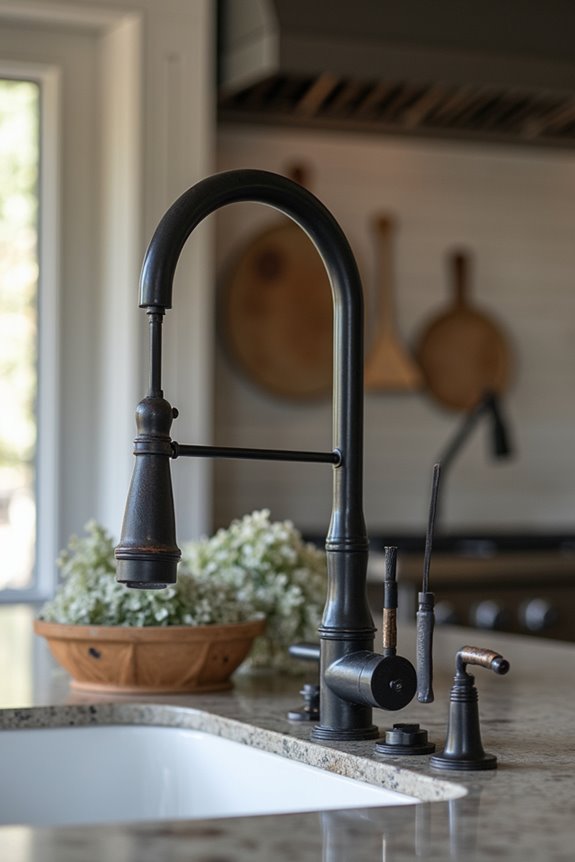
When I first started mixing metals in my own home, I quickly realized that pairing sleek black industrial fixtures with warm, aged copper accents creates this perfect tension—like modern edge meets rustic coziness. You’ll want to think strategically about where you place each metal: black pendant lights over a kitchen island, copper cabinet hardware on farmhouse cabinetry, or matte black sconces flanking a copper-framed mirror. The real trick is letting these metals be your room’s stars while keeping walls, wood beams, and countertops neutral so nothing competes for attention.
Black Metal Accent Placement
How do you make two totally different metal finishes actually work together? I’ve learned that strategic placement is everything when blending black metal with copper accents.
Here’s what I’d suggest:
- Anchor with black metal – Use matte black fixtures for your major pieces like pendant lights and cabinet pulls so they don’t compete for attention.
- Reserve copper for accents – Let copper shine through smaller details: sink fixtures, decorative hardware, or light trim. This prevents visual chaos.
- Keep backgrounds light – White walls or light wood make both finishes pop without overwhelming your space.
- Layer your lighting – Combine black metal ambient fixtures with copper task lighting in kitchens and entryways.
This approach keeps things balanced and deliberate. You’ll get that modern-farmhouse blend without anything feeling forced or heavy.
Aged Copper Finishing Touches
Why does aged copper feel like the covert asset nobody’s discussing? I’ve found it works well for bridging modern and farmhouse styles. When I paired copper pendant lights with black industrial hardware, the warmth softened the starkness considerably.
Aged copper hardware finishes work effectively on cabinet pulls, open shelving, and range hoods. They echo rustic charm while keeping everything streamlined. I specifically choose matte finishes with protective patina because they reduce glare and age gracefully.
Here’s my winning formula: balance cool modern surfaces like quartz countertops with copper accents. This combination maintains warmth without overwhelming clean lines. The hardware finishes create that artisanal feel people seek in modern farmhouse design.
This copper approach delivers real results for your space.
Balancing Industrial And Warm
Ever notice how black metal and warm copper seem like they shouldn’t work together—yet they absolutely do? I’ve found that combining these finishes creates industrial warmth in your home.
Here’s my approach to nailing this contrast:
- Use black metal for window frames, railings, and pendant lights to anchor your space
- Add aged copper sconces above islands or gathering areas for that cozy glow
- Layer lighting with ambient, task, and accent fixtures so industrial starkness doesn’t feel harsh
- Introduce natural materials—reclaimed wood, brick, stone—alongside metal to unify everything
I’ve learned that matte black hardware paired with warm copper accents actually softens a room. The key? Balance. When you introduce textured textiles and wood tones, the industrial elements feel inviting instead of cold. That’s when your space truly feels like home.
Layer Textures With Fabrics and Handmade Accents
Blending different fabrics and textures is where the work happens when you’re mixing modern and farmhouse styles. I’ve learned that combining linen, wool, leather, and jute creates a cozy, tactile space.
Here’s what works for me: I layer throw blankets in earthy neutrals over sleek furniture. This bridges the gap between distressed wood and clean lines. An area rug grounds the room while adding softness underfoot.
Handmade accents matter too. I use hand-hammered metal hardware on cabinets and vintage lighting fixtures. These details unify rustic charm with modern craftsmanship without feeling forced.
The key? Don’t overthink it. Mix one vintage piece with streamlined furniture. Add textured textiles gradually. You’ll find your balance—and that’s when your space starts feeling like the place you want to be.
Choose Anchor Pieces That Blend Eras
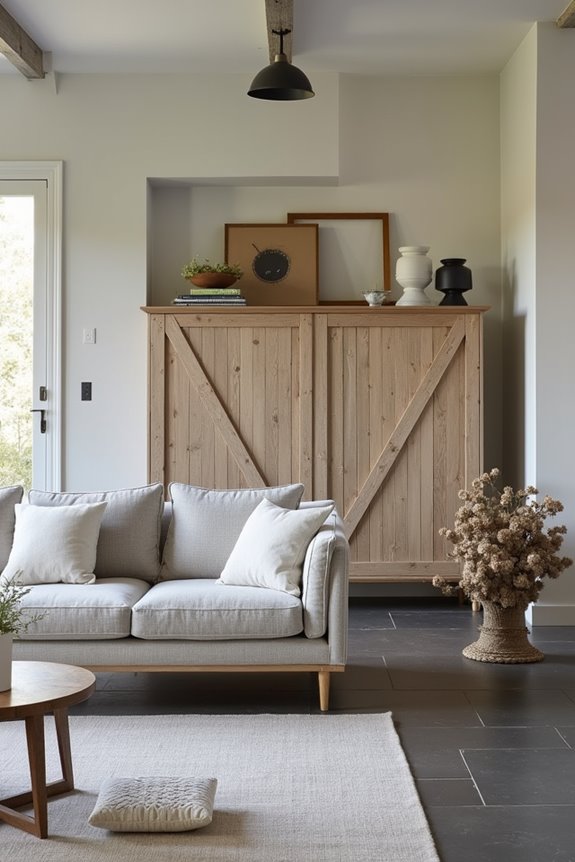
How do you actually make modern and farmhouse styles live together without looking like they’re fighting in your living room?
I’ve found an effective approach: anchor pieces. These are the foundational items that blend eras and give modern farmhouse designers their starting point.
- Pair a sleek modern sofa with a reclaimed wood coffee table to create contrast that works well together
- Choose a fireclay farmhouse sink with minimalist cabinetry to bridge old and new in your kitchen
- Hang a streamlined metal light fixture above a rustic dining table for visual harmony
- Mix low-profile furniture with traditional upholstered pieces to balance silhouettes throughout your space
These anchor pieces work because they’re not trying too hard. They’re comfortable being themselves while respecting their stylistic opposite. I recommend starting here before layering anything else.
Application: Design Your Modern Farmhouse Kitchen
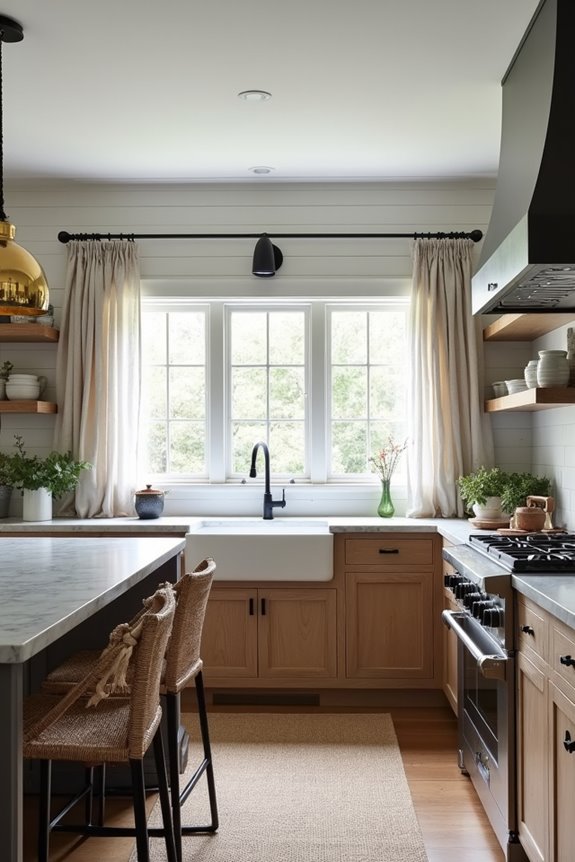
Install copper pendant lights over your island. They’re warm and sculptural, bringing farmhouse character to your kitchen. Then add task lighting under your wall cabinets for clean, practical functionality.
Next, tackle your surfaces. White shiplap backsplash paired with quartz countertops creates a blend of traditional and contemporary styles. Add a fireclay sink for authentic farmhouse appeal.
Finally, layer in natural wood elements—reclaimed beams or wide-plank flooring—paired with sleek black-metal fixtures. This balance keeps your kitchen design consistent and deliberate, avoiding a disjointed appearance.
Keep Modern Farmhouse Accessories Curated, Not Cluttered
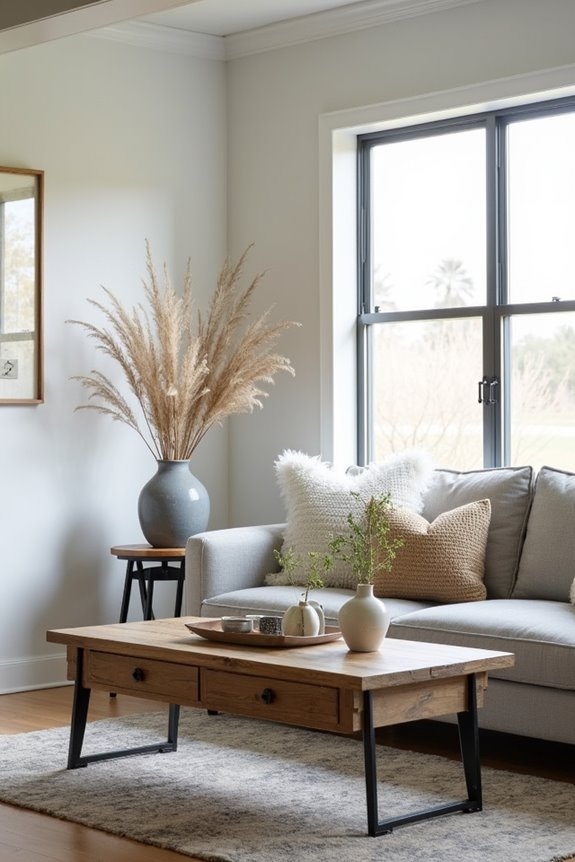
Your kitchen’s looking great with those copper lights and reclaimed wood beams—but here’s where a lot of people stumble. I’ve seen beautiful farmhouse kitchens buried under too many accessories, and it disrupts the whole aesthetic.
Here’s what I’ve learned works:
- Choose neutral colors for your base—whites, creams, soft grays—so standout pieces actually stand out
- Display only wood items with real purpose, like a vintage cutting board or single shelf of cookbooks
- Limit vintage finds to three or four intentional pieces instead of filling every corner
- Rotate seasonal decor so your curated look stays fresh without feeling cluttered
When you’re selective with curated decor, each piece tells a story. Your space has room to exist. That’s the core of modern farmhouse—restraint and purpose over abundance.
Refresh Your Exterior With Classic-Contemporary Details
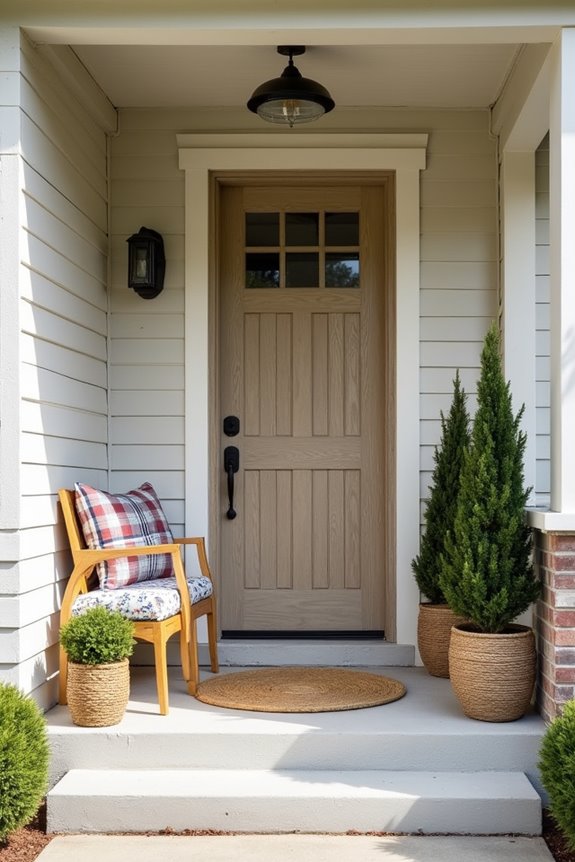
Your home’s exterior is where modern farmhouse style really shines, and I’ve found that mixing materials and textures—like pairing natural wood with sleek stone—creates that perfect blend without looking chaotic. The right lighting and hardware choices matter more than you’d think; I learned this the hard way after installing clunky fixtures that clashed everything, but switching to black metal lights with warm wood accents improved my home’s appearance significantly. Let me show you how to nail both elements so your home looks intentionally designed, not accidentally mismatched.
Blending Materials and Textures
How can you make an old farmhouse feel fresh without erasing what makes it charming? Blending materials and textures works.
Here’s what I’ve learned:
- Pair reclaimed wood with sleek metal—I used old barn beams alongside blackened steel window frames for warmth with an edge
- Mix exterior finishes—combine natural stone or brick with modern cementitious siding for visual interest
- Layer your neutral palette—warm wood tones against pale exteriors create balance and sophistication
- Add dark metal accents strategically—these details highlight texture and ground your design
The approach isn’t choosing between rustic or modern. You’re creating conversation between them. When I positioned open shelving next to minimal hardware, the contrast felt deliberate rather than confused. That’s when your home becomes balanced, authentic, and welcoming.
Modern Lighting and Hardware
Once you’ve got your materials and textures working together, it’s time to dial in the details that’ll really make people stop and notice—the lighting and hardware.
I’ve learned that modern lighting and hardware create strong contrast when done right. Install contemporary fixtures alongside rustic pieces. Layer your lighting with ambient, task, and accent options to highlight those textural details you’ve worked hard to achieve.
For hardware, I’m talking about copper or brass pulls on your cabinets. These warm metallics pop against white-painted surfaces beautifully. Add black metal accents on fixtures for that contemporary edge.
These choices pull everything together. Your lighting and hardware aren’t afterthoughts—they’re the final details that make your farmhouse-modern blend work as a unified whole.