
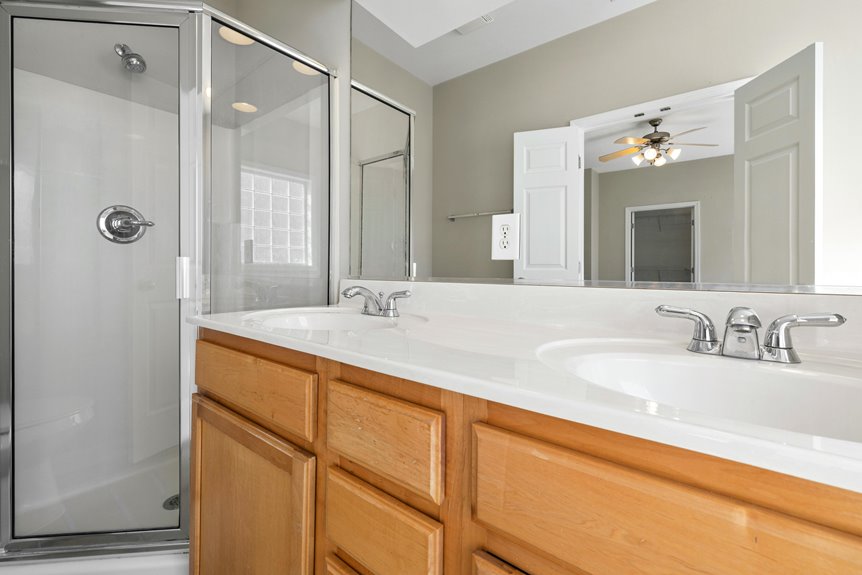
No, your bathroom fan won’t cool your house—mine actually warmed it up when I kept it running on hot days. When you turn it on, it pulls air out and creates a vacuum that sucks in hot, humid outside air through cracks and gaps.
Your fan only helps when outdoor air’s cooler than inside, like early morning or evening.
The key is timing it correctly for better results.
How Bathroom Fans Work (And What They Don’t)

Ever wonder why turning on your bathroom fan doesn’t cool down your whole house on a hot day?
Ever wonder why your bathroom fan won’t cool your whole house? Here’s the surprising reason why.
Here’s the thing: your exhaust fan creates negative pressure by pulling air out. That air’s gotta come from somewhere, so outside air rushes in through gaps and leaks. If that outside air is hotter than your indoor temperature, you’re actually pulling hot air inside. Not ideal.
The real benefit happens during air exchange when outside air is cooler. Then your ventilation system removes some indoor heat and humidity. But—and I learned this the hard way—most bathroom fans can’t move enough CFM to cool your entire house.
Think of it like this: your exhaust fan is excellent at removing moisture from your bathroom. That’s its actual job. Whole-house cooling? That’s not what it’s designed for.
Why Bathroom Fans Heat Your House on Hot Days
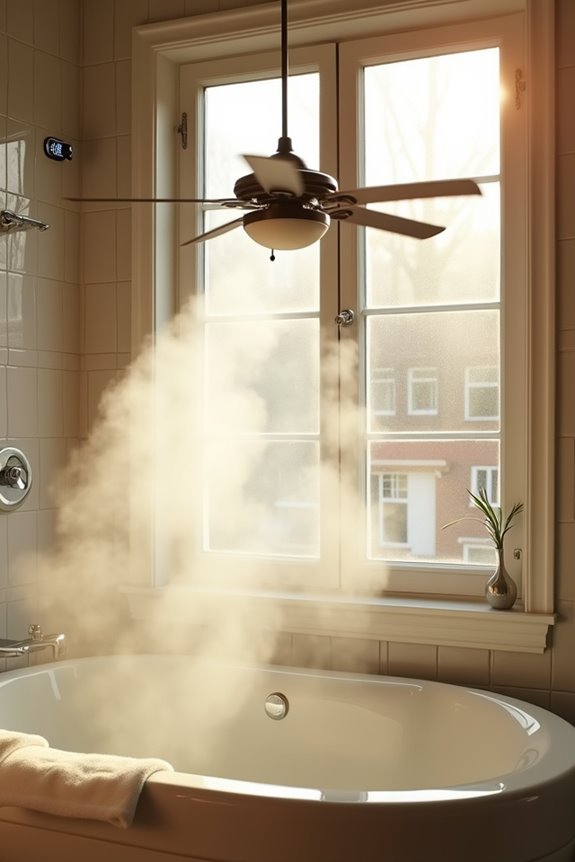
So what’s actually happening when you flip on that bathroom fan during a scorcher of a summer day? You’re creating a pressure problem. When your exhaust air leaves through the fan, you’re removing cooler indoor air. Nature hates a vacuum, so warmer outdoor temperature air rushes in through cracks and gaps—I learned this the hard way. This infiltration brings unwanted heat gain and humidity with it. The continuous air exchange from your fan actually warms your house rather than cooling it. On hot days, that pressure difference pulls in more warm outdoor air than you’re getting rid of. It’s counterintuitive, I know. Your fan works harder, your AC works harder, and your energy bill climbs.
When a Bathroom Fan Actually Helps: Temperature Timing Matters

When does that bathroom fan actually cool your house instead of warming it? Timing is everything. Run your exhaust fan during cooler mornings or evenings when outdoor air is genuinely cooler than your indoor air. That temperature difference works in your favor.
Run your exhaust fan when outdoor air is cooler than indoor air—timing is everything for actual cooling.
Here’s the approach: check outside before flipping that switch. If it’s hotter out there, skip it—you’ll just pull warm air inside. But on hot days when evening arrives? That’s your moment.
Pay attention to humidity too. If outdoor air is drier, exhausting humid indoor air helps even more. I learned this the hard way after cooling my house for nothing all summer.
Consider running fans strategically: early morning, dusk, or overnight when conditions already support your cooling goals.
Should You Run Your Bathroom Fan Year-Round?
What if I told you that leaving your bathroom fan running constantly might actually work against you?
I’ve learned the hard way that year-round exhaust ventilation creates problems. When outdoor temperature climbs above your indoor air, continuous operation actually warms your house. Here’s why: the exhaust pulls hot air inside through cracks and gaps.
There’s more. Running fans constantly creates negative pressure in your home. This invites backdraft risk—warm attic air sneaks into living spaces through ducts. Not ideal.
Instead, I recommend balanced ventilation. A dedicated fresh-air input or HRV system gives you reliable cooling and humidity control without the headaches. They work intelligently, responding to actual conditions rather than running blindly.
Your home deserves smarter breathing. Ditch the constant fan habit.
When You Need More Than a Bathroom Fan
Your bathroom fan can only do so much before you need bigger reinforcements. When outdoor air’s hotter than your indoor space, that fan actually works against you—it pulls in scorching air instead of cooling things down. You’re basically fighting physics, and physics wins every time.
That’s when I realized I needed a balanced system. A whole-house cooling solution like an HRV handles ventilation properly by managing outdoor air intake alongside exhaust. Your bathroom fan alone creates unbalanced flow, which invites backdrafts and wastes energy.
If you’re serious about cooling, consider controlled fresh-air ventilation. It’s the difference between hoping for relief and actually achieving it. Sometimes we need stronger tools to win.