
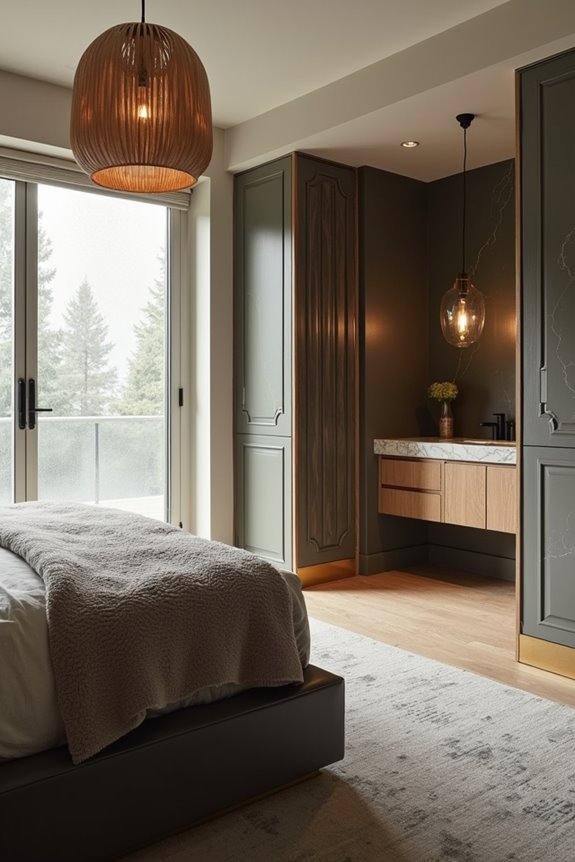
Your bedroom and bathroom don’t need matching decor—they need to *connect*. I recommend repeating two or three shared elements like brass hardware, warm wood tones, or soft gray paint to tie them together without looking identical. Think of it as a whisper between rooms rather than a shout.
A neutral foundation works beautifully as your base, letting each space develop its own mood while staying linked. Cohesion comes from the layers you build with intentional contrast and subtle threads of connection.
Do Your Master Bedroom and Bathroom Need to Match?
Why do we automatically assume our bedroom and bathroom have to look like twins separated at birth? I used to think they did—until I realized they don’t.
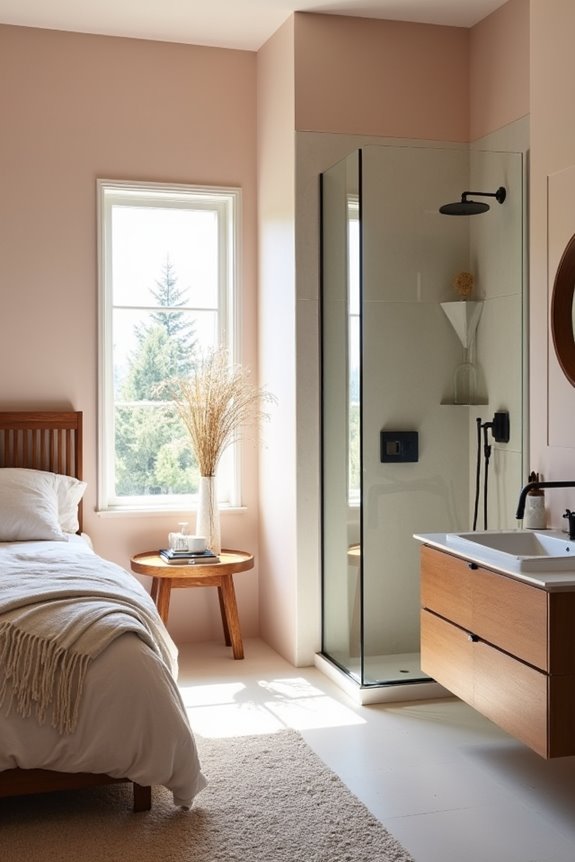
Here’s what I’ve discovered: cohesion and contrast can actually work together well. You can create a warm, cozy bedroom that pairs perfectly with a clean, spa-like bathroom. These different moods complement each other rather than clash.
The real approach? Repeat shared elements. I tie my spaces together through matching finishes or textures without making everything identical. Maybe I use the same wood tone in both rooms or echo a neutral color palette.
Your bedroom and bathroom don’t need to match. They need to *feel* connected while letting each space do its own thing.
Matching Your Spaces: Colors, Textures, and Design Elements
So how do you actually tie your bedroom and bathroom together without making them feel like a matched set from a furniture catalog?
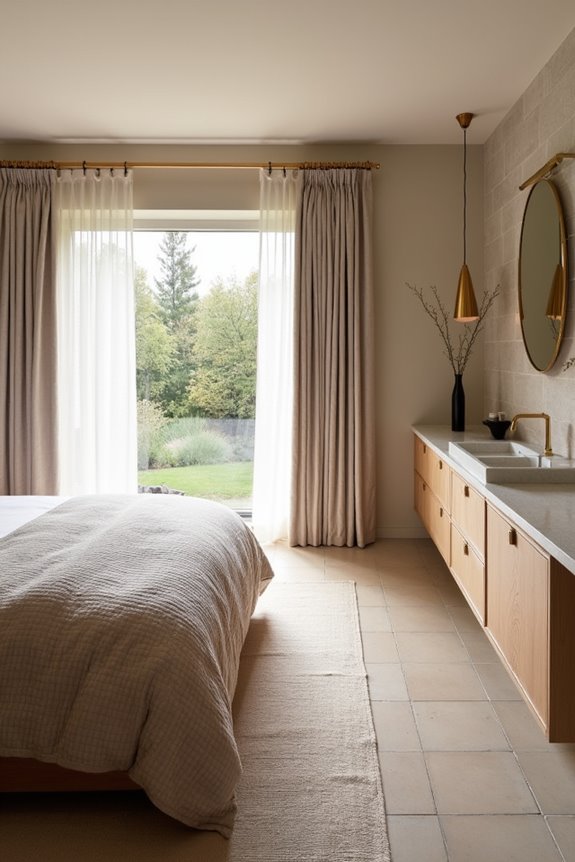
Start with two or three main colors you love. I use soft neutrals with blue accents in both spaces—it creates harmony between your bedroom and bathroom naturally. Then repeat specific materials. Matching brass hardware on fixtures and mirrors instantly connects the rooms without screaming “we’re twins!”
Consider textures too. Wood finishes, whether warm oak or cool gray, establish a cohesive feel. A woven basket in your bedroom pairs nicely with a woven wall hanging in your bathroom.
The approach? You’re not decorating identical rooms. You’re creating spaces that whisper to each other. One soft. One energizing. Both distinctly your own.
Five Coordinated Styles That Work for Both Rooms
If you’re like me and can’t decide between matching everything or going totally different, I’ve found that certain design styles actually work well in both your bedroom and bathroom without feeling forced. Let me show you a couple of my favorites—Modern Coastal and Minimalist Luxe—that prove you can have a unified look while letting each room maintain its own character.
Modern Coastal Elegance
How do you create a bedroom and bathroom that feel like they’re part of the same peaceful retreat? Modern Coastal design is your answer. I’ve found that combining light blues, sandy neutrals, crisp whites, and driftwood tones instantly creates cohesion between rooms.
The key? Repeating materials and textures. I use white shiplap or light wooden vanities in both spaces—no need for exact matches. Linen fabrics and woven accents add natural warmth throughout.
Here’s what ties everything together beautifully: matching hardware. Brass or brushed nickel finishes in both rooms reinforce that connected feeling. When your doorknobs, faucets, and light fixtures echo each other, the spaces feel unified.
The result? A calm, airy sanctuary where color and texture flow throughout. Your bedroom and bathroom become one cohesive escape.
Minimalist Luxe Aesthetics
When you’re ready to refine your bedroom and bathroom, Minimalist Luxe aesthetics deliver—without the fuss. A cohesive color palette—think soft whites, warm grays, and touches of gold—creates unity across both spaces. Repeating key elements like marble textures and brass hardware establishes continuity between rooms while maintaining distinct character in each.
| Element | Bedroom | Bathroom | Purpose |
|---|---|---|---|
| Color Base | Soft white walls | Soft white tiles | Unity |
| Accent Metal | Gold fixtures | Gold mirrors | Elegance |
| Texture | Marble nightstand | Marble countertop | Sophistication |
| Mood | Calm retreat | Spa-like serenity | Relaxation |
The result? Two rooms that feel intentionally connected, never matchy-matchy. Your spaces convey luxury through restraint rather than excess.
Intentional Contrast: When Mismatched Rooms Work Better
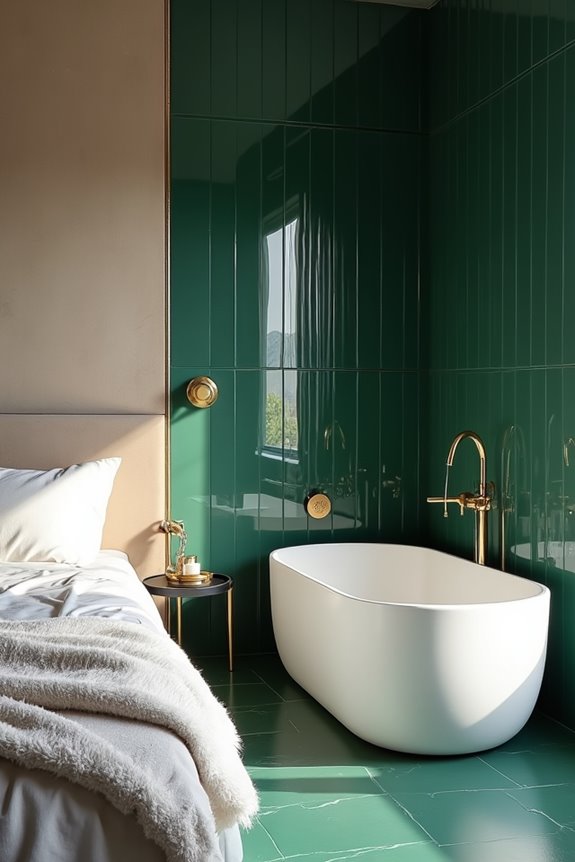
I’ve learned that your bedroom and bathroom don’t need to match—and honestly, they probably shouldn’t if you want each space to do its job well. When I paired my warm bedroom with a crisp, spa-like bathroom, I discovered that the contrast actually made both rooms feel more deliberate and thoughtful. The key is creating that visual break on purpose, using shared elements like color undertones or similar textures to keep everything connected even when the moods are completely different.
Creating Purposeful Visual Breaks
Why settle for matchy-matchy rooms when you can actually use contrast to make both spaces feel more considered and distinct?
I’ve learned that purposeful visual breaks between your bedroom and bathroom create something worthwhile. Think of it this way: your bedroom invites you to rest with warm textures and soft lighting. Your bathroom becomes a spa-like escape where clean lines and crisp finishes energize you. This intentional shift prevents visual fatigue.
The trick? Use contrasting moods while keeping them connected. Repeat brass hardware in both spaces. Echo wood tones from your bedroom’s nightstand in bathroom shelving. These shared details prevent the rooms from feeling disconnected while letting each space breathe differently.
You’re not just decorating—you’re creating distinct experiences that serve different purposes within one cohesive home.
Mood Separation Through Design
Harmony doesn’t mean matching everything. Your bedroom needs coziness—think warm lighting, soft textures, maybe moody wall colors. Your bathroom deserves to feel like a spa retreat with crisp whites, bright lighting, and clean lines.
Create mood separation intentionally. I pair my bedroom’s deep blues with my bathroom’s pale neutrals. They’re different worlds, yet they work together.
Here’s the approach: use one shared element—a wood finish, a color undertone, or a texture—to tie them together. It’s like wearing the same scarf with two completely different outfits. You maintain cohesion while letting each room breathe its own personality.
This works.
How Paint Colors Create Connection Without Forced Matching
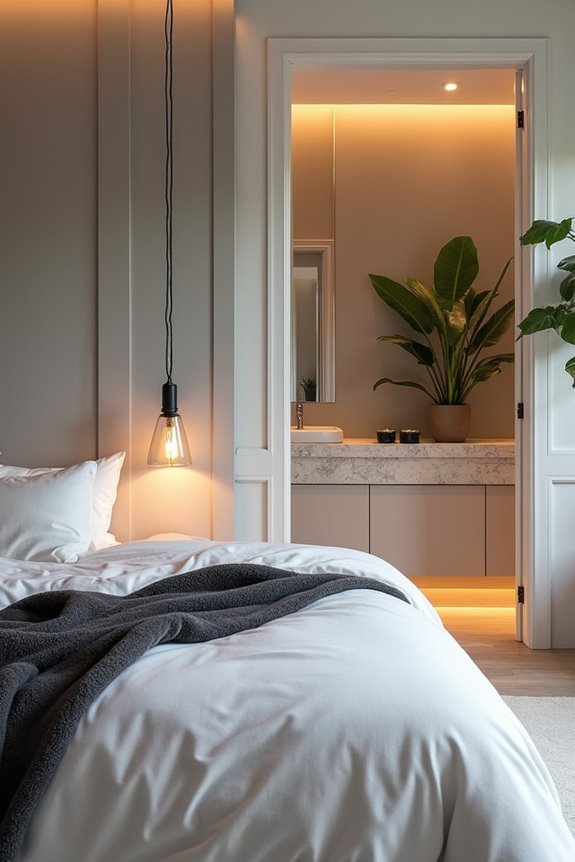
When’s the last time you walked from your bedroom into your bathroom and felt like you’d stepped into a completely different world?
I’ve learned that paint colors create connection without forcing exact matches. Instead of painting both rooms identical, I use analogous colors—shades next to each other on the color wheel. This builds cohesion naturally.
| Bedroom | Bathroom | Why It Works |
|---|---|---|
| Soft sage | Pale green | Adjacent colors flow together |
| Warm beige | Cream | Neutral palette feels unified |
| Dusty blue | Slate blue | Deeper tone maintains connection |
| Soft taupe | Greige | Subtle shift shows planning |
Your color palette becomes a thread connecting both spaces. I pick two to three main colors across rooms. The transition feels deliberate, not random. You’re building an atmosphere your guests—and you—actually want to experience.
Design Elements That Tie Bedroom and Bathroom Together
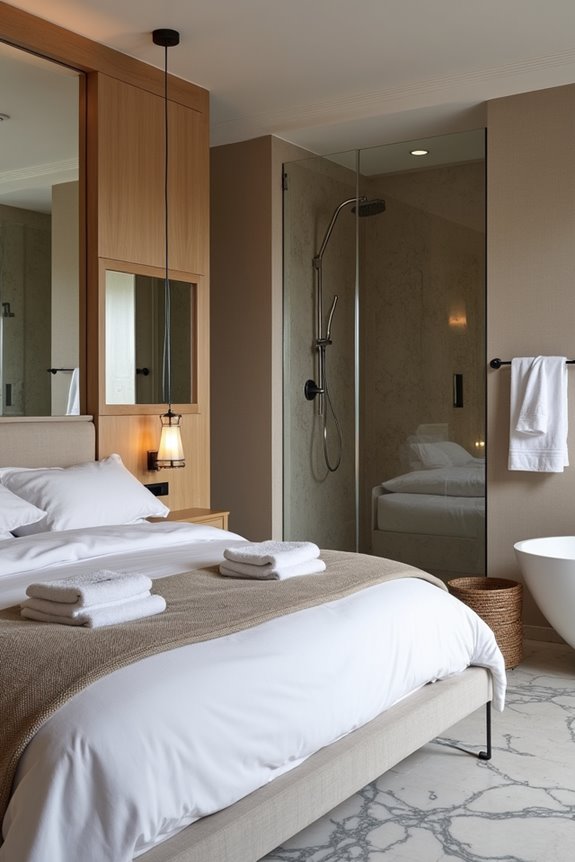
Beyond paint colors, you have powerful tools to link these two spaces together—and they’re probably already sitting in your rooms. Think about shared design elements that create harmony without forcing an obvious match. Natural wood finishes on bedroom furniture and bathroom vanities create an immediate connection. Repeating textures like shag rugs or shiplap walls tie spaces together well. Matching wall art frames or similar themes—say, coastal or floral—provide continuity that works naturally. Hardware finishes matter too. Brushed brass or matte black fixtures in both rooms work like invisible threads binding everything together. These design elements let each space function independently while keeping things connected. You’re not forced into identical rooms. Instead, you’re building a home where the spaces relate to one another in a way that feels natural.
Start With Neutral: Why a Flexible Foundation Wins
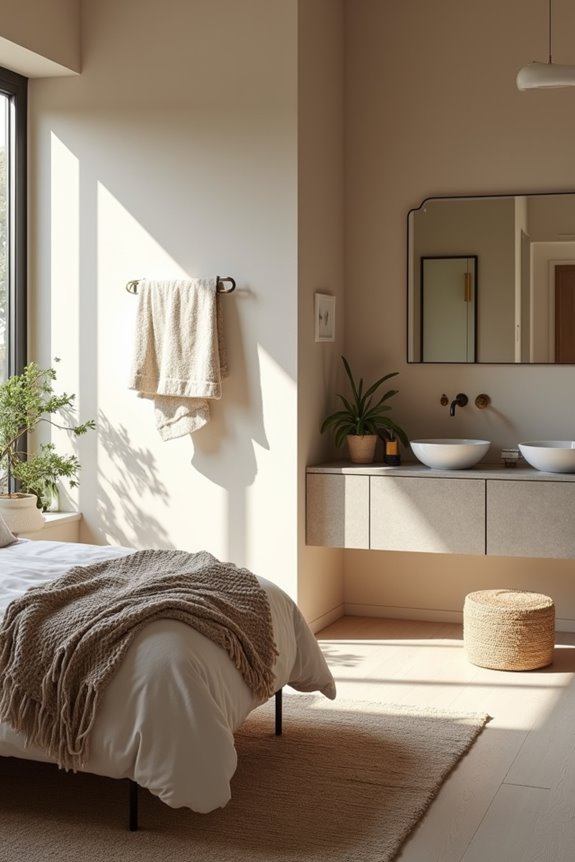
Why do some homes flow from room to room while others feel chaotic? A flexible foundation helps: starting with neutral colors.
When I painted my bedroom and bathroom in soft grays and warm whites, something shifted. These neutral tones created a flexible base that lets each space work independently without clashing. I’m not locked into one look—I can add bold accents in my bedroom while keeping my bathroom calm and spa-like.
Here’s what I learned: neutrals build connection naturally. They highlight architectural details and let lighting carry the visual weight. Two shades of the same hue work well in different rooms, creating distinct zones while maintaining that linked feeling.
This approach gives you room to breathe. You’re building a cohesive strategy that feels deliberate, not repetitive. That’s the sense of belonging you’re seeking.