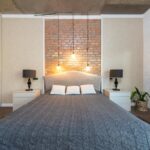
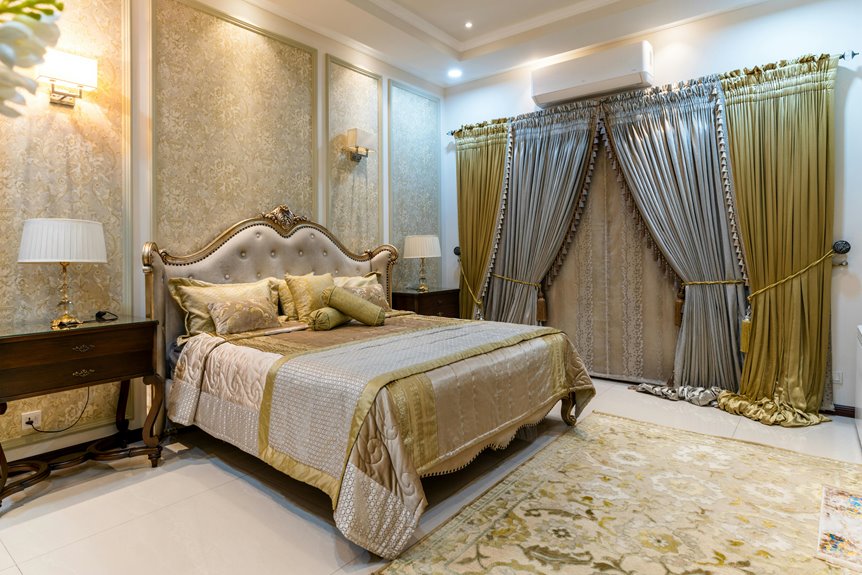
I’ve found that creating your bedroom starts with decisions that ripple through the space. Paint your walls first—they guide everything else. Then plan your lighting before furniture arrives. Choose a headboard that anchors the room, layer natural textures, and hang a strategic mirror to expand the space. Display personal art, build smart storage, and add wood and plants. Finally, arrange furniture for multiple uses—sleeping, working, relaxing. These moves create a sanctuary that feels considered and yours. Keep reading to discover exactly how each piece fits together.
Paint Your Walls First: They Set Everything Else
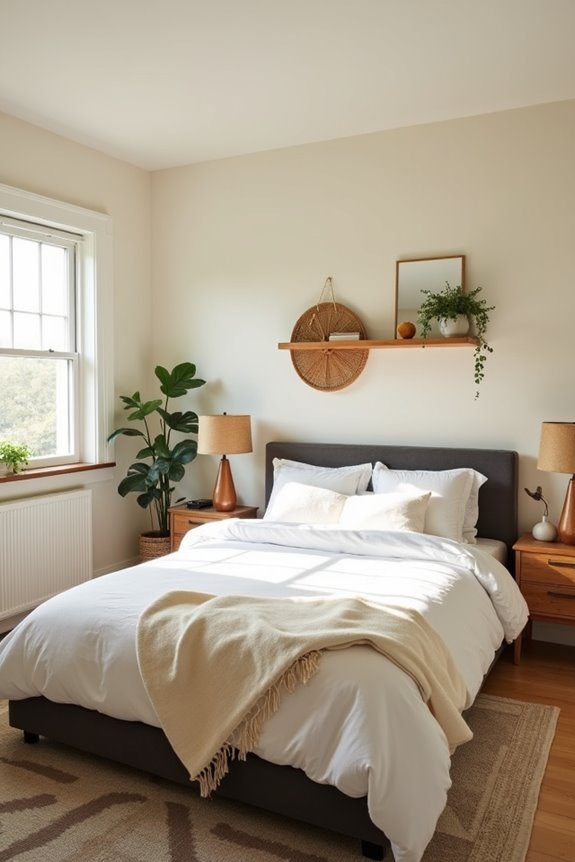
Ever notice how a single wall color can completely change the feeling of a room?
A single wall color can completely transform how a room feels and functions.
I learned this the hard way. I’d picked furniture first, then struggled to find a paint that matched. Now I do it backwards—and my decorating process works much better.
Your walls create the foundation. They influence everything that comes next: your furniture choices, your textiles, your décor. It’s like they’re giving permission to the rest of your room.
Here’s what I do now. I explore a 132-shade paint palette with actual color names. I order free colour cards to see how shades look in my space. Then I choose. Soft neutrals and aquatic greens create calm backdrops. Deeper tones establish cozy moods.
Colors like Olive No.13 or Pale Powder No.204 work beautifully as lasting bases. They pair with almost anything you’ll add later.
Paint first. Everything else follows.
Choose Your Lighting Strategy Before Adding Furniture
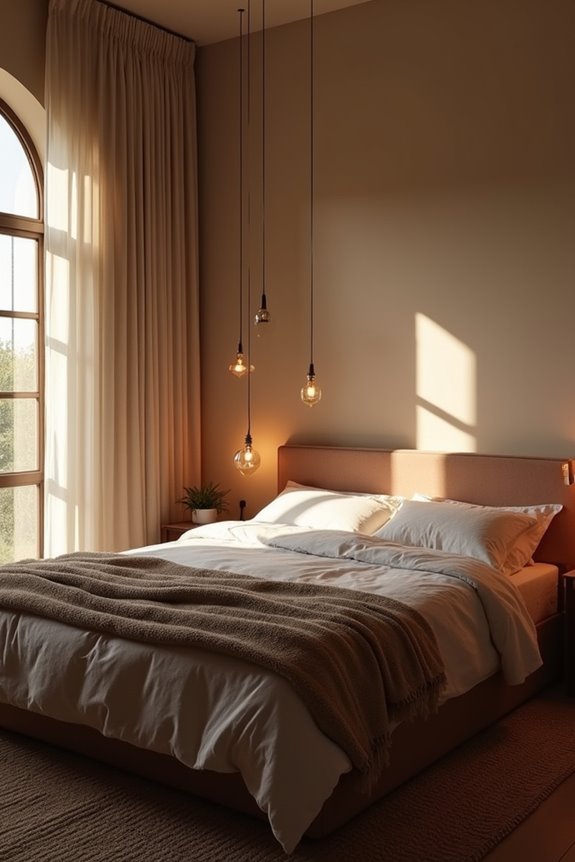
I learned the hard way that picking your lighting strategy before you buy that gorgeous dresser is actually important—I’ve rearranged furniture more times than I’d like to admit. Think of lighting as the foundation that determines everything else: you need ambient light for overall brightness, task lighting for reading in bed without straining your eyes, and accent lighting to highlight whatever makes your room special. Once you nail down where your natural light comes from and which fixtures you’ll use to fill the gaps, your furniture placement practically falls into place.
Lighting Layers and Functionality
How many times have you flopped into bed only to realize you can’t read, or stood in your closet squinting at your clothes because the overhead light’s too harsh?
That’s where layered lighting helps. I’ve learned that combining ambient lighting, task lighting, and accent lighting creates flexibility you’ll actually use. Ambient lighting provides your room’s basic glow—think soft ceiling fixtures. Bedside lighting is your practical tool. I keep lamps on both nightstands so I can read comfortably without disturbing my partner. Task lighting in your closet or dressing area helps you see clothes clearly.
The benefit comes when you can adjust these layers. Dimmers let you shift from bright morning energy to calming evening vibes. You’re not stuck with one harsh setting anymore—instead, you’re creating spaces that work for how you actually live.
Focal Points Through Illumination
When you’re redesigning your bedroom, what’s the first thing you usually buy—the bed, the nightstands, maybe some pretty wall art? I used to make that mistake. Here’s what I’ve learned: choose your lighting strategy first.
Pendant lights and ceiling fixtures become natural anchors that shape your room’s entire ambiance. I installed a statement pendant above my bed, and suddenly the whole space felt deliberate. Large globes or paper pendants work especially well in rooms with high ceilings—they draw your eye upward and create drama.
The approach? Plan lighting before furniture arrives. Your lighting choices guide where everything else goes. Dimmers let you adjust brightness for different moods. This method makes lighting the foundation of your bedroom’s personality rather than an afterthought.
Natural Light Maximization Strategy
Before you push that bed against the wall or position your nightstands, there’s something you’ve got to do first—observe your windows.
I learned this the hard way after rearranging my room three times. Here’s what I do now: I track where natural light enters throughout the day. Morning sun from the east? Afternoon rays from the west? This matters.
Next, I use reflections strategically. Mirrors opposite windows bounce daylight deeper into the room—I’ve made small bedrooms feel spacious this way. Light-filtering blinds let me keep brightness without sacrificing privacy.
Finally, I choose a color palette that works with my room’s daylight. Cool neutrals brighten north-facing rooms; warm tones enhance southern exposures.
Position furniture to avoid blocking windows. Your brain actually perceives rooms with unobstructed daylight as larger and more inviting.
Start here. Everything else follows.
Select a Headboard Style That Fits Your Space
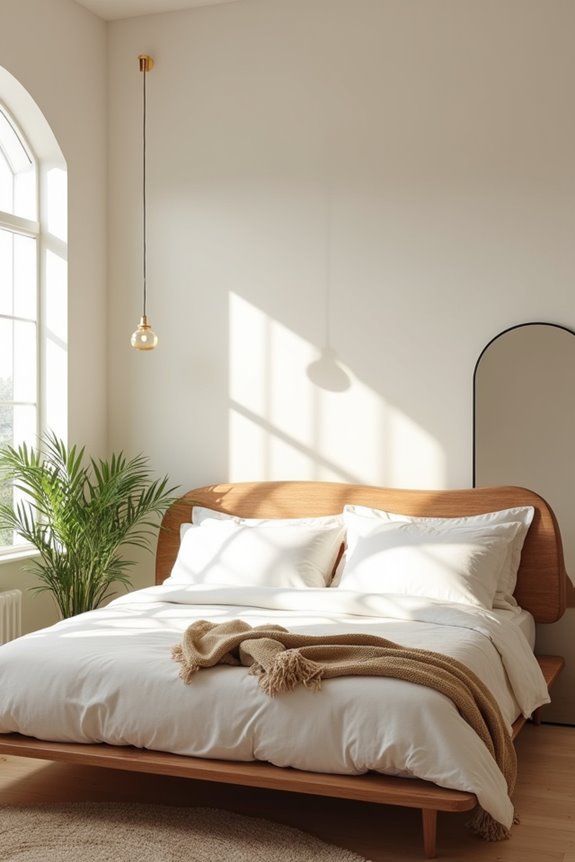
Why does a headboard matter so much when you’re decorating your bedroom? I’ve learned it’s your room’s anchor—the first thing your eyes land on. Your headboard sets the vibe for everything else.
I started small in my cramped bedroom and discovered that integrated headboards with built-in storage worked well. They’re practical for small bedrooms because they don’t waste precious floor space. You get style and function together.
Consider what speaks to you. Upholstered headboards feel cozy. Wood gives you clean lines. Minimalist designs blend seamlessly with your walls.
Your headboard guides your entire color palette and texture choices. It’s not just furniture—it’s your bedroom’s personality on display. Choose something that makes you feel at home.
Layer Natural Fabrics and Tactile Materials
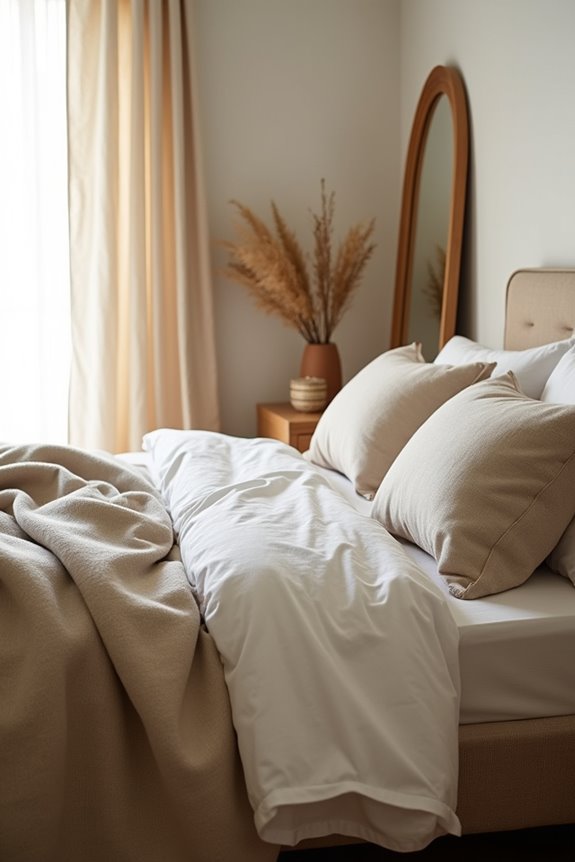
I’ve learned that layering fabrics is the foundation of making a bedroom feel both cozy and interesting—and I’m talking about mixing soft velvet pillows with rougher jute throws, or pairing chunky knit blankets with smooth linen sheets. When you combine different fabric weights and textures this way, you’re not just adding warmth; you’re creating depth that makes your space feel more deliberate and welcoming. Let me walk you through how to pick the right natural fibers and texture combinations so your room functions as a genuine retreat rather than an afterthought.
Texture Combinations For Warmth
When you layer different fabrics and materials in your bedroom, you’re giving the room genuine warmth—and it’s far more effective than cranking up the thermostat.
Texture combinations create real warmth without needing bold colors. Here’s what works:
- Mix plush throws with crisp linen sheets for contrast
- Combine wool blankets and suede pillows for richness
- Layer a woven rug under your bed frame
- Add textured wall panels or soft wallpaper
The trick is pairing natural materials with neutral palettes—think beiges, creams, and taupes. When I combined leather accents with wooden nightstands and woven baskets, my bedroom changed. The layering creates depth that makes the space feel purposefully designed. You’re building texture warmth strategically, which works better than any single bold choice.
Natural Fiber Selection Guide
Natural fibers are your concealed weapon for creating a bedroom that feels as good as it looks. I’ve discovered that wool, linen, and cotton blends create a space into something genuinely cozy without feeling overdone.
Here’s what I recommend: Start with cotton sheets as your foundation—they’re breathable and timeless. Layer in a wool blanket for warmth that actually regulates temperature. Add linen throw pillows for visual interest. Don’t forget jute or rattan accents; they ground your textures beautifully.
The best results happen when you mix weights and weaves. A chunky knit throw paired with smooth velvet cushions creates depth. Pair everything with low-VOC finishes—your lungs will appreciate this choice.
Natural textiles create the bedroom sanctuary you’re craving.
Hang a Large Mirror to Expand the Room
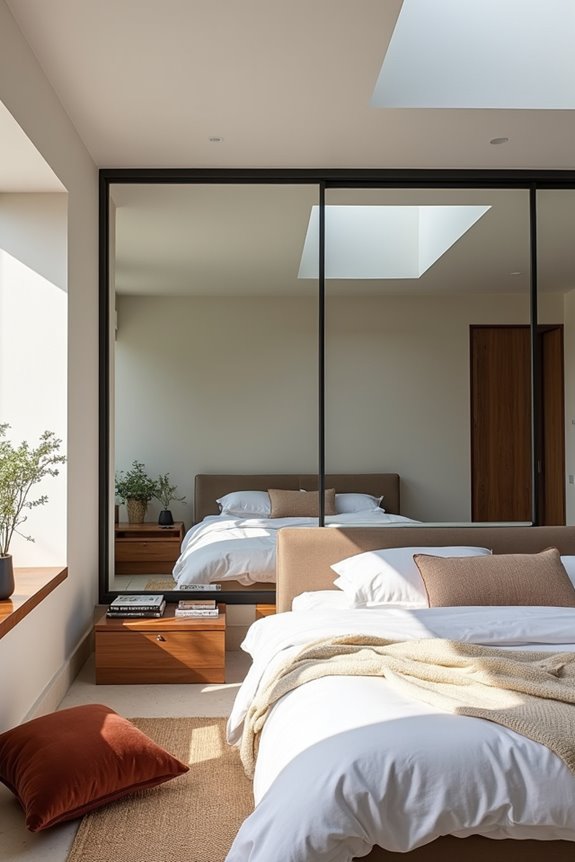
Why does a simple mirror work so well in a small bedroom? Because it actually works. I’ve found that hanging a large mirror changes how I experience my space—and you can too.
Here’s what I’ve learned about using mirrors for space expansion:
- Position your mirror on a wall or elevated bench to catch natural light and bounce it around
- Choose frames that match your room’s earthy, minimalist vibe so nothing looks out of place
- Angle it thoughtfully to reflect outdoor scenery or windows, creating instant depth
- Pair it with wooden textures and muted linens for balanced, modern warmth
The result? My bedroom feels bigger, brighter, and more inviting. No renovation required—just one strategic mirror doing heavy lifting for my small space.
Use Pattern and Geometry Intentionally (Not Everywhere)
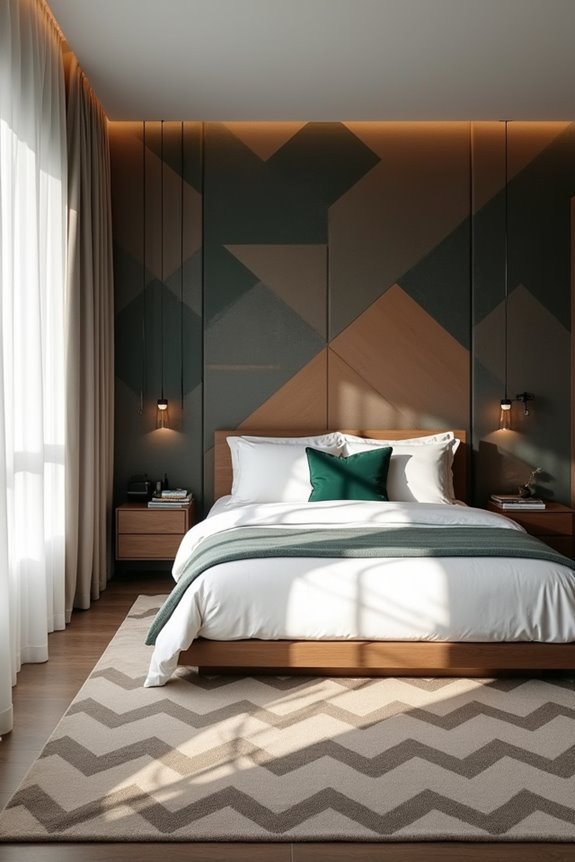
How do you add visual interest to a bedroom without making it look like a geometric explosion happened? Balance is everything. You don’t need pattern and geometry covering every surface—that’s actually overwhelming.
Instead, pick one focal point. Maybe it’s a bold geometric rug or striped curtains. Then keep everything else simple and neutral. I paired my cubic nightstands with a curved headboard, and suddenly the room felt designed rather than chaotic.
Here’s my approach: use large-scale patterns against calm backdrops. Contrast rounded shapes with squared frames. This creates visual interest without competition. Your patterns enhance the space instead of dominating it. Align your geometric accents with soft colors—neutrals work best. Restraint makes your bedroom a thoughtfully designed sanctuary.
Display Art and Objects That Reflect Your Personality
Your bedroom walls are the perfect canvas to show who you actually are—not who you think you should be. I’ve learned that mixing personal collections (those concert tickets, inherited art prints, photos from trips) with gallery walls creates a space that feels like home. The key is arranging these pieces with purpose: mix sizes, balance colors with your room’s palette, and swap things out as your taste evolves, because we’re all works in progress.
Personal Collections And Curation
A bedroom’s true character emerges when you fill it with objects that actually mean something to you—not what a magazine tells you should be there.
I’ve learned that a personal space tells your story. Here’s how I create gallery-style displays that feel like mine:
- Group related items by theme or color on shelves and walls
- Mix sentimental pieces with modern art for layered interest
- Use matching frames to unify diverse objects visually
- Rotate seasonal items to keep your display fresh
The key? Balance scale and meaning. I pair heirloom mirrors with contemporary frames. I swap out pieces seasonally while keeping my favorites visible. I used to display everything at once—clutter city. Now I store less-used items away.
Your bedroom should whisper your personality, not shout it. That’s when you truly belong in your own space.
Gallery Walls And Statement Pieces
When I finally stopped arranging art randomly on my walls, everything clicked into place. I discovered that thoughtful interior design creates a bedroom that reflects who you are.
Creating Balance
I started with one large piece as my focal point—a bold painting that set the tone. Then I built outward, mixing frame sizes and orientations. Small photographs balance bigger prints. Varying heights and widths create natural rhythm without feeling chaotic.
Adding Personal Touch
I included meaningful mementos alongside artwork. A framed concert ticket. A family photo. These personal pieces tell my story while maintaining consistent styling.
The Refresh Factor
Here’s what I love: I can rotate pieces seasonally. Swapping frames keeps things fresh without redecorating everything. Gallery walls aren’t permanent—they evolve with you.
Build in Storage to Keep Surfaces Clear
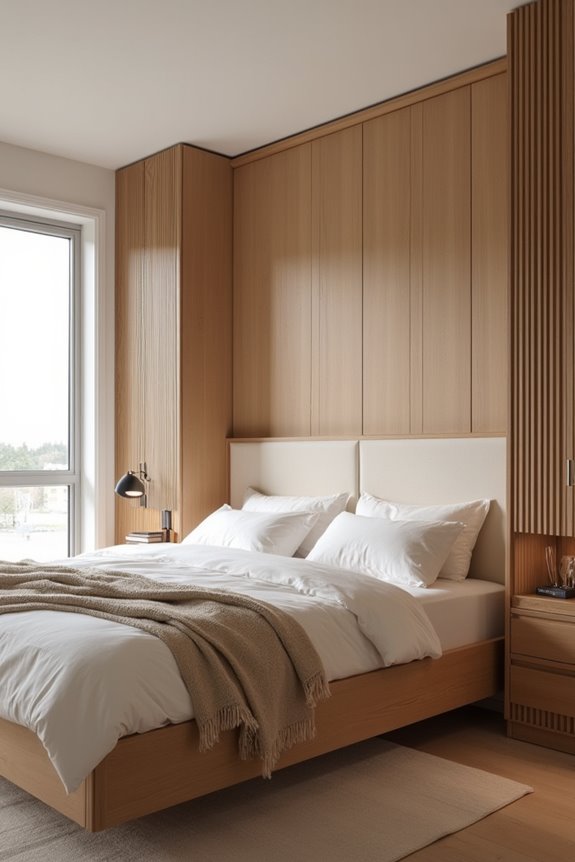
Since clutter has a way of creeping onto every available surface, built-in storage is one of the best moves you can make for a peaceful bedroom. I’ve learned this the hard way after my nightstand became a dumping ground for everything.
Here’s what’s worked in my space:
- Install wall-mounted shelving above your desk or dresser
- Choose storage beds that hide seasonal items underneath
- Add built-in wardrobes to eliminate clothing piles
- Use drawer organizers to maintain order inside
These solutions work because they give everything a home. When I added wall-mounted shelving, my floor instantly felt bigger. Storage beds work especially well for small rooms. You’re not sacrificing style either—these pieces blend seamlessly into your design. A clutter-free surface changes how your bedroom feels.
Add Wood, Plants, and Natural Textures
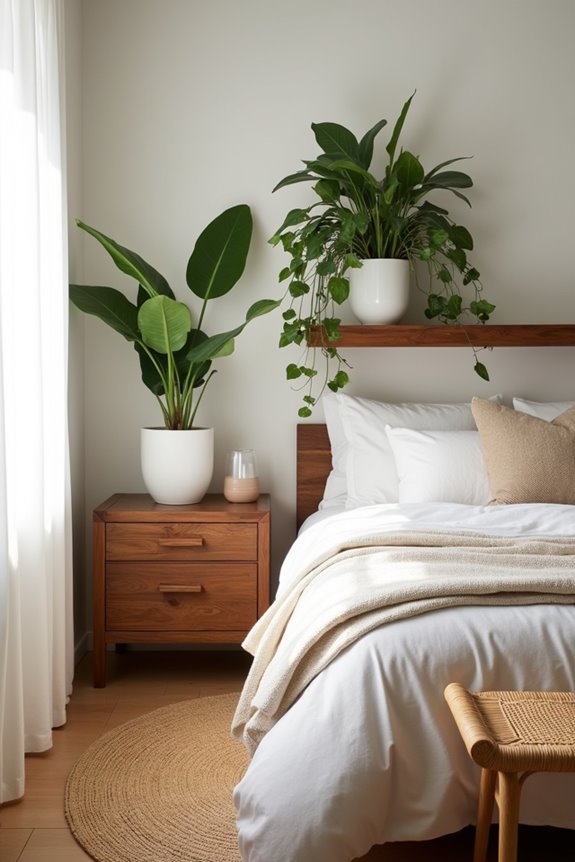
Now that your surfaces are clear and organized, it’s time to fill your bedroom with elements that actually make you want to spend time there.
I’ve found that bringing in natural textures creates a peaceful room. Start with wood—a wooden bed frame or veneer panels add visual interest. Then layer in plants at different heights. I keep hanging planters above my dresser and succulents on nightstands. They’re low-maintenance and improve air quality too.
Pair these with earthy materials like jute rugs and linen textiles. The combination creates a cohesive space. Use soft neutrals to keep everything calm while letting your wood and plants stand out. You’ll notice how this approach makes your bedroom feel inviting—not just decorated, but lived-in and restful.
Arrange Furniture So Your Bedroom Works for Multiple Uses
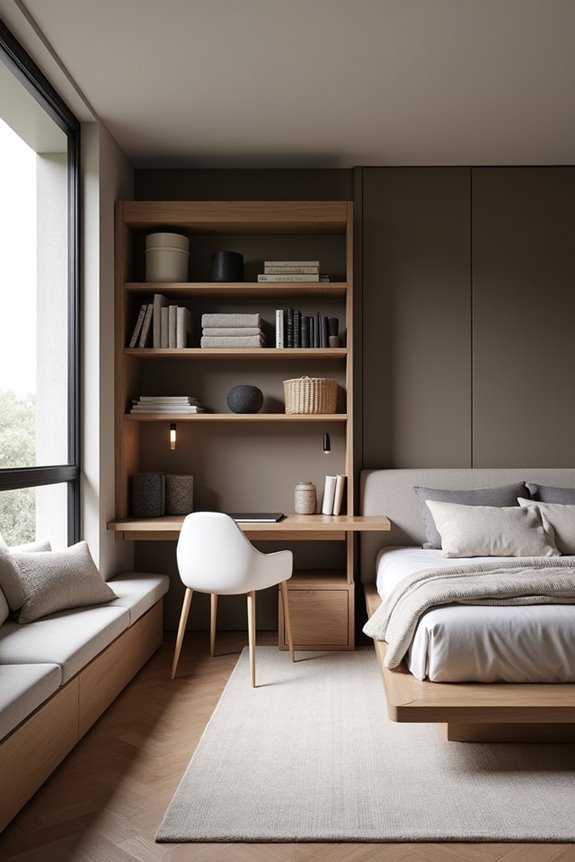
How do you fit a bedroom, home office, and relaxation zone into one space? Smart bedroom layout planning is your answer. Here’s what works best:
Smart bedroom layout planning is your answer to fitting a bedroom, office, and relaxation zone into one space.
- Use zoning to separate sleeping, dressing, and sitting areas
- Place matching bedside tables with lamps for balance and function
- Choose multifunctional furniture like ottomans that store and seat
- Mount shelves on walls to keep floors clear for movement
I position my bed in the corner to maximize floor space. Then I add a small desk nearby for work, and a cozy chair for reading. This arrangement keeps everything accessible without feeling cramped. Multifunctional furniture is key to making this work. When you arrange thoughtfully, your bedroom functions as a bedroom, office, or relaxation area—all in one.