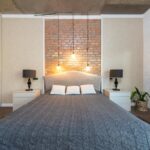
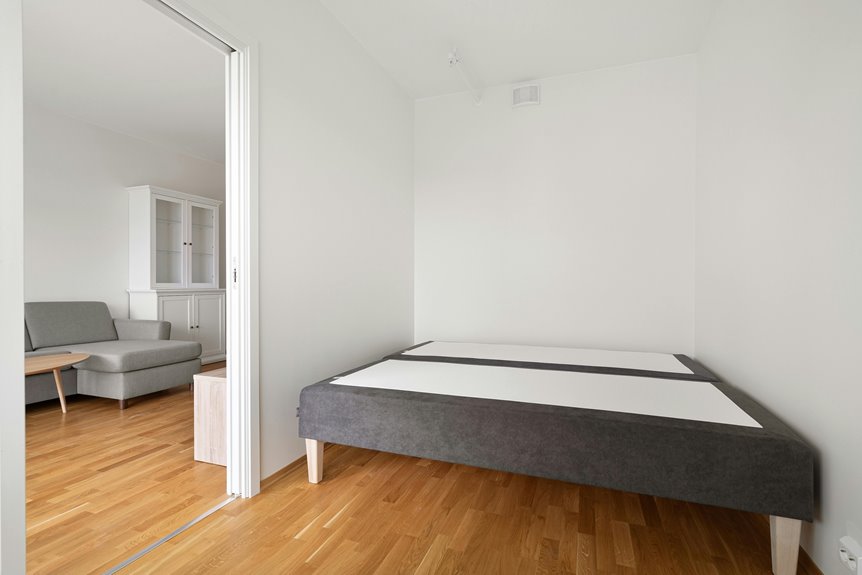
You can use a quality sofa bed or sleeper sectional to create a bedroom in your living room—they work well for compact spaces. Next, add a folding divider or curtains to separate the sleep area, then layer your lighting so it works during the day and feels comfortable at night. Include vertical storage to keep clutter organized, and you’ll have a functional dual-purpose space. The key is making it look purposeful rather than cramped, with several strategies available to achieve this.
Is This Right for Your Space? Know Before You Start
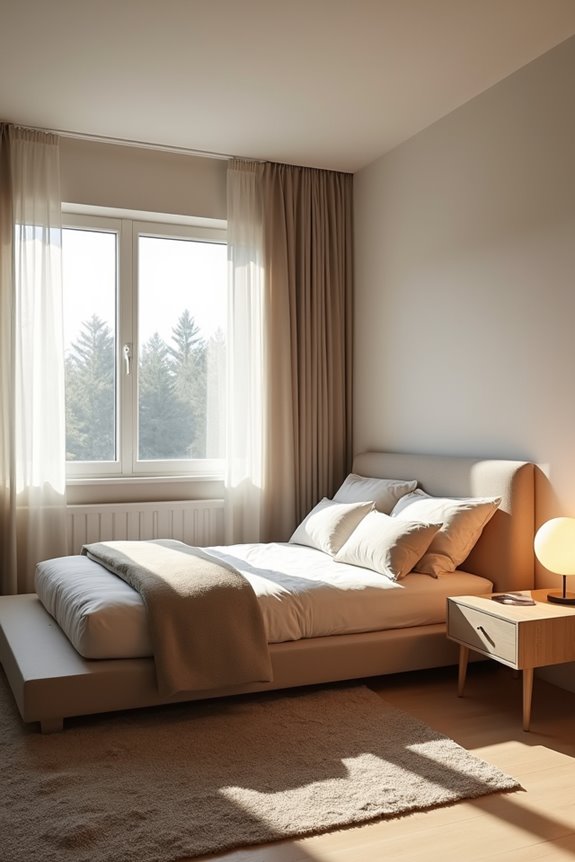
Have you ever wondered if your living room could work harder for you—maybe even pull double duty as a bedroom?
Could your living room work harder by pulling double duty as a bedroom? It might be possible with the right planning.
Before you swap rooms, honestly assess your space. I learned this the hard way: not every layout works equally well.
Check your traffic flow. Does your living room sit between the kitchen and bathroom? That constant foot traffic might keep you awake. Ask yourself where guests naturally walk.
Consider your sleeping space needs. Can you fit a bed comfortably without blocking exits? A room divider helps create privacy without permanent changes—perfect for testing before committing.
Think about dedicated zones. If your bedroom becomes your workspace, can you actually separate work from relaxation? I’ve discovered that mixing purposes requires intentional boundaries.
Take time measuring. Sketch your layout. This non-permanent swap works best when you’ve genuinely thought it through first.
Sofa Beds and Sleeper Sectionals: The Easiest Starting Point
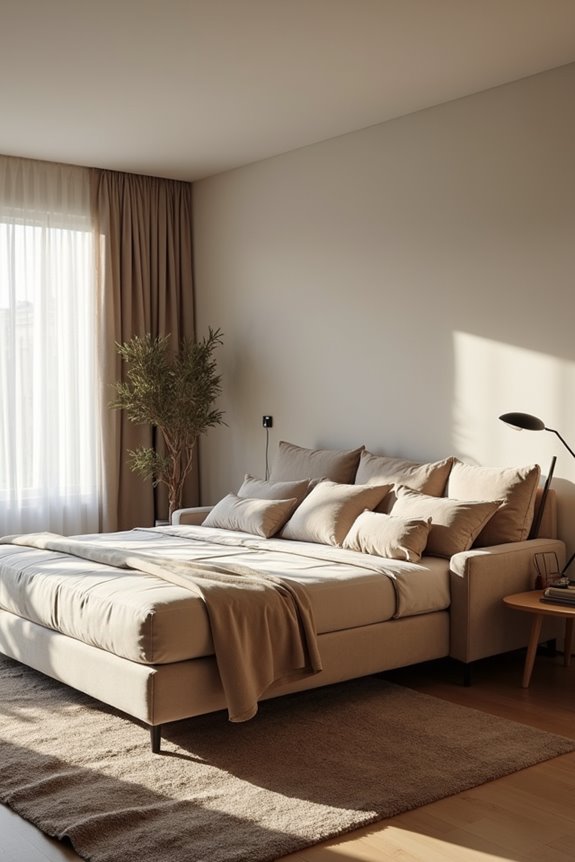
When I first tackled turning my living room into a guest space, I realized sofa beds and sleeper sectionals were my quickest win—no construction, no headaches. These pieces handle the heavy lifting by giving you a real couch for daily lounging and a legit bed that actually folds out (or slides out) when friends visit, which honestly beats the lumpy hand-me-down sleeper sofas I remember from childhood. The trick is matching the right style to your room: sofa beds work great if you’re tight on square footage, while sleeper sectionals give you extra seating and sleeping room if you’ve got the space to spare.
Sofa Bed Functionality And Comfort
Why settle for a living room that only works one way? When you choose quality sofa beds, you’re investing in a space that truly serves you and your guests. I’ve learned that what matters most is finding a model that doesn’t feel like a compromise.
Here’s what makes a sofa bed functional and comfortable:
- Mattress thickness (at least 5-6 inches) that rivals a real bed
- Strong frame support preventing that dreaded sinking feeling
- Easy folding mechanisms you won’t dread using nightly
- Quality fabrics that withstand daily sitting and sleeping
- Proper ventilation to keep the mattress fresh
Your sleep quality depends on these details. Modern sleeper options are genuinely comfortable now. I’ve noticed how much better today’s designs work compared to older models. You’re not settling anymore—you’re actually gaining flexibility without losing comfort.
Sleeper Sectional Space Solutions
If you’ve got a bigger living room and want to stop choosing between comfortable seating and a guest bed, a sleeper sectional might be your answer. I’ve found that these space solutions work well for how we use our rooms. You get multiple seating areas during the day—perfect for movie nights with friends—then unfold a comfy bed at night. No more apologizing for that lumpy old sofa bed.
Modern sleeper sectionals are lighter and way more comfortable than what our parents dealt with. The mattresses use memory foam or high-density options that actually feel good for sleeping. Plus, they reduce clutter by combining two furniture pieces into one.
When shopping, I look for easy-to-operate mechanisms and fabrics that resist stains. Your living room finally works as hard as you do.
Hide Clutter: Smart Storage in a Living Bedroom
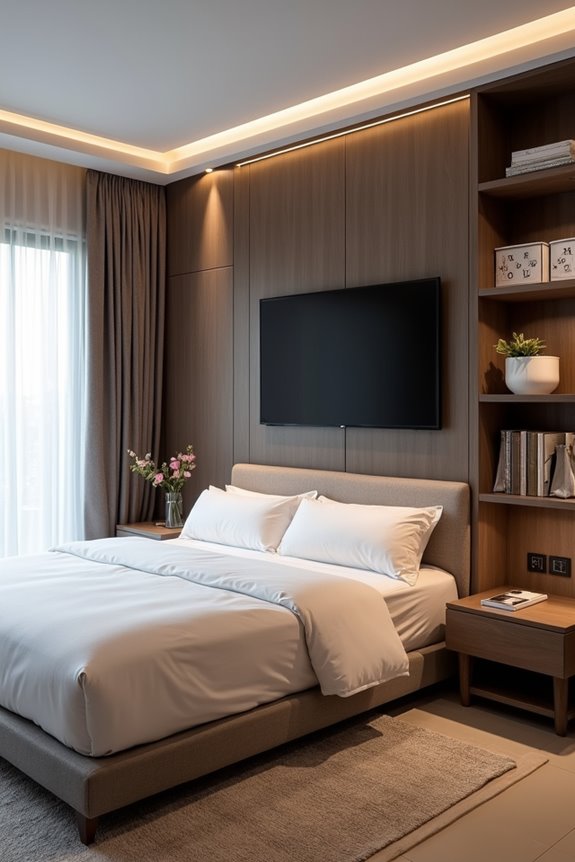
When I first tried making my living room pull double duty as a bedroom, I realized clutter was my biggest enemy—blankets draped everywhere, pillows stacked in corners, and bedding that seemed to multiply overnight. I learned that you’ve got to think vertical and smart with your furniture choices: wall shelves for folded blankets, storage ottomans that double as footrests, and lift-top coffee tables that hide sheets underneath (honestly, my guests never even knew those compartments existed). The real key was understanding that every piece of furniture in a dual-purpose room should earn its spot by storing something, which meant saying goodbye to decorative-only items and hello to functioning storage solutions.
Vertical Storage Solutions
How’d you like to reclaim your floor space without sacrificing an inch of storage?
I’ve discovered that vertical storage solutions work well for living bedrooms. By thinking upward instead of outward, you’ll maximize every square inch while creating natural room dividers. Here’s what’s working for me:
- Open-back bookcases separating living and sleeping zones without blocking light
- Wall-mounted cabinets above seating for hidden linens and pillows
- Lofted bed designs with under-bed storage or workspace
- Corner storage towers keeping clothing neatly organized
- Pegboards displaying essentials while saving precious floor real estate
I’ll be honest—my first attempt looked cluttered. But once I committed to vertical thinking, everything changed. These solutions aren’t just practical; they help you feel organized and calm in your shared space. You’re not just storing items; you’re building a functional home that actually works for your lifestyle.
Multi-Purpose Furniture Design
Why settle for furniture that does just one job when you’re working with limited space? Multi-purpose furniture lets my living room function as both a daytime living area and nighttime bedroom. A sofa bed serves as my seating during the day and sleeping spot at night—I’m not juggling two separate pieces. Storage ottomans hide bedding underneath while serving as footrests or extra seating. My lift-top coffee table conceals blankets and pillows while doubling as a work surface when I need it.
The benefit? Everything stays organized and clutter-free. When guests arrive, my space looks well-planned, not cramped. Storage-focused furniture keeps sheets accessible without dominating the room. Choosing multi-purpose pieces isn’t settling for less—it’s designing smarter. Your living room can work harder for you too.
Under-Bed Organization Systems
What’s hiding under your bed right now? If you’re living in a bedroom-living room combo, under-bed storage organization systems are useful for keeping clutter out of sight.
I organize my under-bed space with these essentials:
- Low-profile rolling containers for seasonal clothes
- Clear plastic totes with labeled lids for visibility
- Airtight bins protecting textiles from dust
- Modular dividers separating bedding and off-season wear
- Guest essentials stored separately for quick access
When you maximize this hidden space, you create additional organizational storage. I use labeled containers so I know exactly what’s stored where. This approach frees up your floor area, making your hybrid space feel more livable rather than cramped.
Reclaiming that under-bed real estate improves how you experience your room daily.
Create Privacy Without Walls: Dividers, Curtains, and Paint
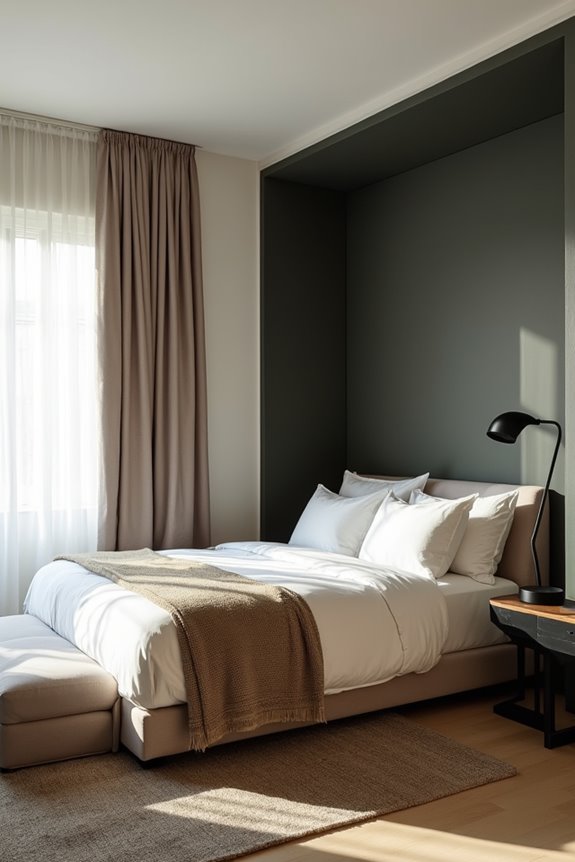
When you’re carving out a bedroom from your living room, you don’t need to break out the sledgehammer or commit to permanent walls. Simple solutions work best.
Folding Dividers are a practical choice. They’re affordable, portable, and functional. Position yours to cordon off your sleeping area in minutes—no tools required.
Curtains offer another approach. Navy velvet creates a cozy sleeping zone, while white linen keeps things airy. Swap seasonally without worry.
Paint matters too. Define your bedroom corner by painting just that wall a calming shade. It signals “sleep happens here” without feeling cramped.
The key? Layer these methods together. Mix dividers with soft lighting and coordinated colors. You’ll create distinct zones that feel genuinely separate, not makeshift.
Light It Right: Layering for Day and Night
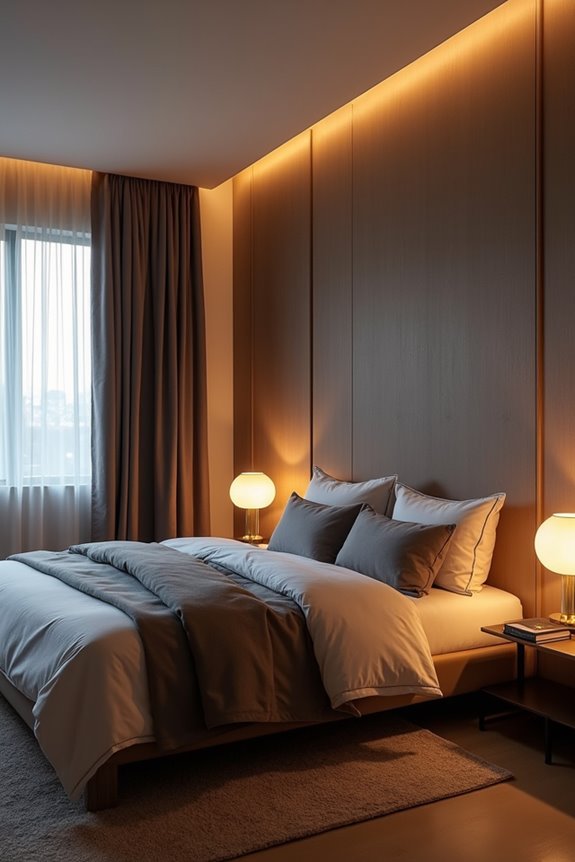
How’s your living room looking right now—bright and energetic during the day, then weirdly harsh at night? I’ve been there. The answer? Layering your lighting to match what you’re actually doing in the space.
Here’s what I’ve discovered works:
- Ambient lighting (overhead fixtures or soft lamps) sets the overall mood
- Task lighting (a reading lamp near your seating) helps you see without strain
- Accent lights (wall sconces or LED strips) create warmth and dimension
- Dimmable options let you shift from daytime living to nighttime sleeping vibes
- Warm-colored bulbs feel cozier than cold white ones
I’ve installed dimmers everywhere. During the day, I crank everything up for energy. At night, I dial it down so my space works as a relaxing bedroom feel. It’s one of the simplest ways to make one room do double duty.
Add Warmth With Rugs, Throws, and Layered Textiles
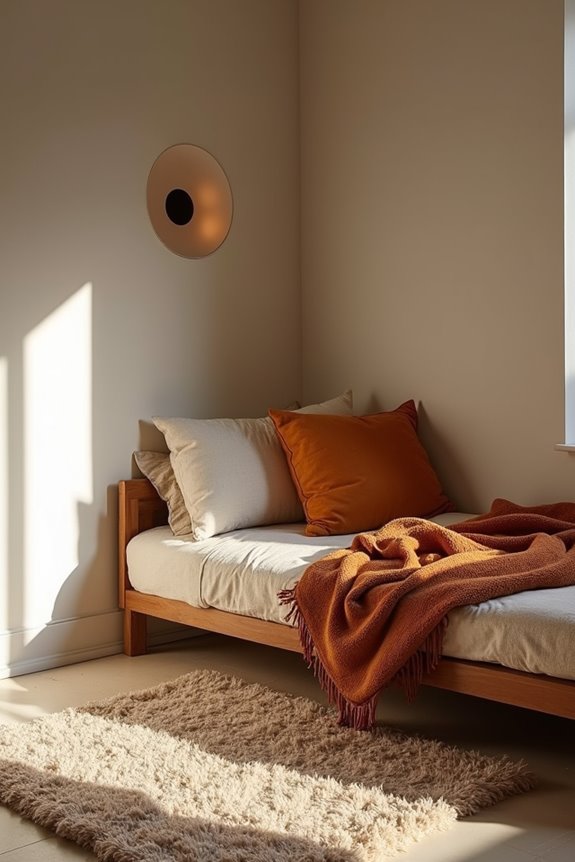
Lighting sets the mood, sure, but textiles are what actually make your space livable—and that’s especially true when you’re asking one room to be both a living room and a bedroom.
I’ve found that rugs and throws work well together. A soft rug anchors your sleeping zone while keeping daytime seating distinct. Layer a velvet throw across your bed or sofa, add coordinating pillows and blankets, and suddenly everything feels organized and comfortable.
| Textile Layer | Day Function | Night Function | Placement |
|---|---|---|---|
| Area Rug | Defines seating | Grounds sleeping space | Under daybed |
| Throw Blanket | Accent piece | Sleep comfort | On furniture |
| Pillows | Decoration | Support | Bed/sofa |
| Curtains | Visual interest | Privacy + darkness | Window/divider |
Curtains near your sleeping area control light and improve privacy. These textiles also soften sound, making your room feel more intimate and restful.
Lofted and Vertical Beds for Small Living Rooms
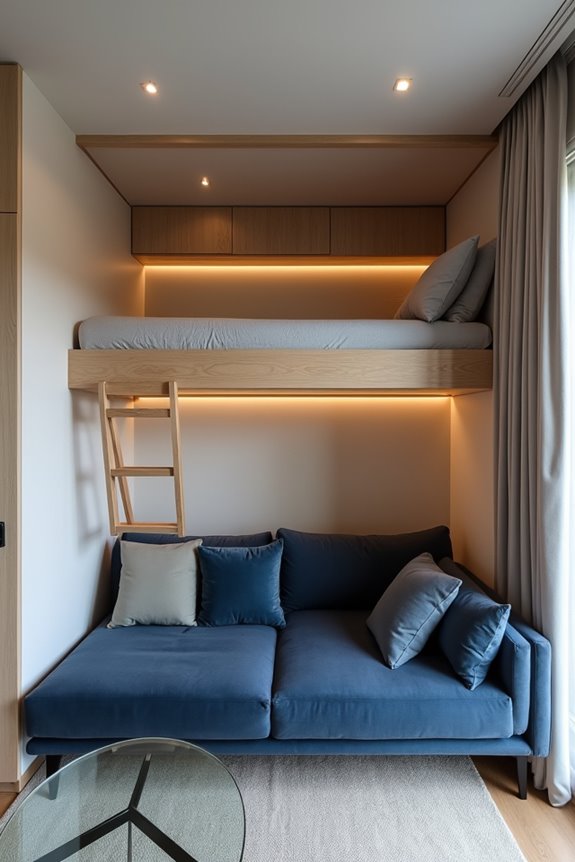
Ever looked at your tiny living room and wished you could somehow squeeze in both a proper bedroom and a comfortable seating area?
That’s where lofted and vertical beds come in. They work well for small spaces like mine. A lofted bed raises your sleeping zone while freeing up the floor below for living essentials.
Here’s what works about this setup:
- Creates a cozy sleeping nook overhead
- Opens floor space for a seating area underneath
- Allows room for built-in desks or shelving
- Requires a ladder or stairs for access
- Pairs perfectly with light walls and strategic lighting
The vertical bed design doesn’t expand your room’s footprint at all. You’re basically stacking your functions, which is practical when you’re working with limited square footage. It’s changed how I use my space.
The Final Touch: Making It Feel Like Home, Not Cramped
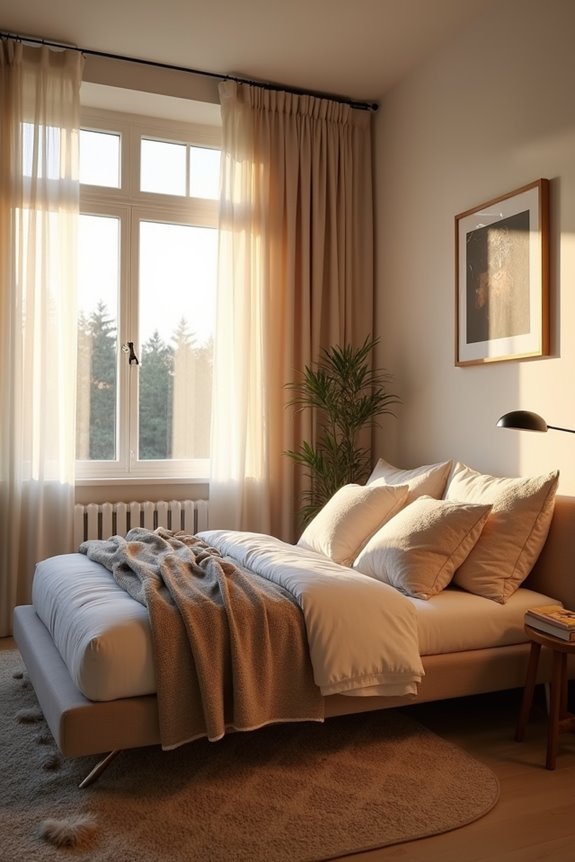
What makes a cramped dual-space livable: warm textiles. Soft blankets, cozy rugs, and layered pillows create intentional design rather than improvised arrangements.
Warm textiles transform cramped spaces into intentional design, signaling someone actually lives here.
Add plants around your space—they soften corners and bring greenery into rooms. Use sliding doors or modular dividers to separate your sleeping zone from your living area without blocking light.
Choose multi-functional furniture strategically. A sofa bed or daybed serves double duty without clutter. Include personal touches like a small reading nook or built-in shelving.
These details signal that someone actually lives here. That’s what makes it home.
Design Layouts That Work: Common Room Configurations
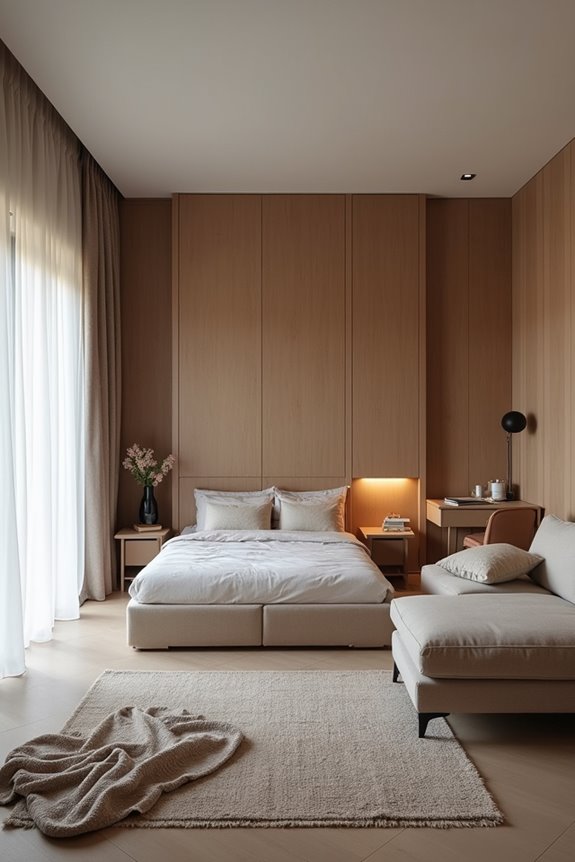
So you’re staring at your living room thinking, “How do I actually make this work as both a place to sit and sleep?” The good news is you’ve got more options than you’d think.
I’ve found that divider layouts are effective. They let you create separate zones without permanent walls. Here’s what actually works:
- Sofa bed for dual functionality
- Folding screens for flexible separation
- Curtain rods dividing sleeping from sitting areas
- Sliding doors for quick transitions
- Lofted beds to maximize floor space
The benefit? You’re not locked into anything. Test different arrangements before committing. I started with a simple screen and appreciated the freedom it gave me. You’ll find your rhythm too. It’s about discovering what works for your space and lifestyle.
Renters’ Solutions vs. Permanent Conversions
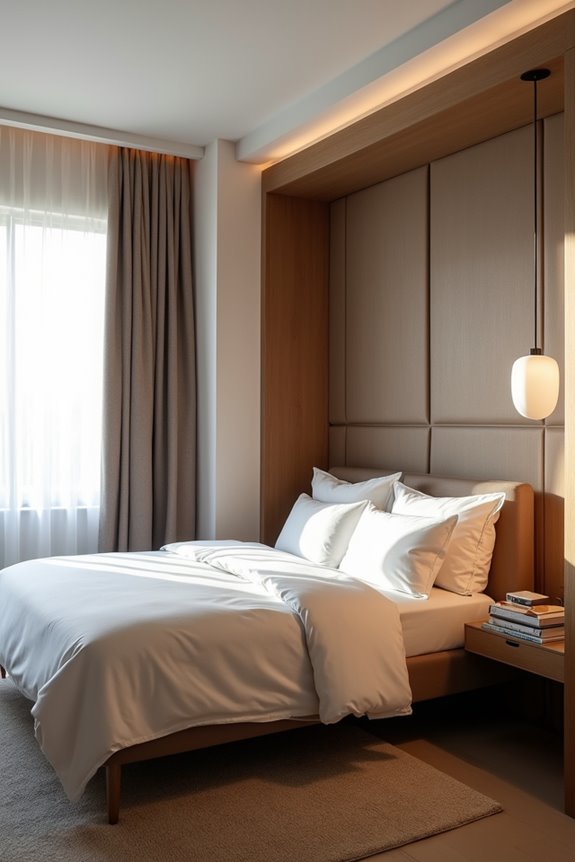
Now that you’ve got your layout figured out, let’s talk about what you can actually do with your space—because your situation matters.
If you’re renting, I get it. You can’t knock down walls or make permanent changes. That’s where folding screens come in handy. They’re affordable, portable, and you can move them around whenever you need a different vibe—perfect for Zoom calls or workspace shifts.
Curtains work great too. Hang them between zones using non-permanent divisions like tension rods, and you’ve got instant privacy without landlord drama.
For something more lasting but still flexible, consider lofted beds with bookshelves underneath. You get storage, a cozy sleeping nook, and light still flows through.
The key? Choose solutions that fit *your* life and move with you.
Troubleshoot Common Challenges in Dual-Use Bedrooms
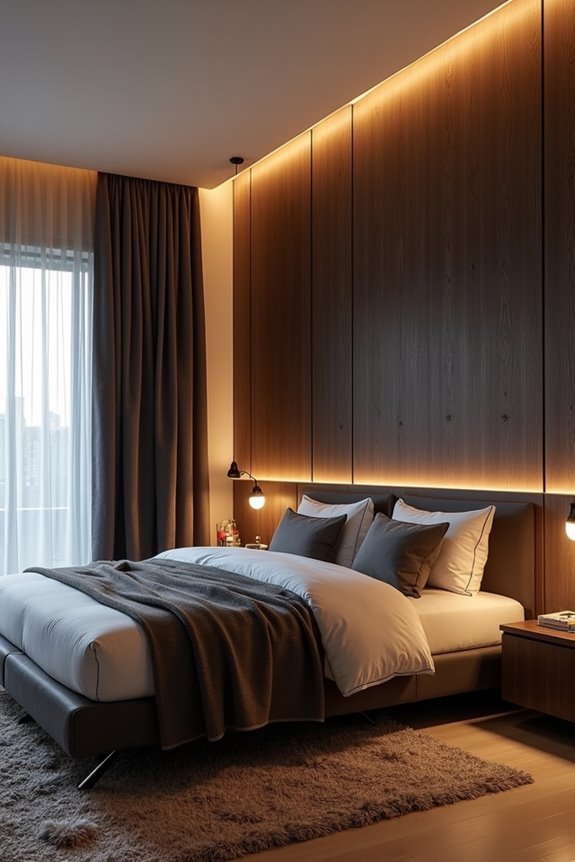
What happens when your sleeping space and your living space start fighting for attention? I’ve learned that tackling dual-use bedroom challenges means getting creative with solutions that work for your lifestyle.
Dual-use bedrooms demand creative solutions that balance sleeping and living spaces for your unique lifestyle needs.
Here’s what I’ve discovered helps most:
- Privacy barriers like freestanding screens that you can move around easily
- Curtains or sliding doors that let you control light without permanent changes
- Lofted beds that steal vertical space and create cozy sleeping zones below
- Bookshelves doing double duty as storage and visual dividers
- Smart furniture that shifts function—think murphy beds or ottomans with hidden storage
The trick? Balance matters. You’re managing light, airflow, and comfort simultaneously. Start by identifying what bothers you most. Too bright? Add blackout curtains. Need better separation? Try a partition. Small adjustments create significant differences.