

Kitchen desks aren’t going anywhere because they solve real problems we all face. You get a dedicated spot for meal planning, bills, and remote work without sacrificing your cooking space. Smart cabinetry hides clutter while durable surfaces handle spills without flinching. They boost resale value and actually make your kitchen work harder for your lifestyle. Curious how to fit one into your space without making it feel cramped? Keep reading.
What Is a Kitchen Desk (and Who Needs One)?
Ever wonder where you’re supposed to pay bills or jot down grocery lists without cluttering your countertops?
A kitchen desk is exactly what it sounds like—a compact workspace built right into your kitchen. I think of mine as my administrative command center. It’s where I handle tasks like meal planning, reviewing recipes, or catching up on emails while staying connected to the action.
Here’s who benefits most: busy families juggling schedules, remote workers needing a secondary workspace, or anyone tired of paperwork scattered across dining tables. Organization is key. Built-in filing drawers, pullout trays, and concealed cabinetry keep clutter hidden. You get a dedicated spot for important documents without sacrificing your prep area’s functionality.
It’s the practical solution for people like us who want everything in one place.
Desk Dimensions and Placement in Your Layout
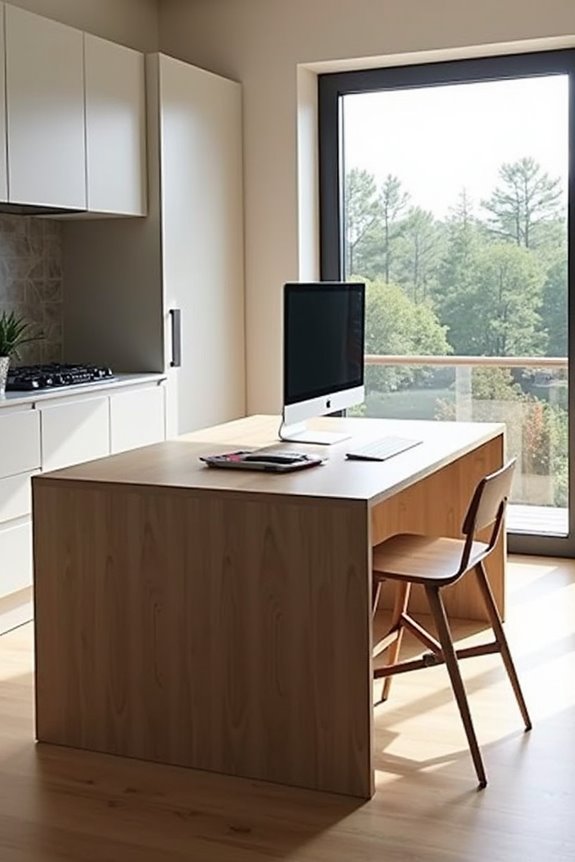
Now that you’ve got the concept down, let’s talk about making one actually work in your space—because a kitchen desk is only useful if it fits right.
Desk dimensions matter more than you’d think. Aim for 42–48 inches wide with 24–30 inches of depth. This gives you enough room for your laptop and notes without eating up precious kitchen real estate.
Placement is where things come together. Tuck yours adjacent to your dining area, which keeps work separate from cooking zones. You could also nestle yours into a peninsula overhang—smart use of existing space.
Integrated storage is key. Built-in shelving and drawers keep clutter hidden, preserving that clean, intentional appearance. Position your desk near natural light when possible. This setup works well.
Create Workflow Separation Without Walls
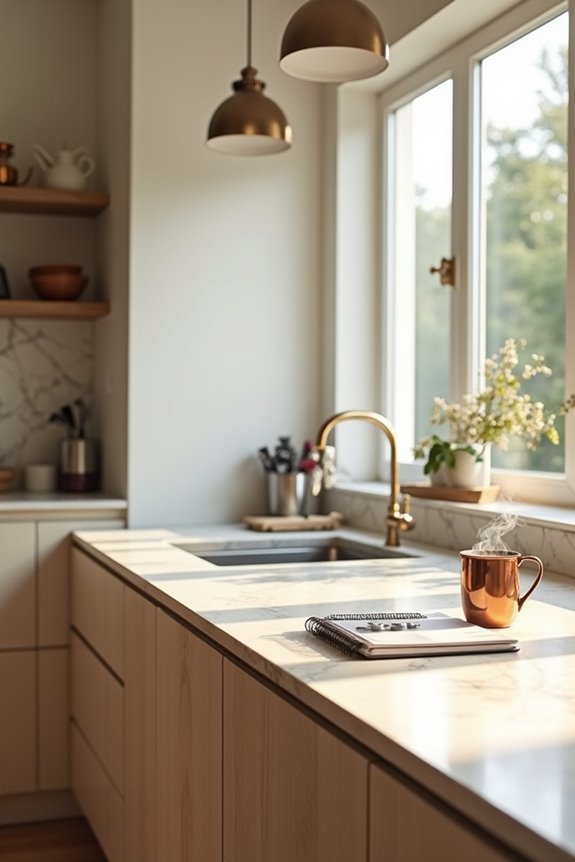
I’ve found that you don’t need actual walls to keep your kitchen desk feeling separate and purposeful—you just need smart zoning. When I positioned my desk near the pantry and my coffee station in a different corner, suddenly each spot had its own job: one for planning menus, one for morning tasks, one for actual cooking. The trick is using cabinetry, movable chairs, and placement strategy so your workspace reads as purposeful, not like I just plunked a table down without thought.
Zoning Without Visual Clutter
Most kitchens I’ve worked with face the same challenge: how do you separate different activities—prepping, cooking, dining, working—without throwing up walls that make the space feel cramped?
Kitchen zoning works well when you’re deliberate about it. Here’s what actually works:
- Position appliances strategically to naturally define cooking zones without blocking sightlines
- Use custom cabinetry as subtle boundaries that organize without announcing themselves as dividers
- Distribute storage vertically with full-height cabinets that reduce visual clutter while maximizing function
The result? Task-zoned design lets each zone breathe. Your prep area stays separate from your dining space. Your desk functions independently. Light flows freely. Views remain unbroken.
You’re not sacrificing openness for organization—you’re gaining both. That’s the balance worth pursuing.
Task-Specific Work Areas
Once you’ve got your zones breathing without walls, dedicated spaces for specific tasks make a real difference in how your kitchen functions.
Think beverage stations, coffee bars, baking areas, and snack zones—each one’s got its own job. Task zoning changes how I work in my kitchen. Built-in storage and modular cabinetry anchor these spaces, making prep, cooking, and cleanup feel natural and organized.
Your beverage station needs mugs, glasses, and supplies clustered together. Your baking area deserves flour, sugar, and mixing tools within arm’s reach. This separation means you’re not hunting across the kitchen anymore.
Want hidden storage? Consider a prep kitchen or butler’s pantry. You’ll keep main counters calm while still handling specialized work. That’s architecture-led efficiency meeting real life.
Open-Plan Kitchen Integration
How do you keep an open kitchen from feeling like one giant, chaotic work zone?
I’ve discovered that thoughtful organization creates separate functional spaces without walls. Here’s what I’ve learned:
- Hidden storage solutions – Butler’s pantries and concealed cabinets reduce visual clutter while keeping essentials accessible
- Defined zones – Designating prep, cooking, and dining areas helps you move naturally between tasks
- Cohesive materials – Matching cabinetry and dining furniture tie spaces together visually
The key is maintaining openness while strategically integrating a kitchen desk or work nook that feels purposeful, not cramped. I position mine near natural light but away from the main cooking area. This separation maintains flow while giving you a calm command center for bills, meal planning, or homework. Your open kitchen stays connected but genuinely organized—exactly what we’re all looking for now.
Desk Surfaces That Hide Spills and Last Decades

I’ve learned the hard way that what you put on your kitchen desk matters just as much as what you put in your kitchen sink—maybe even more, since you’re working there every day. Materials like quartz and sintered stone perform well because they resist coffee spills and pen marks that would damage cheaper surfaces over time. The practical benefit? These surfaces maintain their appearance for years without needing special treatments, which means you get a sleek, modern look with the durability to support it.
Durable Material Selection
When’s the last time you worried about ruining your desk with a coffee spill?
I used to stress constantly. Then I discovered engineered quartz and sintered stone—materials that actually deliver on durability. Here’s why I’m not going back:
- Non-porous durability means liquids don’t seep in and stain like they used to
- Stain resistance hides spills effectively, so I’m not frantically wiping up every accident
- Decades of performance without fading or wearing down, even with daily use
These materials are built tough. I can set my coffee mug down without that nagging anxiety. The surfaces resist UV damage too, keeping colors vibrant year after year. You’re investing in a desk that performs consistently—one that handles the demands of kitchen use without requiring constant maintenance.
Stain-Resistant Surface Innovation
Modern stain-resistant desks use non-porous materials like engineered quartz and sintered stone that refuse to absorb spills. Coffee, wine, pasta sauce—they all bead up instead of soaking in. Antimicrobial treatments enhance hygiene, so you’re not just hiding stains, you’re keeping bacteria at bay.
UV-resistant pigments maintain your desk’s color despite frequent spills and bright lighting. Seamless designs and integrated backsplashes make cleaning straightforward. You get durability that actually performs. No more worry over accidents. Desks built this way stay relevant for decades.
Match Your Desk Finish to Your Kitchen Style
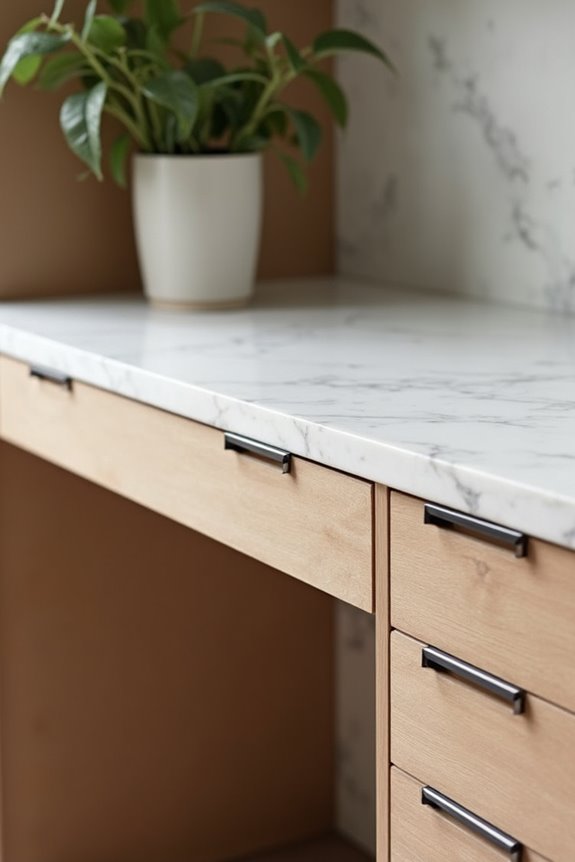
Why does a mismatched desk stick out like a sore thumb in an otherwise beautiful kitchen? I learned this the hard way when I placed a glossy white desk next to my warm wood cabinetry. The disconnect was immediate.
A mismatched desk disrupts your kitchen’s design—I learned this lesson placing glossy white next to warm wood cabinetry.
Creating a cohesive design means your desk finishes should echo your kitchen style. Here’s what I’ve discovered works:
- Match wood tones—soft taupe or warm grain on your desk reflects cabinet materials
- Mirror hardware details—brushed nickel or matte black accents tie everything together
- Align surfaces with countertops—engineered quartz or stone tones create visual continuity
In modern kitchens, handleless cabinetry pairs beautifully with streamlined desk designs. When your workspace harmonizes with cooking zones, you’re not just organizing; you’re building a kitchen that works as a unified whole.
Ergonomics and Height Standards for Kitchen Desks
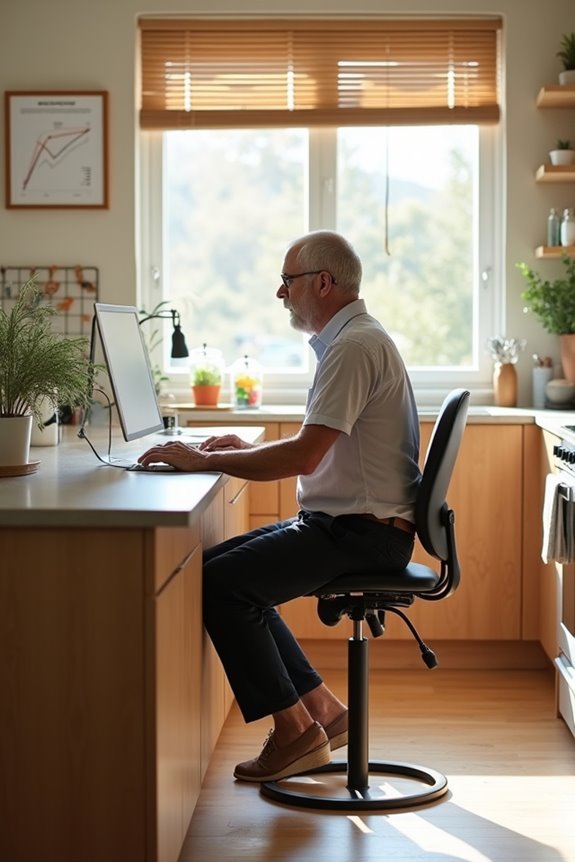
A beautiful desk that looks fantastic with your cabinetry won’t do you any favors if it leaves your back aching after an hour of bill-paying or meal planning.
Here’s the truth: ergonomics matter. I’ve learned this the hard way. Standard counter height works for most people, but you might need something slightly lower for typing tasks. That’s where adjustable-height surfaces shine. They let you customize your workspace to fit *your* body, not squeeze your body into a one-size-fits-all setup.
Don’t forget about legroom and knee space either. Proper clearances prevent that annoying spatial fatigue that creeps in during longer work sessions. Add integrated power outlets nearby, and you’ve eliminated cord clutter while keeping everything within reach. Your future self will appreciate this.
Smart Outlets and Task Lighting Above Your Desk
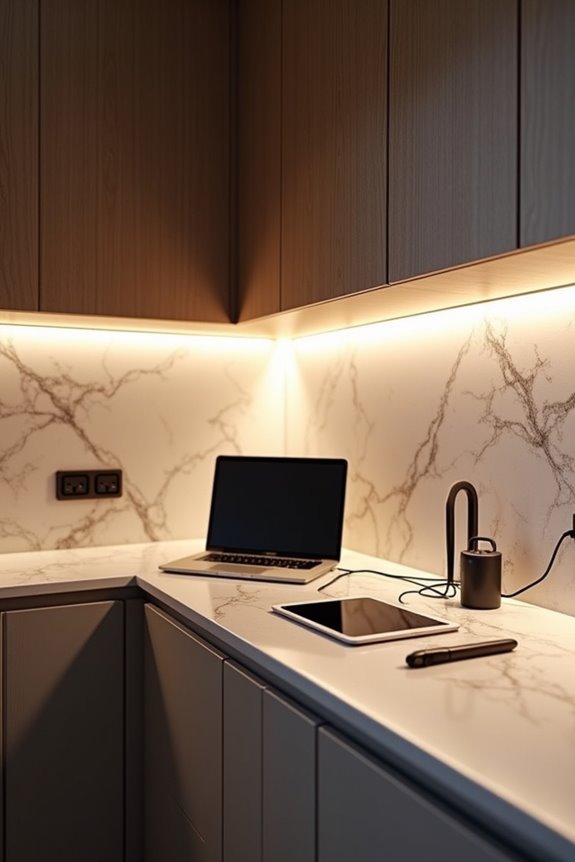
When I finally added smart outlets and task lighting to my kitchen desk, I stopped fumbling around with tangled cords and squinting at my design sketches—and honestly, it’s changed how I actually use the space. You can charge your tablet, laptop, and measurement tools all at once without that cable spaghetti taking over, plus dimmable LED lights above your work surface cut down the glare that makes screens harder to read and details easier to miss. Setting these lights and outlets on a schedule means they’re ready when you need them and off when you don’t, which saves energy and keeps your workspace organized instead of chaotic.
Charging Stations For Devices
How many cables are currently tangled behind your kitchen desk right now?
Device charging used to mean messy cord situations. Here’s what’s changed with modern kitchen desks in 2026:
- Built-in charging pads and USB-C hubs integrated directly into your desk surface
- Smart outlets with energy monitoring that you control from your phone
- Multiple power footprints supporting phones, tablets, laptops, and smart home devices simultaneously
Dedicated charging stations for devices keep your workspace organized. These provide practical benefits beyond convenience. With kitchen desks featuring seamless device power access, you’re not hunting for outlets anymore. Your phone, tablet, and laptop all have designated locations. Smart outlets eliminate standby waste automatically. That’s the kind of setup that gives you control over your workspace.
Adjustable Lighting For Focus
Why does your kitchen desk feel like you’re working in a cave one minute and an interrogation room the next? I’ve been there, squinting at my screen or straining my eyes during planning sessions. That’s where adjustable lighting helps.
I installed LED strips above my desk with smart outlets that let me control brightness and color temperature for different tasks. Dimmer fixtures mean I can dial down harsh glare on my laptop. Motion-activated smart outlets? They automatically power down my desk lamp when I step away, cutting energy waste.
The result? No more eye strain during long design sessions. The uniform illumination keeps my workspace comfortable and focused. Your kitchen desk becomes the productive zone you actually want to work in.
Integrated Power Management Systems
Good lighting gets you halfway there, but here’s what I’ve learned: you can’t have a truly functional kitchen desk without solving the power puzzle too.
I used to have cables everywhere (not my finest moment). That’s when I discovered integrated outlets paired with task lighting above my desk. Here’s what changed everything:
- Smart outlets monitor energy use while letting me control devices remotely
- Scheduled on/off features eliminate standby power waste automatically
- One unified setup replaces messy cable clutter completely
Now my desk charges laptops, phones, and tablets without the visual chaos. The task lighting focuses right where I need it for writing or digital work. Cable management became nearly invisible. Between the energy savings and clean aesthetics, my kitchen workspace finally works the way it should—functional and organized.
Integrate Your Desk Into Modern Cabinetry
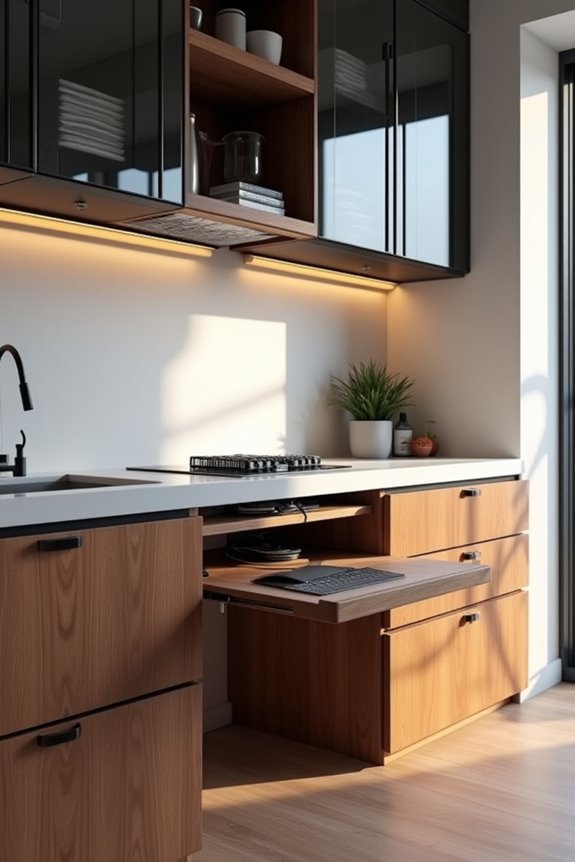
One of the smartest moves you can make is blending your kitchen desk right into your cabinetry—and I mean really blending it, not just plunking a table against the wall and hoping it looks intentional.
When you commit to true desk integration with your cabinetry system, you’re creating something that feels permanent and well-planned. I’ve found that using the same finishes and hardware makes your workspace part of the architectural whole. Your kitchen stops looking like it has a desk problem and starts looking designed.
| Design Element | Benefit | Example |
|---|---|---|
| Full-height cabinets | Integrated storage | Coffee bar with shelving above |
| Concealed appliances | Clean appearance | Hidden prep area |
| Matching finishes | Visual harmony | Same paint and handles throughout |
This approach works beautifully for beverage stations, coffee bars, or hidden butler’s pantries. You’re not compromising style. You’re creating something cohesive and polished.
Position Your Desk to Maximize Natural Light
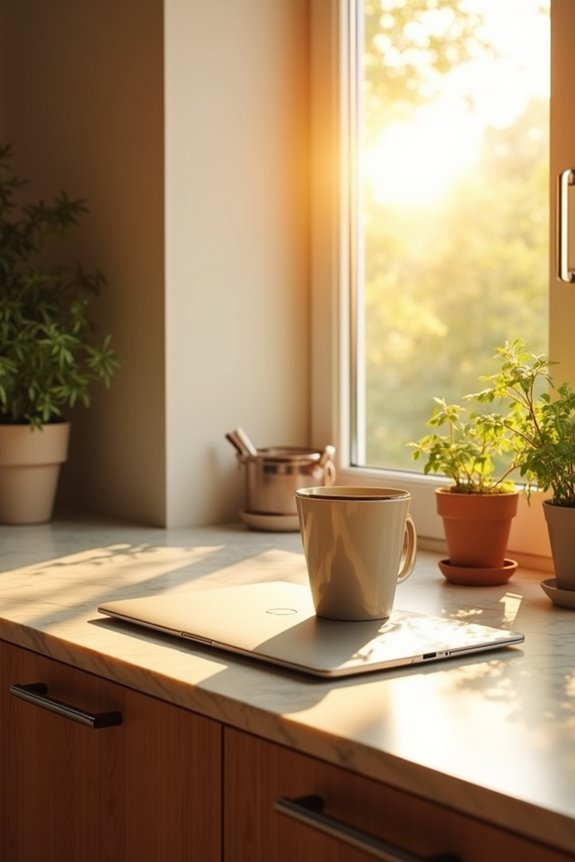
Now that you’ve got your desk beautifully integrated into your cabinetry, let’s talk about where you actually place it in the room—because a well-designed desk in a dim corner won’t serve you well.
Natural light improves your workspace. Here’s how to nail desk placement:
- Position perpendicular to windows – This gives you even, diffused illumination without that annoying screen glare that makes you squint like you’re reading ancient hieroglyphics.
- Use light-colored surfaces – Reflective desk tops and pale walls bounce daylight deeper into your space, multiplying brightness naturally.
- Align with seasonal shifts – Your daylight optimization changes throughout the year, so consider how sun angles affect your reading and screen work.
Strategic desk placement means you’re working *with* natural light, not against it. That’s the winning move.
Kitchen Desk ROI: Resale Value and Market Appeal
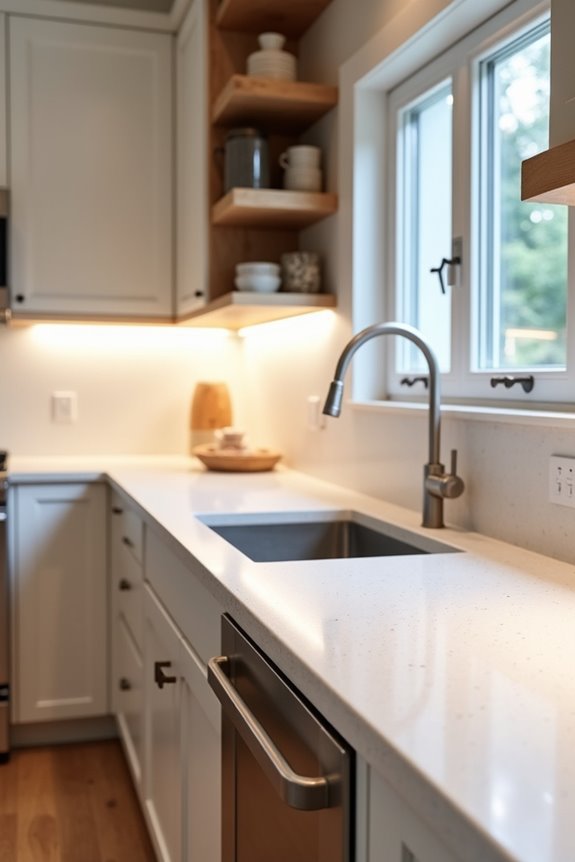
Ever wonder why real estate agents’ eyes light up when they see a kitchen with a built-in desk? I’ve learned it’s because kitchen desk ROI is real. Buyers in the Bay Area actively seek homes with dedicated work zones, and I’m talking serious resale value gains here.
Here’s what I’ve noticed: integrated desks alongside quality cabinetry signal that a home understands modern living. You’re not just adding furniture—you’re adding functionality that today’s families need. A well-designed desk area keeps your kitchen organized while boosting overall market appeal.
Think about it: remote work isn’t disappearing. Neither is homework. Homes offering these built-in solutions attract more buyers willing to pay premium prices. That’s kitchen desk ROI working for you before you even list your place.