
Kitchen islands aren’t fading because they’re genuinely practical. You get real storage, prep space, and workflow for multiple cooks—no more bumping elbows. They work in small kitchens too with wheeled carts or freestanding tables. Honestly, they’re the unofficial headquarters where families gather, kids do homework, and life happens. Curved designs and mixed materials feel current, while smart features like USB outlets add convenience. Whether you’re cramped on budget or space, there’s an island solution that fits. Stick around to discover which one works for your kitchen.
Storage and Workflow: What Islands Actually Do
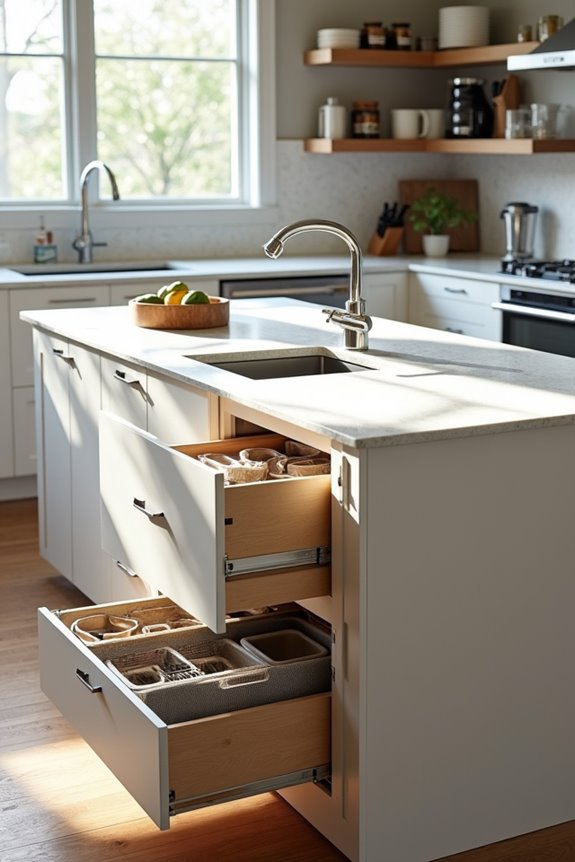
Why do so many home cooks keep coming back to kitchen islands? They provide practical benefits for how you actually work in your kitchen.
Islands give you real storage and prep space where you need it most. Deeper drawers and vertical dividers mean everything has a home. You’re not shuffling stuff around constantly.
Islands give you real storage and prep space where you need it most. Everything has a home.
What really matters is workflow. Islands let multiple cooks work simultaneously without bumping elbows. You’ve got dedicated zones: one person prepping vegetables, another handling the range, someone else managing cleanup.
Built-in appliances seal the deal. Microwave drawers, dishwashers, and wine coolers on your island free up counter space on your perimeter walls. Suddenly you’ve got room to actually work. That’s why islands aren’t disappearing anytime soon.
Islands Work in Any Kitchen Size
The beauty of kitchen islands is they’re not one-size-fits-all—they’re actually flexible enough to work whether you’re cooking in a galley kitchen or a sprawling open concept. I’ve seen this myself. In small kitchens, you don’t need a massive built-in island. Instead, consider a freestanding worktable or farm table. It gives you those multifunctional surfaces you need without taking up your floor space. Modular design changes how you approach this. Droplids and multi-height surfaces let you customize what works for your kitchen. Open shelving keeps things airy. Even a compact island with wheels can serve as your practical solution for extra prep space and storage. The trick? Choose purposeful over bulky. That’s when islands work best, regardless of your kitchen’s footprint.
Islands Are Where Families Gather
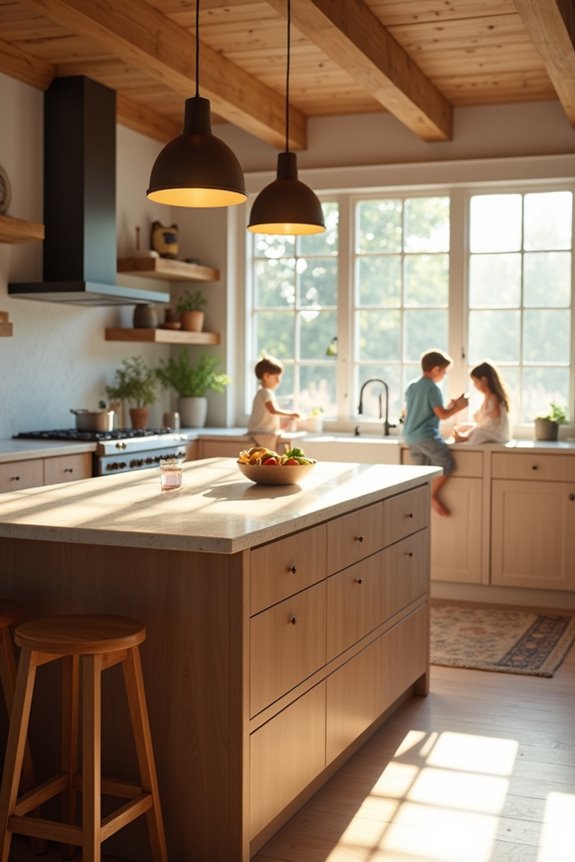
I’ve noticed that my kitchen island has become the unofficial headquarters of our home—where my kids drop their backpacks, we hash out homework questions, and someone’s always nibbling on snacks while we catch up on the day. It’s not about fancy dinner parties anymore; it’s about those real moments when your teenager actually talks to you while you’re prepping dinner, or your younger kids color at the counter while you cook. In 2026, islands are designed to be the beating heart of family life, not just a pretty kitchen feature.
The Social Kitchen Hub
When you’ve got hungry kids circling the kitchen or friends lingering after dinner, you’ll notice something: everyone gravitates toward the island. That’s not coincidence—it’s design working exactly as it should. Modern kitchen islands function as true social hubs, pulling your family together naturally. The best part? Today’s modular islands adapt to how you actually live. You can position a freestanding worktable wherever conversation flows best, then shift it when needs change. Rounded edges feel welcoming. Multi-height surfaces let kids help with prep while adults chat. Add warm pendant lighting overhead, and your dining space becomes the room’s beating heart. Your kitchen island isn’t just furniture. It’s where memories happen.
Multi-Generational Gathering Spaces
Your kitchen island works harder than any piece of furniture in your home—it’s where your 8-year-old tackles homework, your partner preps dinner, and your parents pull up a stool to chat while you cook.
Multi-generational islands serve as natural gathering spots that bring everyone together. Here’s what makes them so versatile:
- Flexible seating arrangements keep kids close while you work, letting them feel included without getting underfoot
- Durable surfaces handle homework spills, meal prep, and cleanup without complaint
- Open legroom accommodates multiple generations simultaneously without rigid constraints
Islands adapt to your family’s rhythm. Someone’s always there—doing homework, sharing stories, or simply being present. That’s belonging. Your kitchen becomes the heart of everything, where connection happens around food and conversation.
Casual Connection Over Meals
How many meals have you actually eaten at your dining table versus perched on a stool at the island? I’m guessing the island wins. That’s because kitchen islands have become our favorite casual meals destination. They’re where families naturally gather without the formality of a separate dining space. Your kids do homework there while you prep dinner. Friends lean against the counter with coffee. Everyone’s connected, not isolated at opposite ends of a room. This social hub vibe is exactly why kitchen islands remain essential. They turn eating from a scheduled event into spontaneous connection. The island isn’t just furniture—it’s where your family’s actual life happens. That’s why they’ll never go out of style.
2026 Kitchen Islands: Curved, Freestanding, and Unique
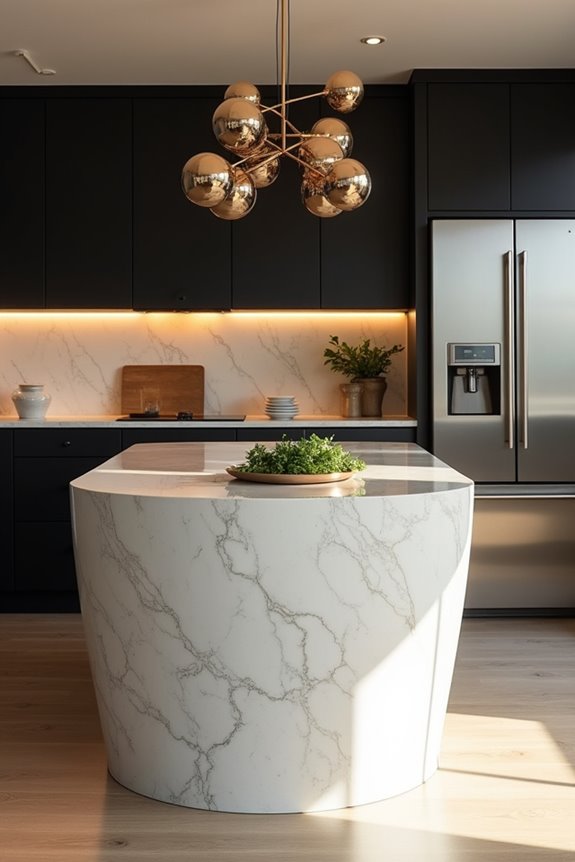
Why do so many kitchen islands still feel awkward to work around? I’ve realized the answer lies in how we’re designing them now. Here’s what’s shifting:
- Curved islands replace harsh angles, making movement around your kitchen feel natural and inviting
- Freestanding pieces preserve your floor space and cost less than built-ins
- Materials mixing—contrasting woods, metals, and stones—creates depth and visual interest
The key is pairing these curved, freestanding designs with thoughtful lighting accents. Pendant clusters above define the space without overwhelming it. Single-level surfaces work best for everything from prep to dining. You’re not just adding furniture; you’re creating a gathering spot that actually works for how you live.
Why Freestanding Islands Cost Less Than Built-In
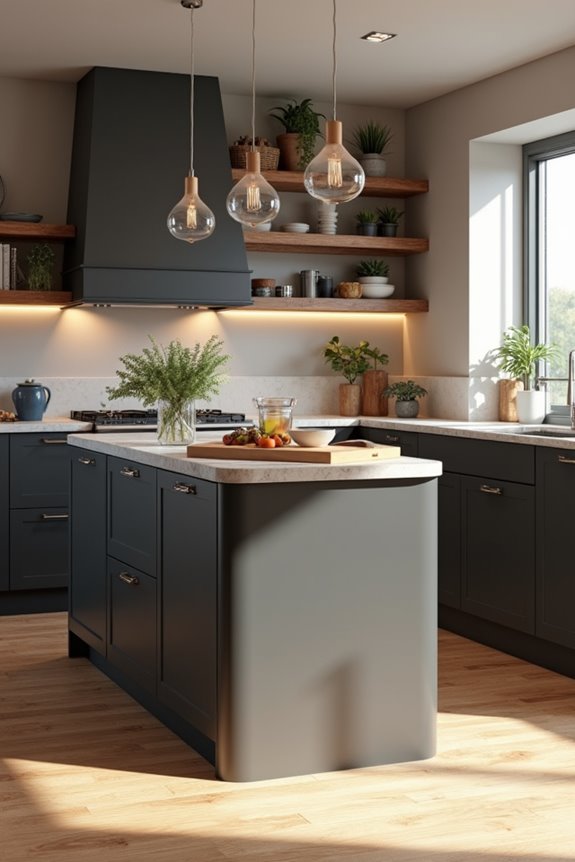
When you’re pricing out kitchen upgrades, here’s what I’ve discovered: freestanding islands’ll save you thousands compared to built-ins. Built-in islands demand expensive structural work, plumbing modifications, and custom cabinetry. That adds up fast. Freestanding islands? They’re furniture pieces you simply place in your space. No contractor drama. No hidden costs creeping up.
I’ve found vintage or antique-inspired freestanding options that cost a fraction of custom built-in work. You skip the renovation headaches entirely. Plus, when you’re ready for a kitchen remodel down the road, you can reposition or replace your freestanding island without major disruption. That flexibility matters. You’re investing in something practical that adapts to your needs, not locked into permanent decisions. That’s smart budgeting.
Smart Islands: Outlets, Charging, and Wireless Controls
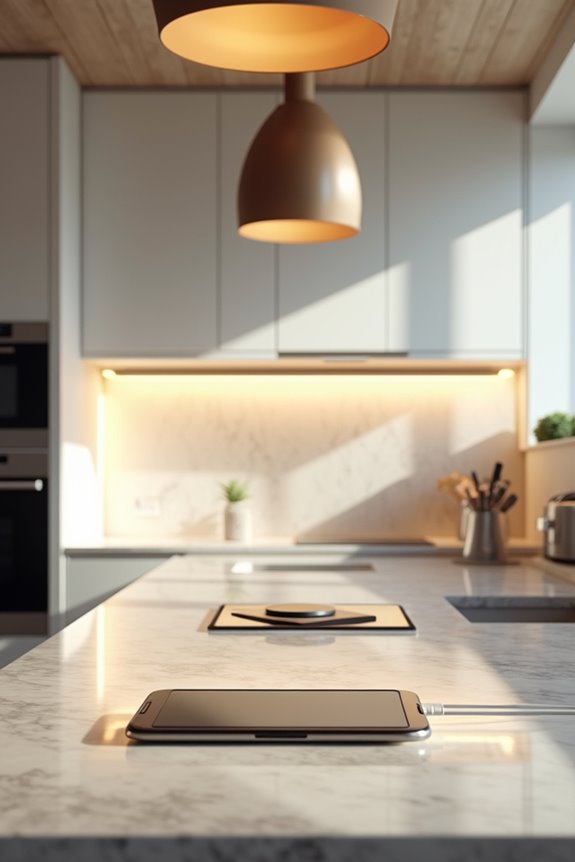
You’ve saved money with your freestanding island—now let’s make it actually work for your real life. Smart islands improve how you cook and connect. Here’s what I’d prioritize:
- Wireless charging spots built into the countertop so your phone stays powered without cable clutter
- USB outlets and standard plugs positioned at accessible heights for small appliances and device charging
- Touch lighting controls above the island that you can adjust without stopping meal prep
These features aren’t luxuries anymore—they’re practical necessities. Strategically placed outlets eliminate that frustrating hunt for power. Wireless controls let you dim lights one-handed while stirring. Your island becomes a genuine work hub, not just a pretty surface. That’s the smart island difference.
When to Skip an Island (Narrow Kitchens, Tight Budgets)
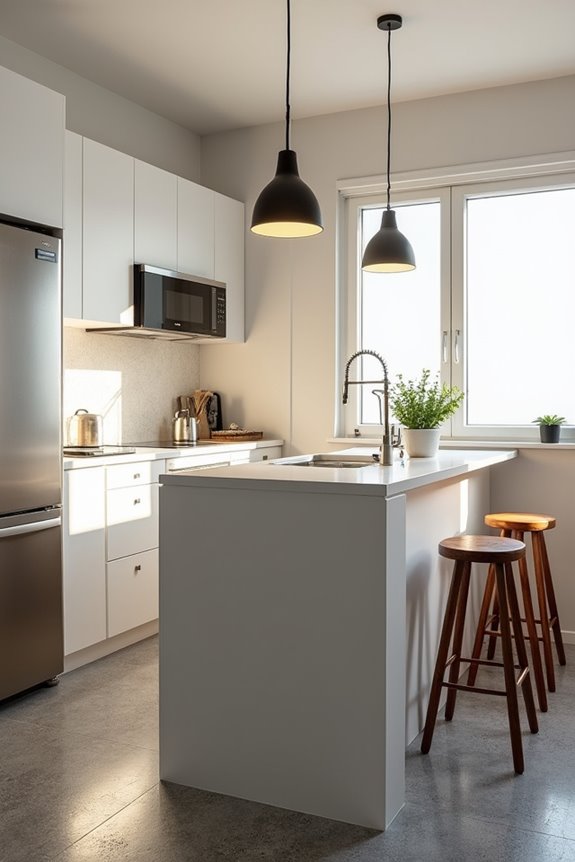
Not every kitchen needs an island—and honestly, I didn’t realize that until I helped a friend squeeze one into her galley kitchen and watched her bump her hip on it constantly.
Not every kitchen needs an island—especially galley kitchens where one becomes an obstacle.
If you’ve got small spaces or a tight budget, consider alternatives instead. A compact worktable or freestanding cart gives you extra prep space without blocking traffic flow. They cost less than built-in cabinetry.
Here’s what works better in cramped kitchens: mobile carts roll out when you need them. Single-level, slim surfaces maximize usable counter room. Skip the oversized two-tier designs—they’ll just make everything feel cramped.
Mixing portable surfaces with open shelving creates a practical kitchen that functions well. You’ll get what you need without sacrificing the flow that makes cooking enjoyable.